Sourdough Bread Recipe (Crusty Homemade Loaf)
 By Emily Carter ·
Published
Quick answer
Mix active starter with flour, water and salt, rest and fold the dough over a few hours, shape it into a round, rest it in the fridge overnight, then bake in a hot covered pot until deep brown. Cool it fully before slicing for a crusty loaf with a soft, open crumb.
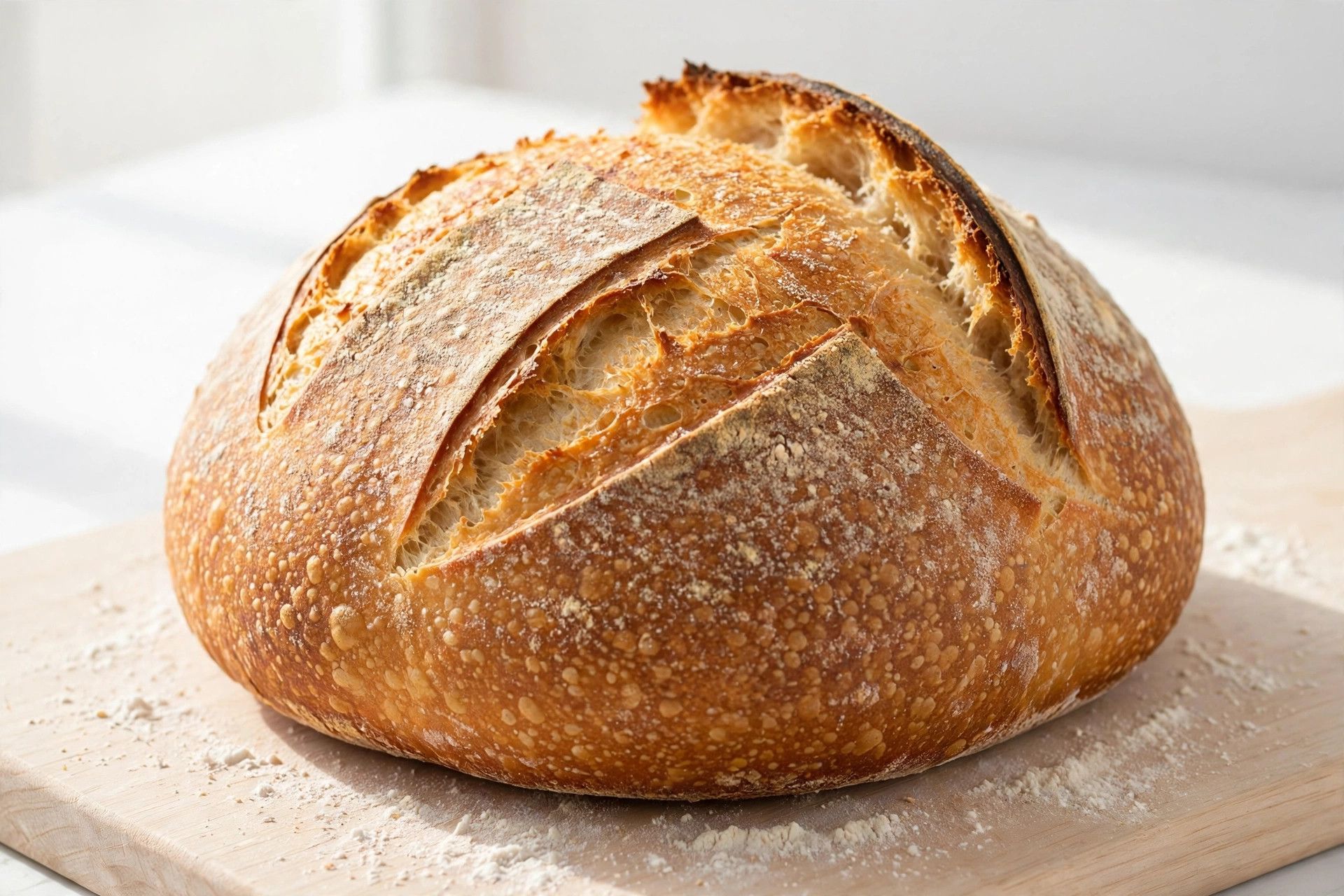
Sourdough Bread Recipe the homemade way is just four ingredients and a little patience: active starter, bread flour, water and salt, mixed, folded, rested overnight and baked in a hot covered pot. The result is a crackling crust, a soft open crumb and a gentle tang that no loaf from a bag can match.
Why you’ll love it
- Four ingredients, no yeast from a packet, no preservatives.
- A crackling crust and a soft, open crumb in every slice.
- Gentle tangy flavor that comes from the overnight rest, not from sour tricks.
- About 30 minutes of hands on work, with the fridge doing the rest.
- Slices that toast beautifully and hold up to butter, jam or avocado.
Ingredient notes
Active sourdough starter: the heart of the loaf. It should be bubbly, doubled and pass the float test, a spoonful dropped in water should float. A sleepy starter makes a dense loaf, so feed it and wait until it peaks before you mix.
Bread flour: the structure. Its higher protein builds the gluten that holds the rise and gives the crumb its chew. All purpose flour works in a pinch, but the loaf comes out a little softer and lower.
Water: the hydration. 375 g of water to 500 g of flour gives a dough that is soft and a little sticky, which is exactly right. Wet hands make folding easy without adding extra flour.
Fine sea salt: the flavor and the control. Salt rounds out the tang and keeps the rise from running away. Add it after the first rest, so the flour has time to drink up the water first.
Rice flour: the dusting. It sticks less than plain flour, so the loaf releases cleanly from the basket and keeps its shape going into the pot.
The overnight rest rule that makes or breaks it
One rule decides whether this loaf tastes tangy and complex or plain and flat, and it is the overnight rest in the fridge. A cold rest of about 12 hours lets the flavor develop slowly while the dough firms up, which also makes scoring easy and helps the loaf hold its shape in the oven. Skip it and bake the same day and the loaf will still be good bread, but it will taste milder and score less cleanly. The second rule is the covered bake. Twenty minutes under the lid traps steam and gives the crust its crackle and the loaf its tall rise, and the last 25 minutes uncovered is what turns it deep brown. Cool the loaf for at least 1 hour before slicing, since the crumb is still setting inside, and a hot slice turns gummy.
Variations
- Whole wheat sourdough: swap 100 g of the bread flour for whole wheat flour for a nuttier loaf with a slightly tighter crumb.
- Seeded sourdough: fold 3 tablespoons of mixed seeds into the dough during the last fold for crunch in every slice.
- Olive and herb sourdough: fold in a handful of chopped olives and a spoonful of fresh rosemary during shaping for a savory loaf.
- Sandwich sourdough: bake the same dough in a greased loaf pan at 425 degrees F for about 40 minutes for neat slices that fit a sandwich.
What we learned testing it
- An overnight fridge rest beat a same day bake clearly in the side by side test. The overnight loaf tasted tangy and complex, while the same day loaf tasted plain and a little flat.
- Baking in a covered Dutch oven beat baking on a bare tray. The covered loaf had a crackling crust and a tall rise, while the tray loaf spread flat and dried out.
- Weighing the flour beat measuring by cups. The weighed batch rose evenly every time, while the cup measured batch came out dense twice out of three bakes.
Read how we test recipes.
Sourdough Bread Recipe (Crusty Homemade Loaf)
Makes 1 large loaf, about 12 slices · 13 hr 15 min total · Medium
Ingredients
Equipment
Large mixing bowl · Kitchen scale · Dutch oven with lid · Proofing basket or bowl lined with a clean towel · Parchment paper · Sharp knife or razor blade · Cooling rack
Instructions
-
Mix the starter, flour and water
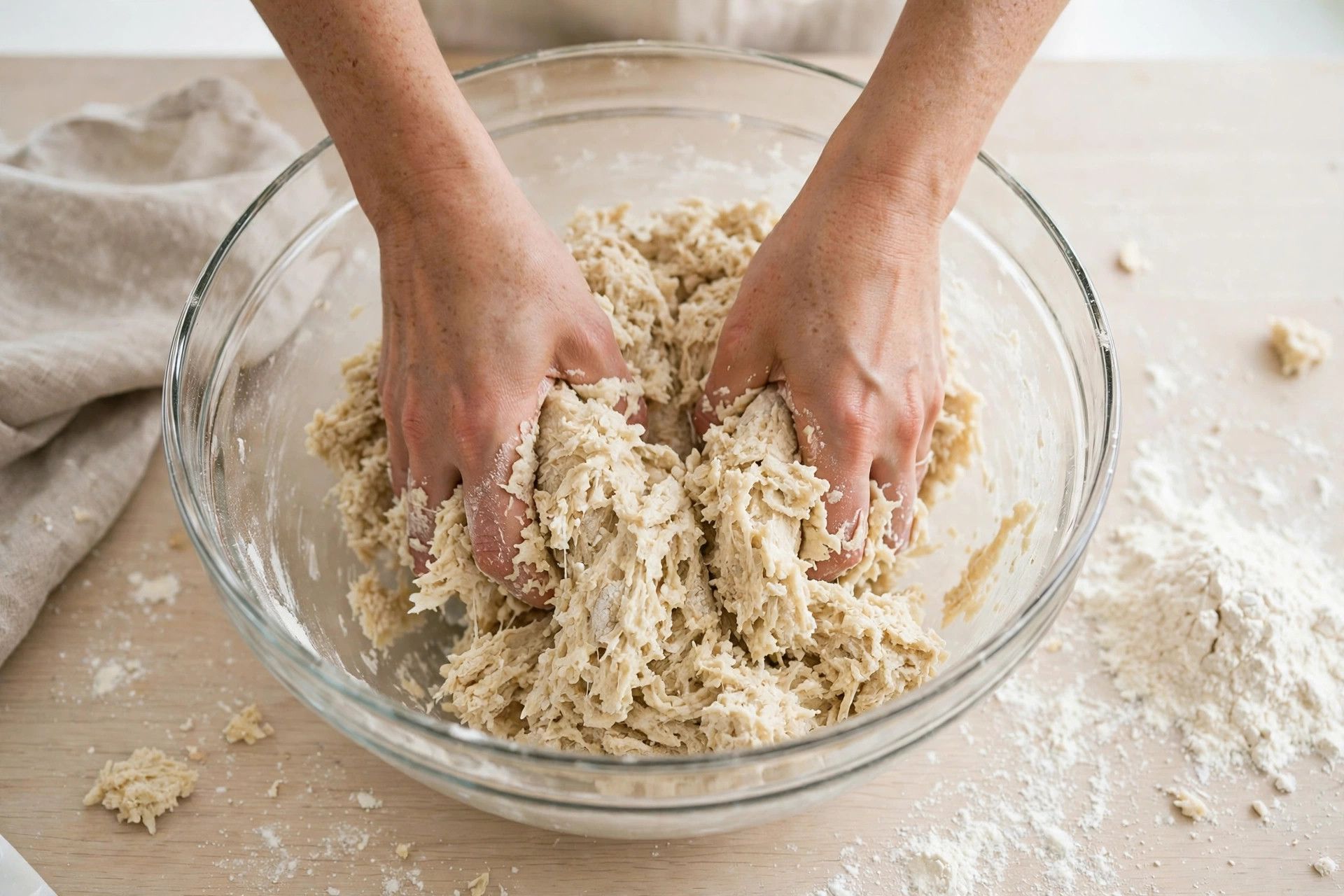
Stir the starter into the water in a large bowl until it loosens and looks milky. Add the bread flour and mix with your hands until no dry flour is left. Cover the bowl and let the dough rest for 30 minutes. This rest lets the flour drink up the water, which makes the dough easier to fold later.
-
Add the salt and fold the dough
Sprinkle the salt over the dough with a splash of water and squeeze it in with your hands until the salt disappears. Cover and let the dough rise at room temperature for about 4 hours, folding it every 30 minutes for the first 2 hours. Each fold is simple: lift one edge up and fold it over the middle, then turn the bowl and repeat on the other sides.
-
Shape the loaf and rest it overnight
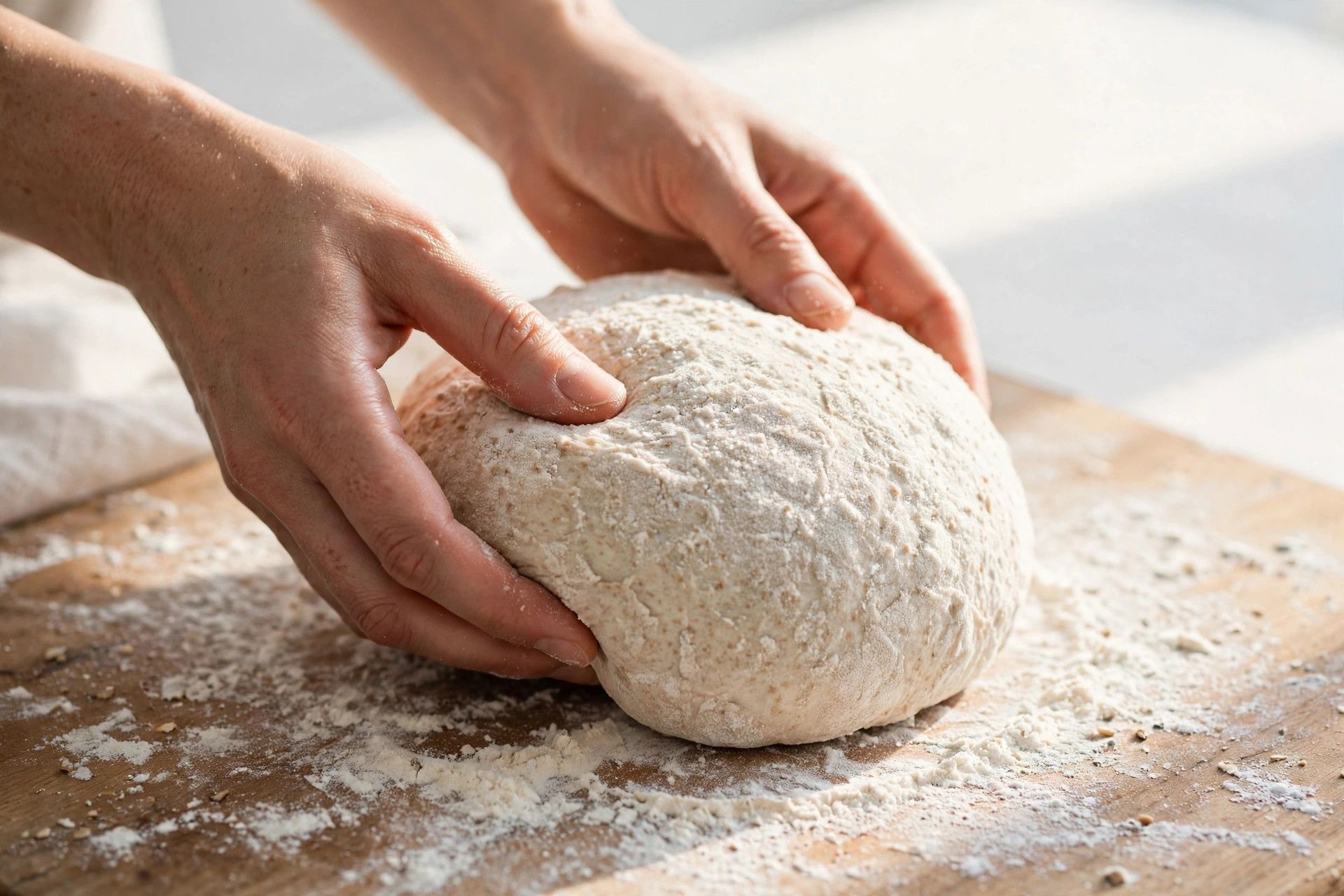
Turn the dough onto a lightly floured surface and shape it into a tight round, pulling the surface taut with your hands. Dust a proofing basket with rice flour, set the loaf in seam side up, cover it and rest it in the fridge overnight, about 12 hours. The cold rest is what builds the tangy flavor.
-
Score, bake and cool before slicing
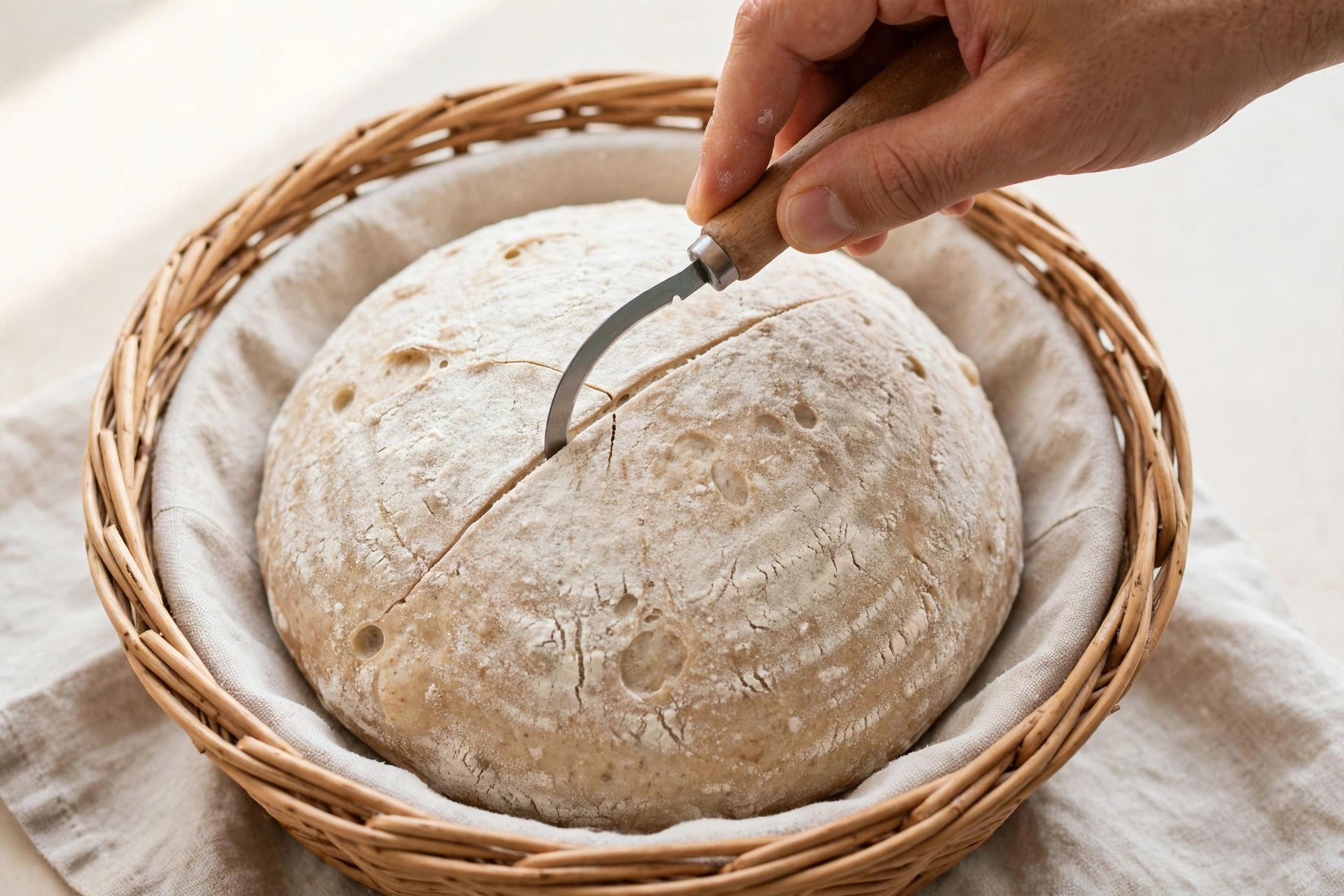
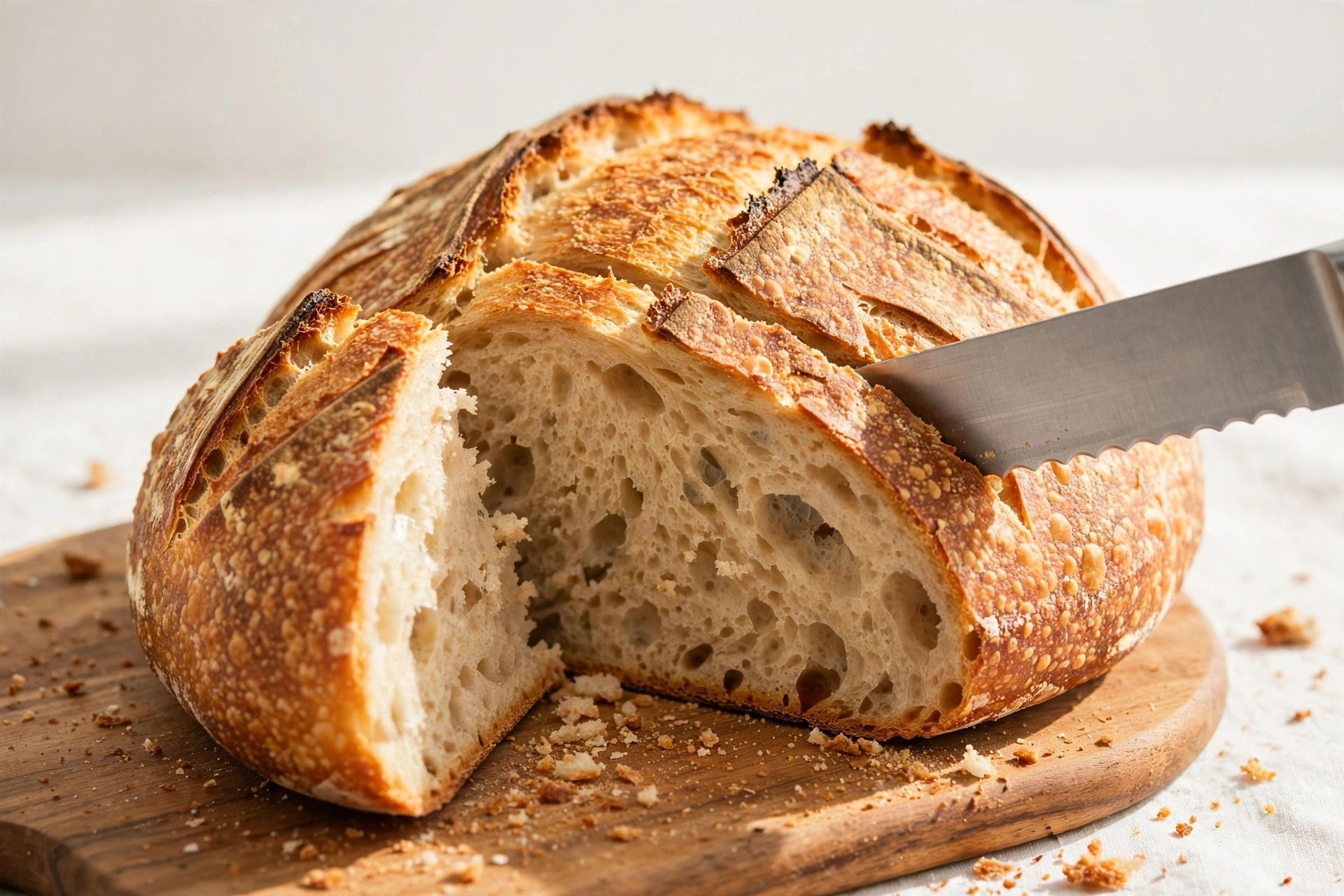
Heat the oven to 450 degrees F with the Dutch oven inside for 30 minutes. Turn the cold loaf onto parchment, score the top with one confident slash, and lower it into the hot pot. Bake covered for 20 minutes, then uncovered for 25 minutes more until deep brown. Cool the loaf on a rack for at least 1 hour before slicing, since the crumb is still setting inside.
Notes
- Use a starter that has doubled and passes the float test. A sleepy starter makes a dense loaf, and no amount of folding fixes that.
- Weigh the flour and water on a scale. Cups of flour vary too much from scoop to scoop, and a scale is the one tool that keeps this loaf the same every time.
- The dough should feel soft and a little sticky, not stiff. If it feels dry, wet your hands when you fold instead of adding more flour.
- Cool the loaf fully before slicing. Cutting a hot loaf lets the steam escape and leaves a gummy crumb, even when the bake was perfect.
Nutrition per serving
Nutrition information is being calculated.
Substitutions
- Bread flour
- Use all purpose flour instead. The loaf will be a little softer and less chewy, and the rise will be a touch lower, but it still bakes well.
- Rice flour for dusting
- Use plain flour or fine cornmeal instead. Rice flour sticks the least, but plain flour works if you dust the basket well.
- Dutch oven
- Use a heavy oven safe pot with a tight lid instead. The lid traps steam, which is what makes the crust crackle, so any heavy lidded pot will do.
Storage and make-ahead
Keep the loaf cut side down on a board under a clean towel for up to 2 days. For longer storage, slice the loaf and freeze the slices in a bag for up to 3 months, then toast them straight from frozen. Do not store bread in the fridge, since it dries out fast.
Frequently asked questions
How long does this sourdough bread recipe take?
About 30 minutes of hands on work, plus about 4 hours of rising, an overnight rest in the fridge, and 45 minutes in the oven. Most of the time is waiting, not working, so start the dough in the afternoon and bake the next morning.
Do I need a Dutch oven to bake sourdough?
It helps a lot, but it is not required. A heavy oven safe pot with a tight lid works the same way, since the lid traps steam and gives the crust its crackle. A bare tray bake still works, but the loaf will be flatter and paler.
Why is my sourdough dense?
The usual cause is a starter that was not fully active, or a rise that was cut short. Feed your starter until it doubles and floats, and let the dough rise until it looks puffy and jiggles when you shake the bowl.
Can I bake the loaf the same day instead of overnight?
Yes. After shaping, let the loaf rise at room temperature for about 2 hours until puffy, then bake it the same way. The loaf will be good, but it will taste milder, since the overnight cold rest is what builds the tang.
How do I know when the loaf is done?
The crust should be deep brown and the loaf should sound hollow when you tap the bottom. If you use a thermometer, the center should read about 205 degrees F. Cool it for at least 1 hour before slicing.