Cottage Cheese Protein Pancakes
 By Emily Carter ·
Published
Quick answer
Blend 1 1/2 cups cottage cheese, 3 eggs and 1 cup rolled oats into a smooth batter, rest it 5 minutes, then cook 1/4 cup scoops for 2 to 3 minutes per side. You get about 8 fluffy pancakes with roughly 28 g protein per serving, no protein powder needed.
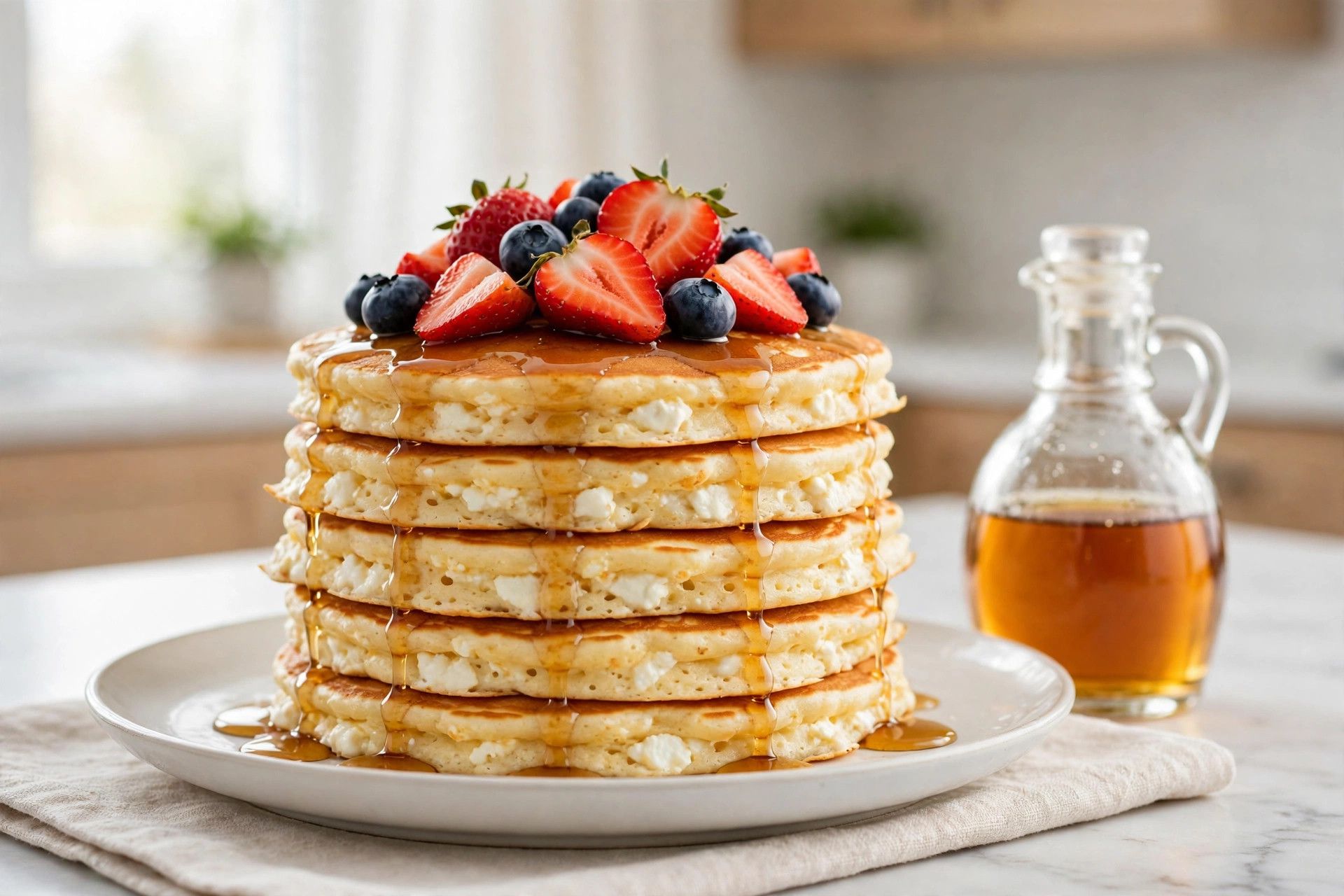
These cottage cheese protein pancakes are the breakfast that makes a high protein morning genuinely easy. Everything goes into one blender, cottage cheese, eggs and oats, and out comes a smooth batter that cooks into fluffy, golden pancakes with about 28 grams of protein per serving. There is no protein powder, no chalky taste, and nobody at the table will guess the cottage cheese is in there.
Why you’ll love it
- Fluffy and golden, with no visible curds and no protein powder taste.
- About 28 g of protein per serving from cottage cheese, eggs and oats.
- One blender batter, about 8 pancakes, on the table in 30 minutes.
- Meal prep friendly: they freeze well and reheat in the toaster all week.
Ingredient notes
Cottage cheese: this is the base of the batter, and it blends completely smooth, so the finished pancakes taste like regular pancakes. Full-fat gives a richer, more tender crumb. Low-fat works too and keeps the protein high. Small curd or large curd makes no difference once blended.
Rolled oats: old-fashioned rolled oats turn into oat flour right in the blender, which gives the pancakes their structure. Quick oats also work. Do not use steel-cut oats, which stay hard and gritty no matter how long you blend.
Baking powder: this does all the lifting, so check that yours is fresh. If it has been open in the pantry for a year, the pancakes will still taste good but will come out noticeably flatter.
Why these pancakes stay fluffy
Protein batters have a reputation for turning out dense and rubbery, and it usually comes down to three things: not enough lift, no rest, and too much heat. This recipe handles all three. The baking powder provides the rise, the 5 minute rest lets the ground oats hydrate and thicken so the pancakes hold their height instead of spreading, and steady medium heat lets the eggs set gently while the centers cook through. The cottage cheese helps too: it keeps the crumb moist and tender in a way protein powder never does, because powder drinks up liquid and dries the batter out.
Variations
- Blueberry: drop a few fresh blueberries onto each pancake right after pouring, before the flip. They burst slightly as the second side cooks.
- Chocolate chip: fold 1/4 cup (45 g) mini chocolate chips into the rested batter. A weekend favorite with kids.
- Apple cinnamon: add 1/2 teaspoon ground cinnamon to the blender and serve the stack with warm sauteed apple slices on top.
- Banana: blend in half a ripe banana and cut the maple syrup in the batter to 2 teaspoons. The pancakes come out sweeter and extra moist.
What we learned testing it
- Resting the batter for a full 5 minutes made a clear difference. Unrested batter spread thin and tore at the flip, while rested batter held its shape and flipped cleanly every time.
- Medium heat is the sweet spot. On medium-high, the first test batch browned before the centers set, so the pancakes broke apart when flipped.
- Blending until the oats are completely smooth gives a regular pancake texture. A shorter blend left oat flecks in the batter and a slightly grainy bite.
Read how we test recipes.
Cottage Cheese Protein Pancakes
Makes About 8 pancakes · 30 min total · Easy
Ingredients
Equipment
Blender · Large skillet or griddle · Spatula
Instructions
-
Blend the batter
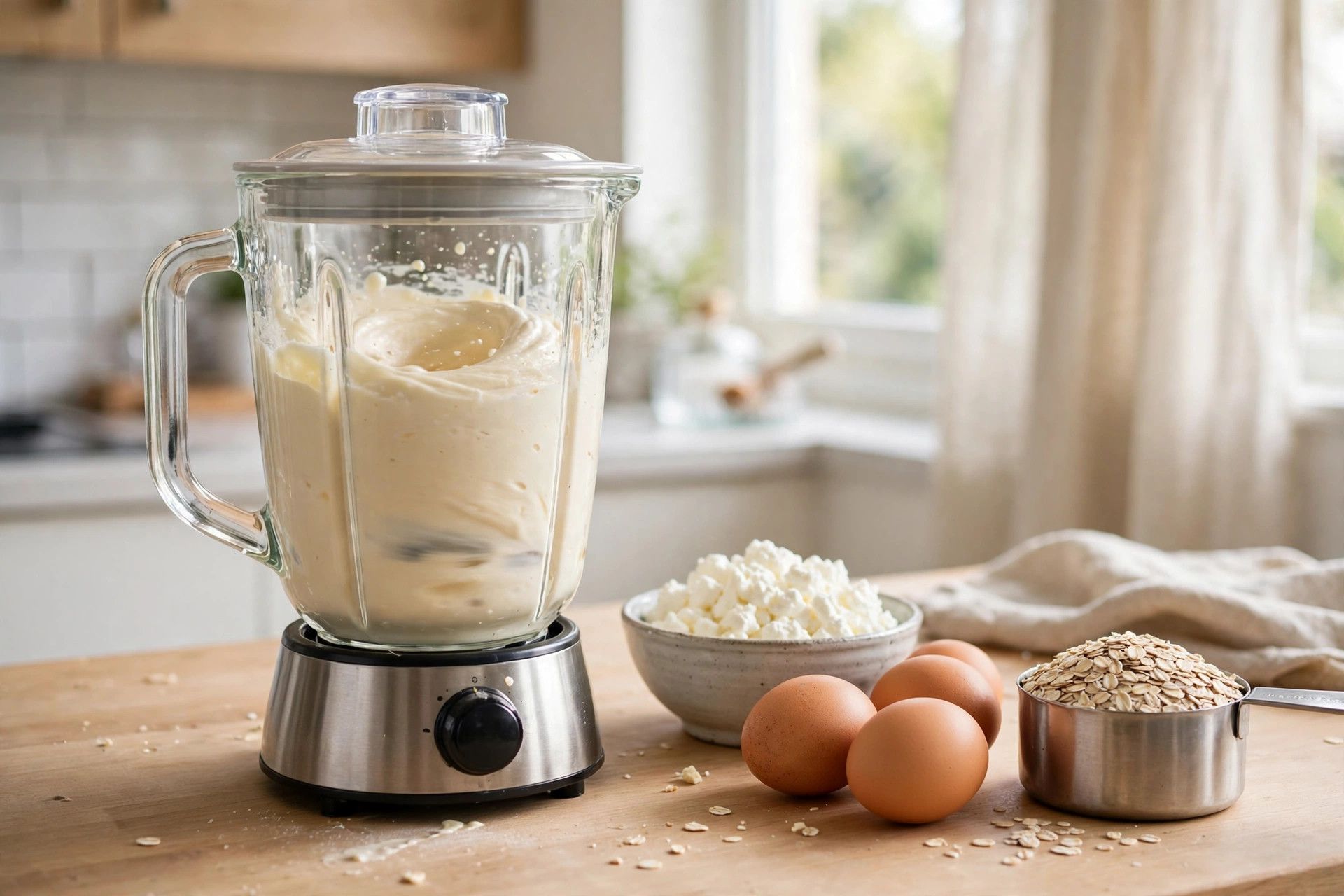
Add the cottage cheese, eggs, rolled oats, maple syrup, vanilla, baking powder and salt to a blender. Blend on high for 30 to 45 seconds, stopping once to scrape down the sides, until the oats disappear and the batter is completely smooth and pourable.
-
Rest the batter
Let the batter sit in the blender for 5 minutes. It will thicken as the oats absorb liquid, which keeps the pancakes from spreading too thin in the pan.
-
Heat the skillet
Set a large skillet or griddle over medium heat and let it warm up for 2 to 3 minutes. Lightly grease it with butter or oil. A drop of water should sizzle gently, not spit and jump.
-
Pour the pancakes
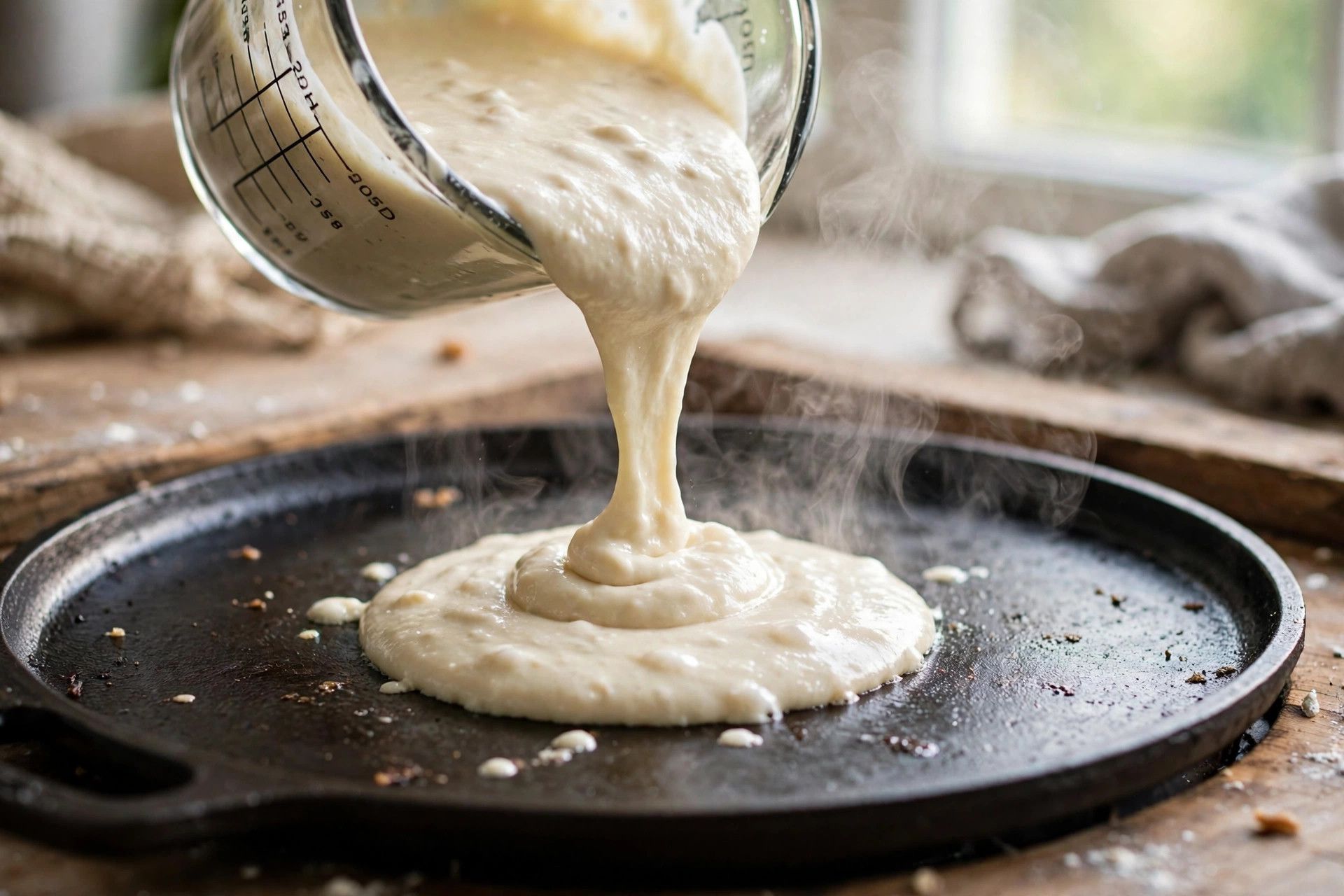
Pour 1/4 cup of batter per pancake onto the hot skillet, leaving space between them. The batter is thick, so nudge each scoop into a round with the back of the measuring cup if needed.
-
Flip until golden
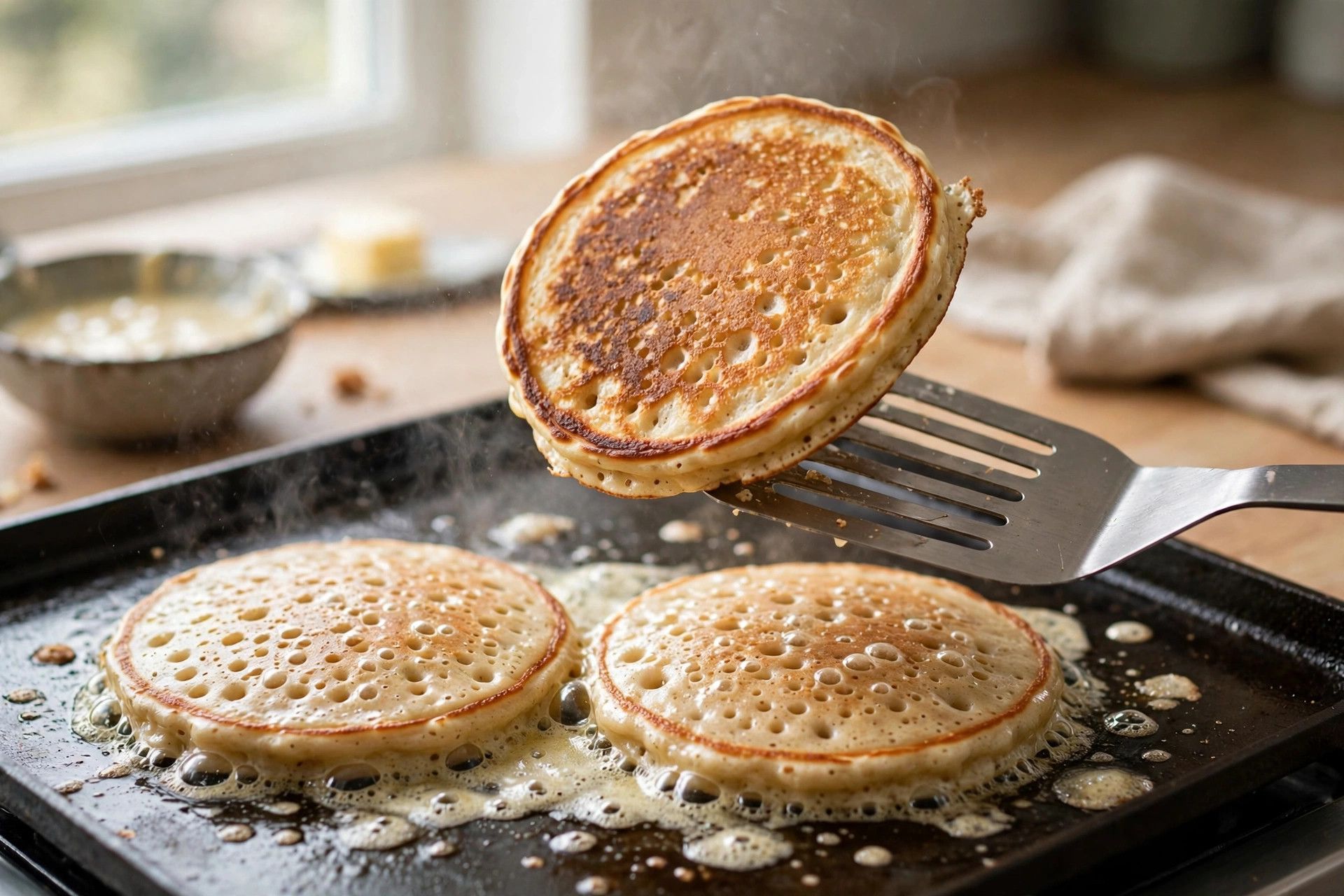
Cook for 2 to 3 minutes, until the edges look set and small bubbles appear on the surface. Slide a spatula underneath and flip in one confident motion. Cook the second side for 1 to 2 minutes, until golden and firm to a light touch.
-
Finish the batch
Move the finished pancakes to a plate and keep them warm under a clean towel. Regrease the skillet lightly and repeat with the rest of the batter, lowering the heat a notch if the second batch browns too fast.
-
Serve warm
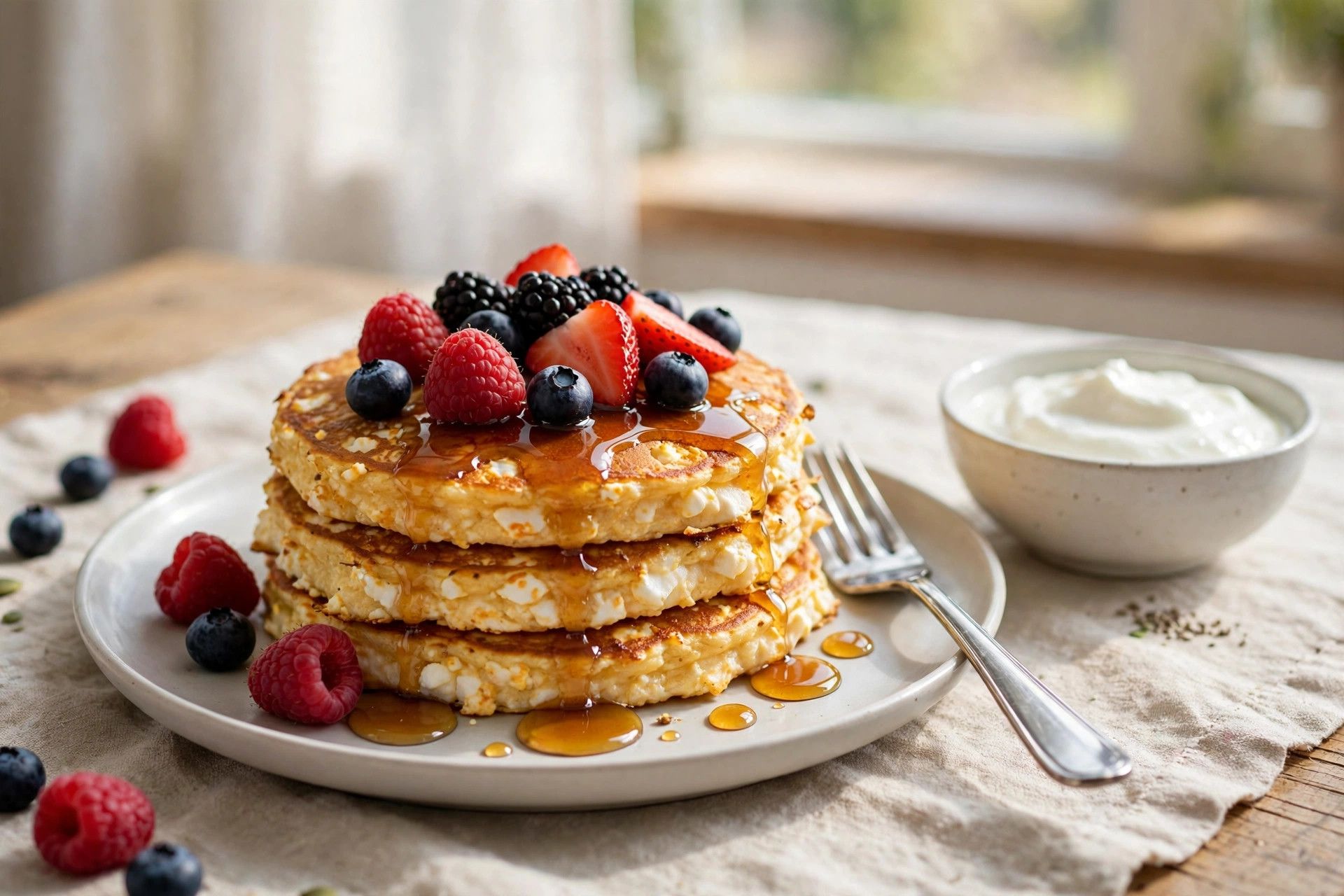
Stack the pancakes high and serve right away with fresh berries and a drizzle of maple syrup. A spoonful of Greek yogurt on top adds even more protein.
Notes
- Batter thickness: after the 5 minute rest the batter should pour slowly, in a thick ribbon. If it still pours thin, blend in 1 more tablespoon of oats and rest 2 more minutes.
- Do not press the pancakes down with the spatula while they cook. Pressing squeezes out the air and makes them dense instead of fluffy.
- Keep the heat at medium the whole time. Protein-rich batters brown fast, and a too-hot pan gives dark outsides with soft, raw centers.
Nutrition per serving
Nutrition information is being calculated.
Substitutions
- Rolled oats
- Use 3/4 cup (95 g) all-purpose flour instead. Blend the cottage cheese and eggs first, then stir the flour in by hand so the pancakes stay tender.
- Cottage cheese
- Use 1 1/2 cups (360 g) plain Greek yogurt. The pancakes come out tangier and a little more delicate, so flip them gently and give them the full 3 minutes on the first side.
- Cottage cheese (dairy-free)
- Use a dairy-free cottage cheese alternative, or the same amount of silken tofu blended until completely smooth. The pancakes stay fluffy, though the protein is lower and the flavor milder.
Storage and make-ahead
Cool leftovers completely, then refrigerate in an airtight container for up to 4 days. Reheat in a toaster, in a dry skillet over low heat, or in the microwave for 20 to 30 seconds. For meal prep, freeze the pancakes in a single layer first, then stack them in a freezer bag with parchment between the layers; they keep up to 2 months. Reheat from frozen in the toaster until warm through and crisp at the edges.
Frequently asked questions
Can I use flour instead of oats?
Yes. Swap the oats for 3/4 cup (95 g) all-purpose flour. Blend the cottage cheese, eggs and flavorings first, then stir the flour in by hand just until combined. The batter will be a little thinner, so keep the scoops at 1/4 cup and do not skip the short rest.
Why do my cottage cheese pancakes fall apart?
Almost always one of three things: the batter did not rest, so it was too thin; the heat was too high, so the outside browned before the center set; or the flip came too early. Wait until the edges look set and bubbles show on the surface, and flip once, gently but confidently.
Can I freeze these pancakes for meal prep?
Yes, they freeze very well. Cool them completely, freeze in a single layer, then stack in a freezer bag with parchment between the layers for up to 2 months. Reheat straight from frozen in the toaster until warm and lightly crisp.
Are these pancakes good for kids?
They are a great fit for kids. The cottage cheese blends in completely, so the flavor is mild and familiar, like a regular pancake, with no protein powder taste. Serve with fruit and maple syrup, and cut them into strips for little hands.
Can I make the batter without a blender?
Yes. Whisk the eggs, cottage cheese, maple syrup and vanilla in a bowl, then stir in oat flour (or finely ground oats), baking powder and salt. The curds stay a little more noticeable without a blender, so expect a more rustic texture, but the pancakes still cook up fluffy.