Blended Cottage Cheese Pasta Sauce
 By Emily Carter ·
Published
Quick answer
Blend 2 cups (450 g) cottage cheese with 1/4 cup milk until completely smooth. Simmer one 14 oz can of crushed tomatoes with garlic and Italian seasoning for 10 minutes, stir the cottage cheese in off the boil with 1/3 cup Parmesan, and toss with 12 oz cooked pasta.
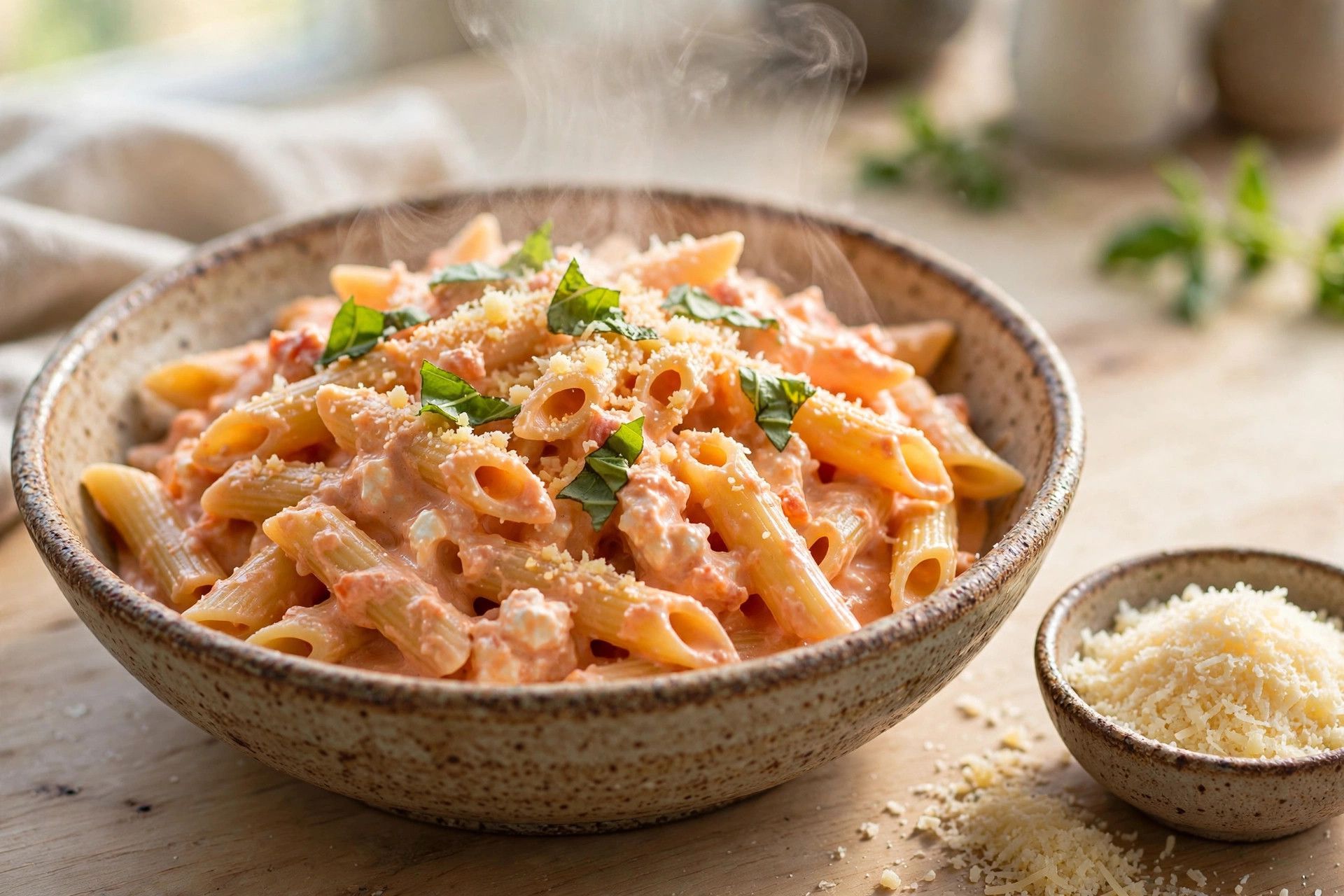
This blended cottage cheese pasta sauce is the weeknight trick that turns a plain tub of cottage cheese into a silky, creamy tomato sauce. The cheese is blended completely smooth before it ever meets the pan, so the finished sauce tastes like a rich pink cream sauce with garlic, Parmesan and basil, and nobody at the table will guess the base. Counting the pasta, each serving lands at about 15 grams of protein (an estimate), and the whole dish is on the table in about 30 minutes.
Why you’ll love it
- Tastes like a creamy pink tomato sauce, not cottage cheese. The curds disappear completely in the blender.
- About 15 g of protein per serving with the pasta (an estimate), and there is no heavy cream in the pot.
- Pantry ingredients and one can of tomatoes. On the table in about 30 minutes.
- Kid friendly and budget friendly, and it works with any short pasta you have in the cupboard.
Ingredient notes
Cottage cheese: full-fat blends the creamiest, but low-fat works well too and keeps the sauce a little lighter. Small curd or large curd does not matter, since it all gets blended smooth. Use plain cottage cheese only. Flavored or fruit varieties will wreck a savory sauce.
Crushed tomatoes: one 14 oz (400 g) can is the backbone of the sauce. Fire-roasted crushed tomatoes add a little smoky depth. If all you have is whole peeled tomatoes, crush them by hand or pulse them a few times in the blender before they go into the pan.
Parmesan: finely grated Parmesan from a wedge melts in smoothly. Pre-shredded cheese is coated to stop it clumping in the bag, and that coating can make a sauce grainy, so grate your own when you can.
Why the cottage cheese goes in off the boil
Cottage cheese is mostly curd protein, and curd protein tightens and separates when it hits a hard boil. That is the whole reason cottage cheese sauces get a bad name: the cheese goes into a bubbling pot, the sauce splits, and it looks grainy before it ever reaches the pasta.
Blending first handles the texture, and gentle heat handles the rest. Stirred into hot sauce that has just stopped boiling, the smooth blend warms through and stays glossy, more like a cream sauce than a cheese sauce. The starchy pasta water finishes the job: its starch helps the sauce emulsify and cling to every ridge of the pasta instead of sliding off.
Variations
- Baked penne: toss the finished sauce with cooked penne, spread it in a baking dish, top with 1 cup shredded mozzarella and bake at 400 degrees F (200 degrees C) for 15 minutes, until bubbling at the edges.
- Veggie loaded: stir 2 big handfuls of baby spinach into the hot sauce until just wilted, or fold in sauteed zucchini, mushrooms or roasted red peppers along with the pasta.
- Sausage night: brown 12 oz Italian sausage in the pan first and lift it out, then build the sauce in the drippings and stir the sausage back in at the end. This version is not vegetarian, and it is the one meat lovers ask for.
What we learned testing it
- Boiling the sauce after adding the cottage cheese split it every time, leaving a grainy, watery pan. Stirring it in off the boil kept the sauce glossy and smooth.
- A quick 20 second blend left visible curds in the finished sauce. Blending the full 90 seconds gave a texture that matched a classic cream sauce.
- Tossing the pasta in the pan with splashes of its cooking water emulsified the sauce, so it coated the pasta evenly instead of sliding to the bottom of the bowl.
Read how we test recipes.
Blended Cottage Cheese Pasta Sauce
Makes About 3 cups of sauce, for 12 oz pasta · 30 min total · Easy
Ingredients
Equipment
Blender · Large skillet or saucepan · Large pot
Instructions
-
Blend the cottage cheese
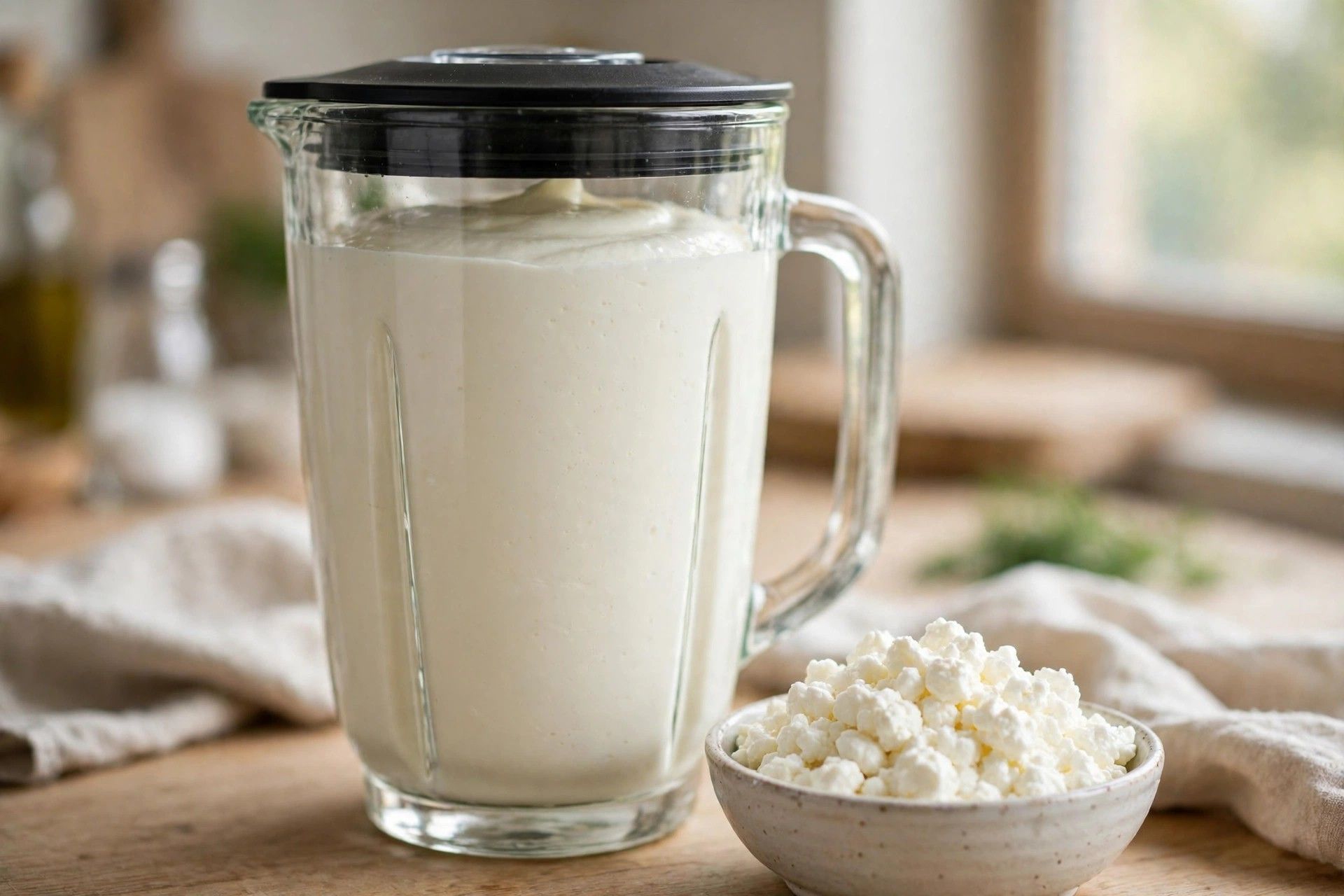
Add the cottage cheese and milk to a blender. Blend on high for 60 to 90 seconds, stopping once to scrape down the sides, until the mixture is completely smooth and pourable, like heavy cream. Any curd left now will show up in the sauce later, so keep blending until no lumps remain.
-
Cook the pasta
Bring a large pot of well salted water to a boil. Cook the pasta until just shy of al dente, about 1 minute less than the package directions. Before draining, scoop out at least 1 cup of the hot pasta water and set it aside. You will use it to loosen the sauce and help it cling.
-
Bloom the garlic
Meanwhile, warm the olive oil in a large skillet or saucepan over medium heat. Add the garlic and cook for about 30 seconds, stirring constantly, until it smells fragrant. Do not let it brown, or it will taste bitter.
-
Simmer the tomato sauce
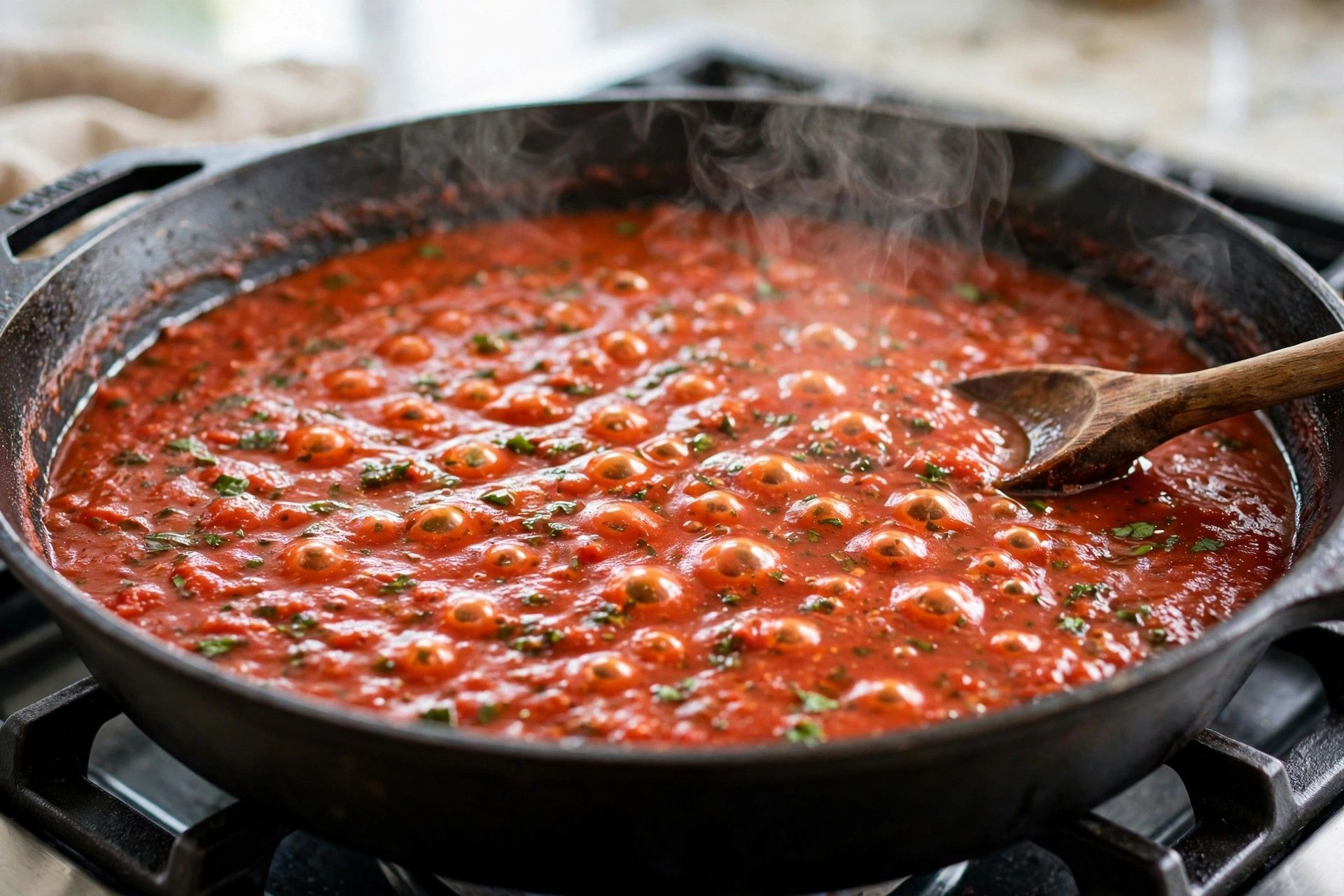
Pour in the crushed tomatoes and add the Italian seasoning, salt, black pepper and red pepper flakes, if using. Stir well and let the sauce simmer gently for 10 minutes, stirring now and then, until it thickens slightly and the sharp raw tomato smell cooks off.
-
Stir in the cottage cheese
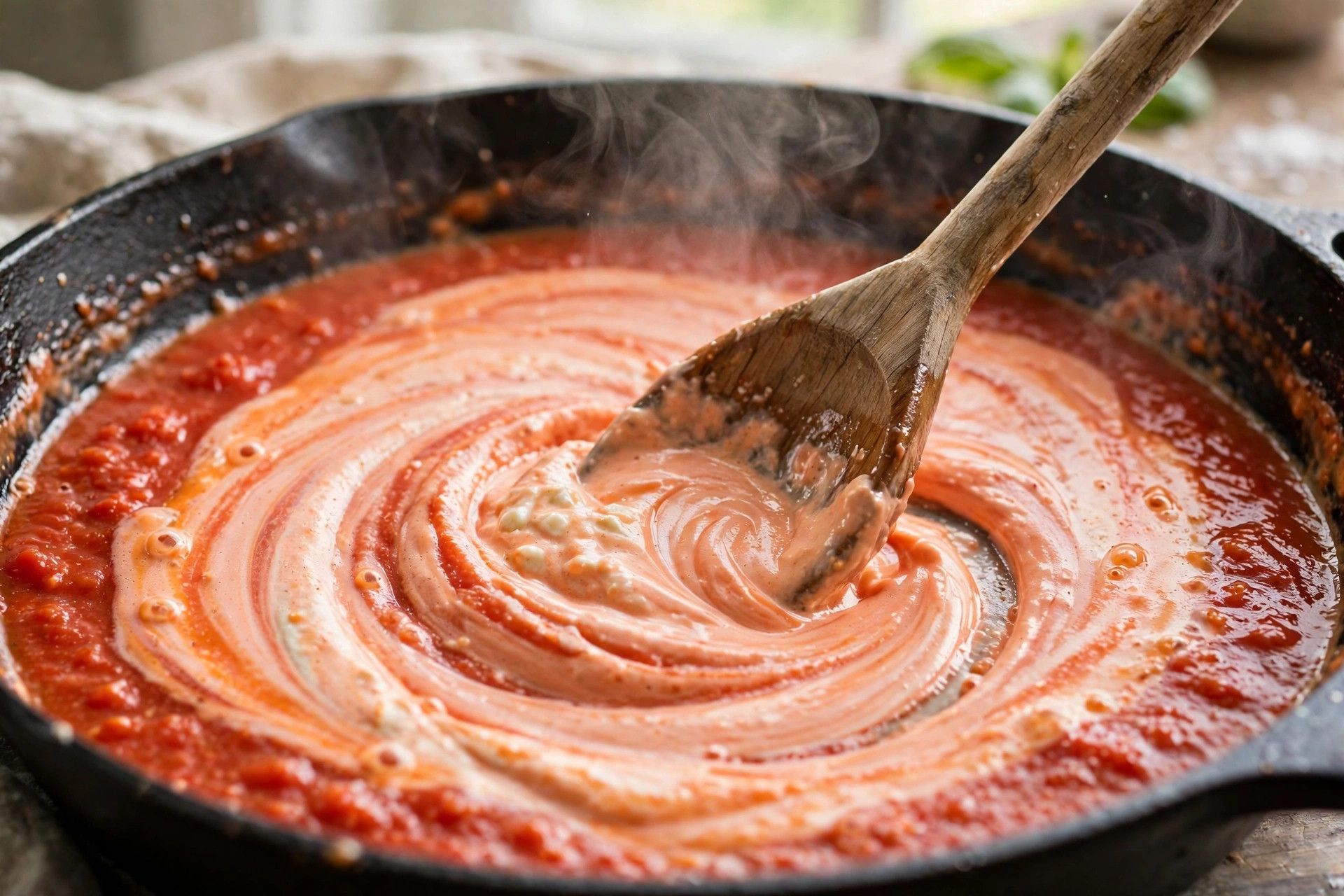
Take the pan off the heat, or turn the heat down to the lowest setting. The sauce has to stop boiling before the cheese goes in. Stir the blended cottage cheese in slowly until the sauce turns a creamy pink orange and looks glossy and smooth, 1 to 2 minutes. Warm it through gently and never let it come back to a boil.
-
Add Parmesan and basil
Stir in the Parmesan until it melts into the sauce, then fold in the torn basil. Taste and adjust the salt and pepper. If the sauce looks thick, stir in a splash of the reserved pasta water.
-
Toss with the pasta
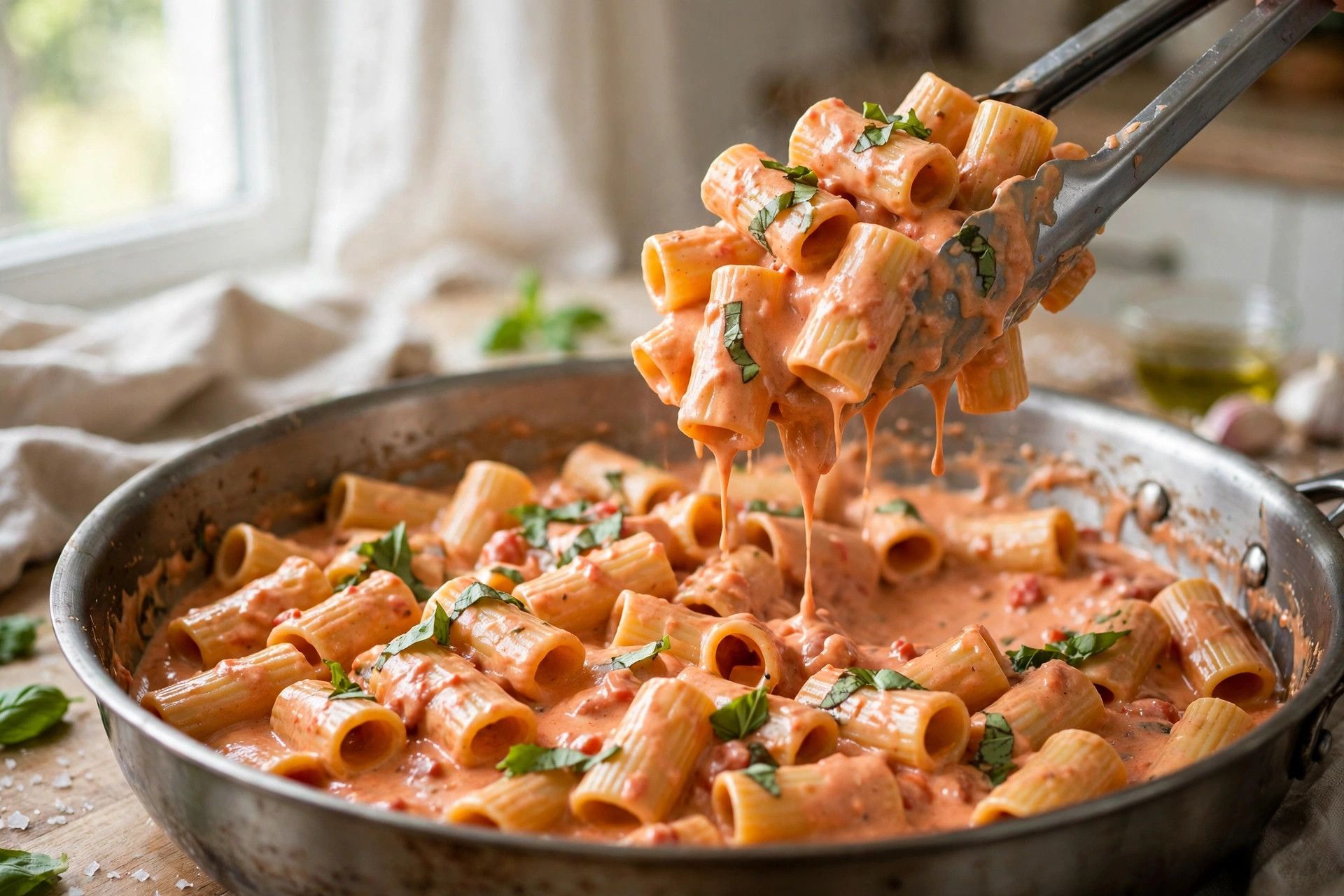
Add the drained pasta straight into the pan. Toss over low heat for 1 to 2 minutes, adding splashes of pasta water a little at a time, until every piece is coated and the sauce clings with a glossy shine.
-
Serve right away
Divide among warm bowls and finish with extra Parmesan and basil. Serve immediately, while the sauce is silky. It firms up as it sits, so plan on a splash of water when you reheat leftovers.
Notes
- Off the boil rule: the cottage cheese goes in only after the sauce stops boiling. Boiling heat splits it and turns the sauce grainy, so warm it through on the lowest heat or off the burner completely.
- Smooth blend rule: blend the full 60 to 90 seconds, until the cottage cheese looks like heavy cream. A half blended base leaves curds in the finished sauce, and no amount of stirring fixes them later.
- Save the pasta water: scoop out a cup before you drain the pasta. A few splashes at the end loosen the sauce and help it coat every piece instead of pooling in the bowl.
Nutrition per serving
Nutrition information is being calculated.
Substitutions
- Cottage cheese
- Use the same amount of ricotta, blended the same way with the milk. The sauce will taste a little sweeter and less tangy, and the texture stays silky.
- Red pepper flakes
- For a spicy arrabbiata style sauce, raise the flakes to 1/2 teaspoon and add them with the garlic so they bloom in the olive oil before the tomatoes go in.
- Cottage cheese (dairy-free note)
- There is no clean dairy-free swap for the cottage cheese itself, since it is the base of the sauce. For a similar creamy tomato sauce without dairy, blend soaked cashews with water into a cream and stir that in instead, and skip the Parmesan.
Storage and make-ahead
Refrigerate leftover sauce, with or without the pasta, in an airtight container for up to 4 days. Reheat gently over low heat with a splash of water or milk, stirring often, and do not let it boil or the sauce can split. The sauce on its own freezes well for up to 2 months. Thaw it overnight in the fridge and warm it slowly.
Frequently asked questions
Does this sauce taste like cottage cheese?
No. The cottage cheese is blended until the curds are gone, and once it is stirred into the tomato sauce with garlic, Parmesan and basil, it reads as a mild, creamy pink sauce. Most people, kids included, never guess what is in it.
Why did my sauce split or turn grainy?
It boiled after the cottage cheese went in. Take the pan off the heat, whisk in a splash of warm milk or pasta water, and the sauce usually comes back together. Next time, let the tomato sauce stop boiling before you stir the cheese in.
Can I make it without a blender?
A food processor works well, it just needs an extra minute to get fully smooth, and an immersion blender in a deep jug also works. As a last resort, push the cottage cheese through a fine mesh sieve with the back of a spoon. The sauce will be a little less silky, but still good.
Can I freeze this pasta sauce?
Yes, the sauce on its own freezes well for up to 2 months in an airtight container. Thaw it overnight in the fridge, then warm it slowly over low heat, stirring and whisking as it heats so it stays smooth. Freeze the pasta separately or cook it fresh.
What pasta shapes work best?
Short shapes with ridges or tubes, like penne, rigatoni, fusilli and shells, hold the most sauce in every bite. Long strands like spaghetti work too, just toss them well with a splash of pasta water so the sauce coats evenly.