Cottage Cheese Pizza Crust
 By Emily Carter ·
Published
Quick answer
Blend 1 1/2 cups of cottage cheese with 2 eggs until completely smooth, stir in 1 cup of flour, baking powder, salt and Italian seasoning, spread it into a round on a lined baking sheet, pre-bake for 15 minutes, then top and bake for 10 minutes more. The crust comes out golden at the edges, firm enough to hold, and ready to slice after a 5 minute rest.
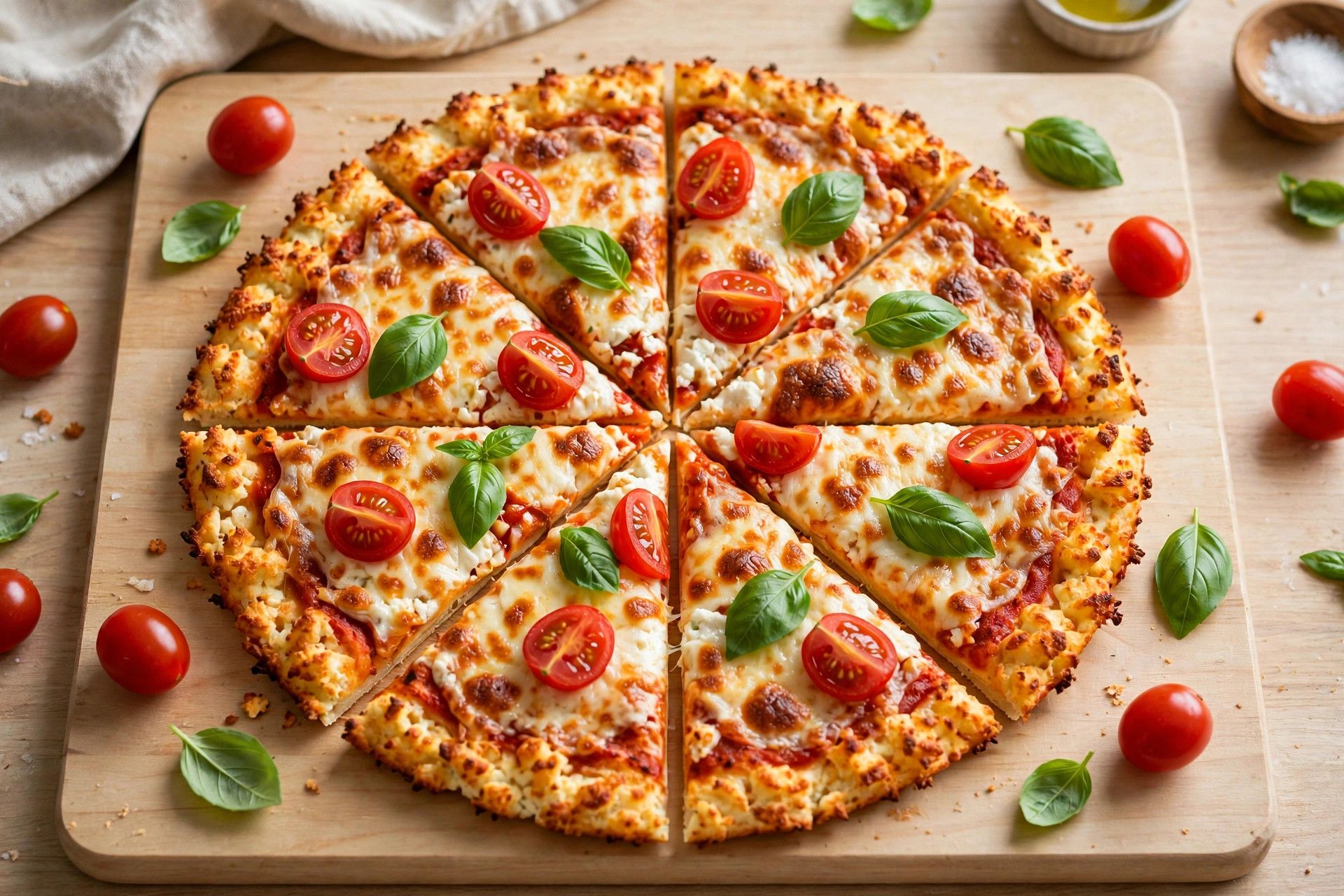
This cottage cheese pizza crust is the weeknight answer to pizza night without a yeast dough, a long rise or a delivery wait. It is just cottage cheese and eggs blended completely smooth, stirred with flour and seasoning, spread on a lined sheet and pre-baked until golden. Top it, bake it again, and it slices like a real pizza, with a crisp rim and a centre that holds its toppings.
Why you’ll love it
- No yeast, no kneading and no rising time: the dough is mixed in one bowl in minutes.
- A crisp golden rim and a firm centre that holds a slice without flopping.
- Built from cottage cheese and eggs, so the base itself brings protein to the pizza.
- Endlessly flexible: margherita, veggie or whatever toppings are already in the fridge.
Ingredient notes
Cottage cheese: the base, the body and the moisture of the crust, all in one tub. Full-fat makes the richest crust; low-fat works well too once it is drained. Drain off any watery liquid before blending, since that liquid is the main cause of a soft centre.
Eggs: two large eggs bind the dough and help the crust set in the oven. Without them the base stays crumbly, so do not skip them or swap them out in this recipe.
Flour and baking powder: one cup of flour gives the crust its structure, and the baking powder gives a little lift so it bakes up soft inside rather than flat and dense. Whole wheat flour works for a sturdier, nuttier version.
The pre-bake that keeps it crisp
Every cottage cheese crust lives or dies on the pre-bake, and this recipe is the clearest example. A bare crust baked for 15 minutes sets, dries on top and turns golden at the edges, so it can carry sauce and cheese without going soft. The same dough topped from the start stayed damp in the centre even after extra time in the oven. Spread the dough to one even thickness, give it the full pre-bake, and only then add the toppings. The second bake is just for melting the cheese and finishing the rim.
Variations
- Classic margherita: tomato sauce, mozzarella and fresh basil, added after the bake so the basil stays bright. The simplest topping set, and the best test of a new crust.
- Garden veggie: mushrooms, peppers and red onion, cooked briefly in a dry pan first so they do not wet the pizza, plus mozzarella and a scatter of olives.
- Garlic bread pizza: skip the tomato sauce, brush the pre-baked crust with garlic butter, add mozzarella and a pinch of Italian seasoning, and bake until bubbling. Cut into strips for dipping.
What we learned testing it
- Thickness decided everything. Spread thin, the crust crisped beautifully but tore when sliced. At about 30 cm across with a slightly thicker rim, it held a slice and still crisped at the edges.
- Full-fat cottage cheese made the richest crust, but low-fat worked well too once it was drained. The difference in the finished pizza was small, and both beat an unblended base by a wide margin.
- Skipping the pre-bake was the one clear failure. The same dough, topped from the start, came out soft and damp in the centre even after extra time in the oven.
Read how we test recipes.
Cottage Cheese Pizza Crust
Makes 1 large pizza, 4 slices · 40 min total · Easy
Ingredients
Equipment
Blender or food processor · Baking sheet · Parchment paper · Spatula
Instructions
-
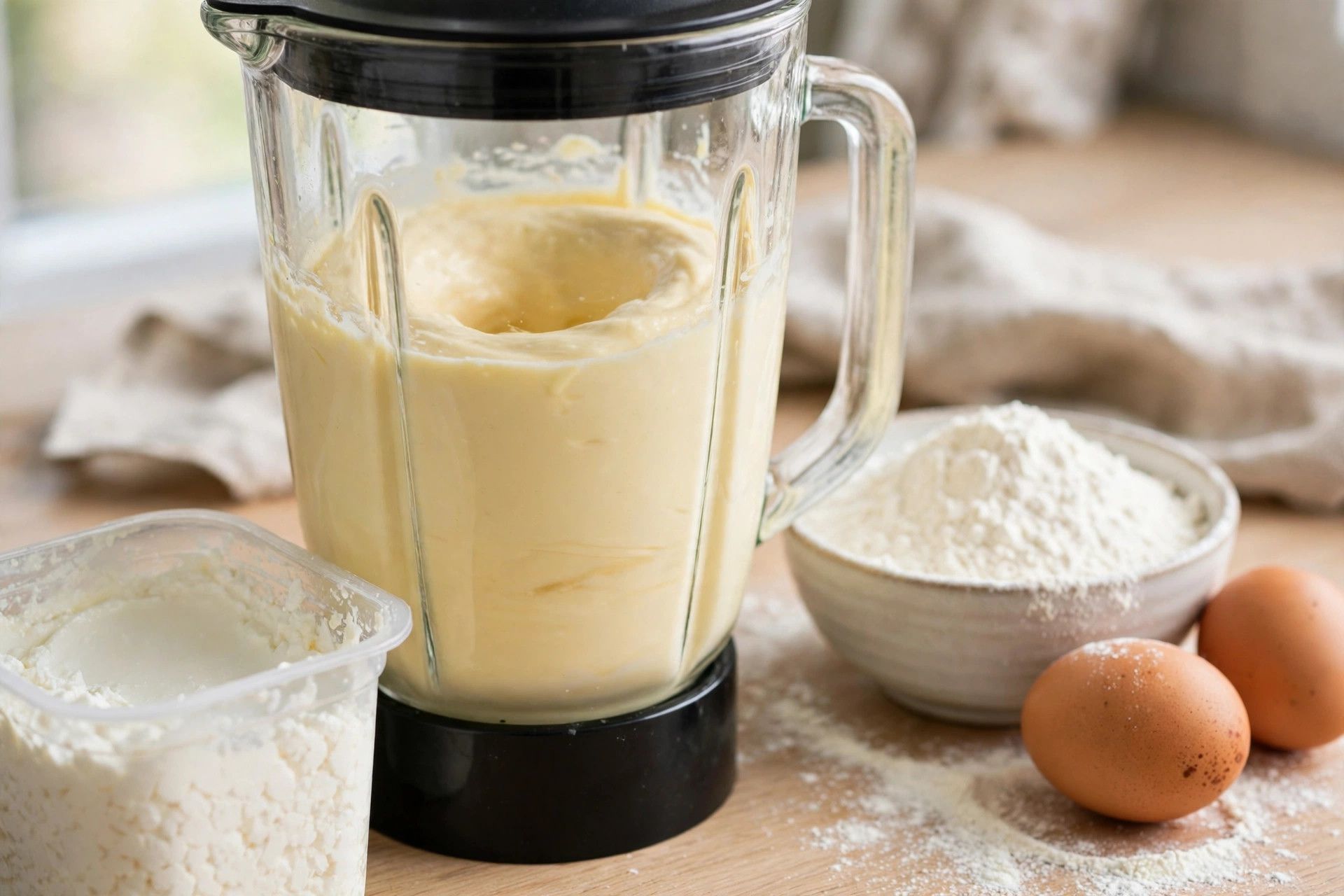
Blend until completely smooth
Add the drained cottage cheese and the eggs to a blender or food processor and blend for 60 to 90 seconds, stopping once to scrape down the sides, until the mixture is completely smooth with no curds left. This step is the whole trick: an under-blended base bakes up lumpy, while a fully blended one gives a smooth, even crust.
-
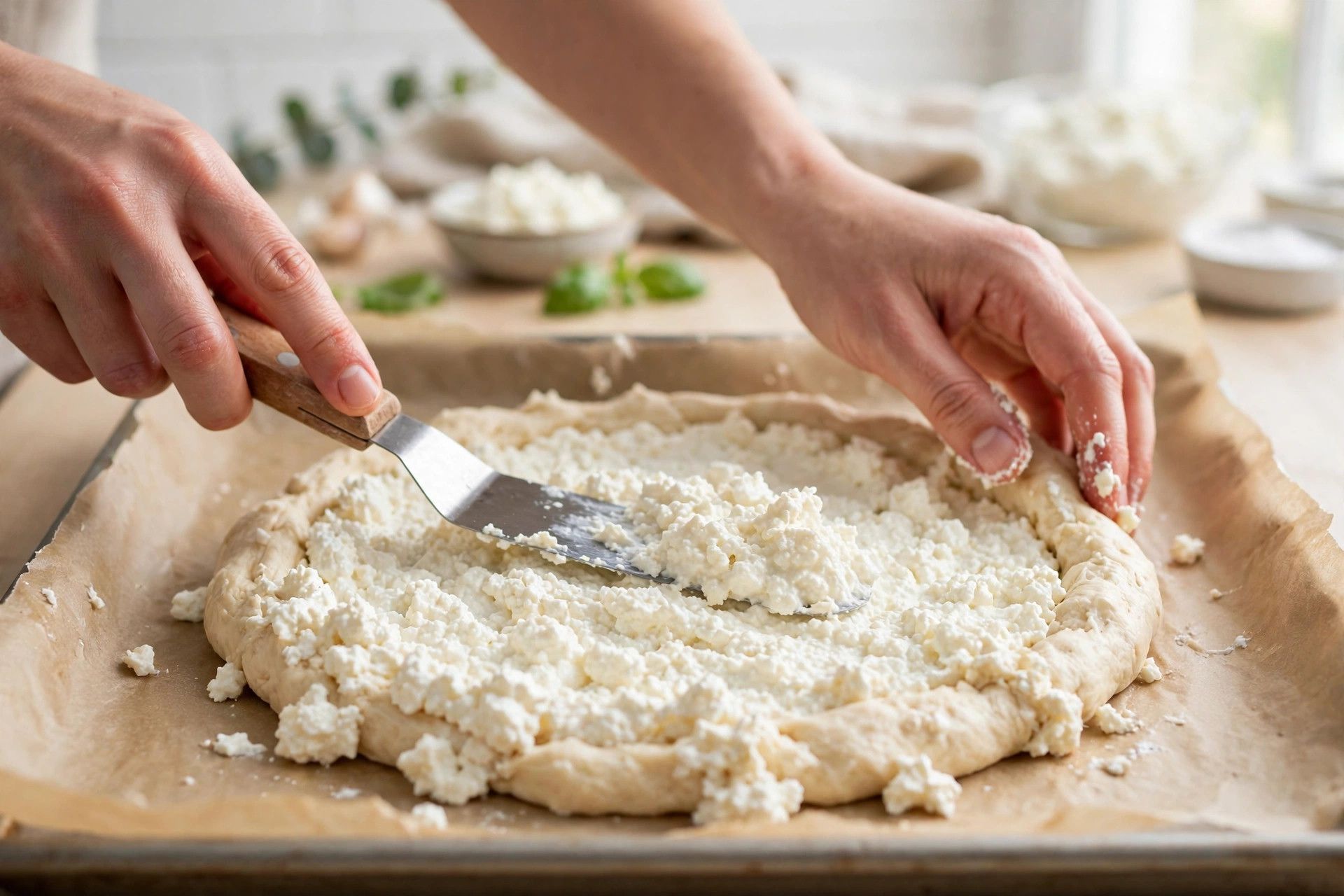
Stir in the flour and spread the crust
Scrape the blended mixture into a bowl. Stir in the flour, baking powder, salt, Italian seasoning and garlic powder until a thick, spoonable dough forms. Line a baking sheet with parchment paper, spoon the dough into the centre, and spread it with a spatula into a round about 30 cm across, with the edge slightly thicker than the middle.
-
Pre-bake until set and golden
Bake the bare crust in a preheated oven at 220 C (425 F) for 15 minutes, until it is set, dry on top and golden at the edges. Do not skip this step. A crust that goes into the oven already topped stays soft in the middle, while a pre-baked crust holds its shape under the sauce and cheese.
-
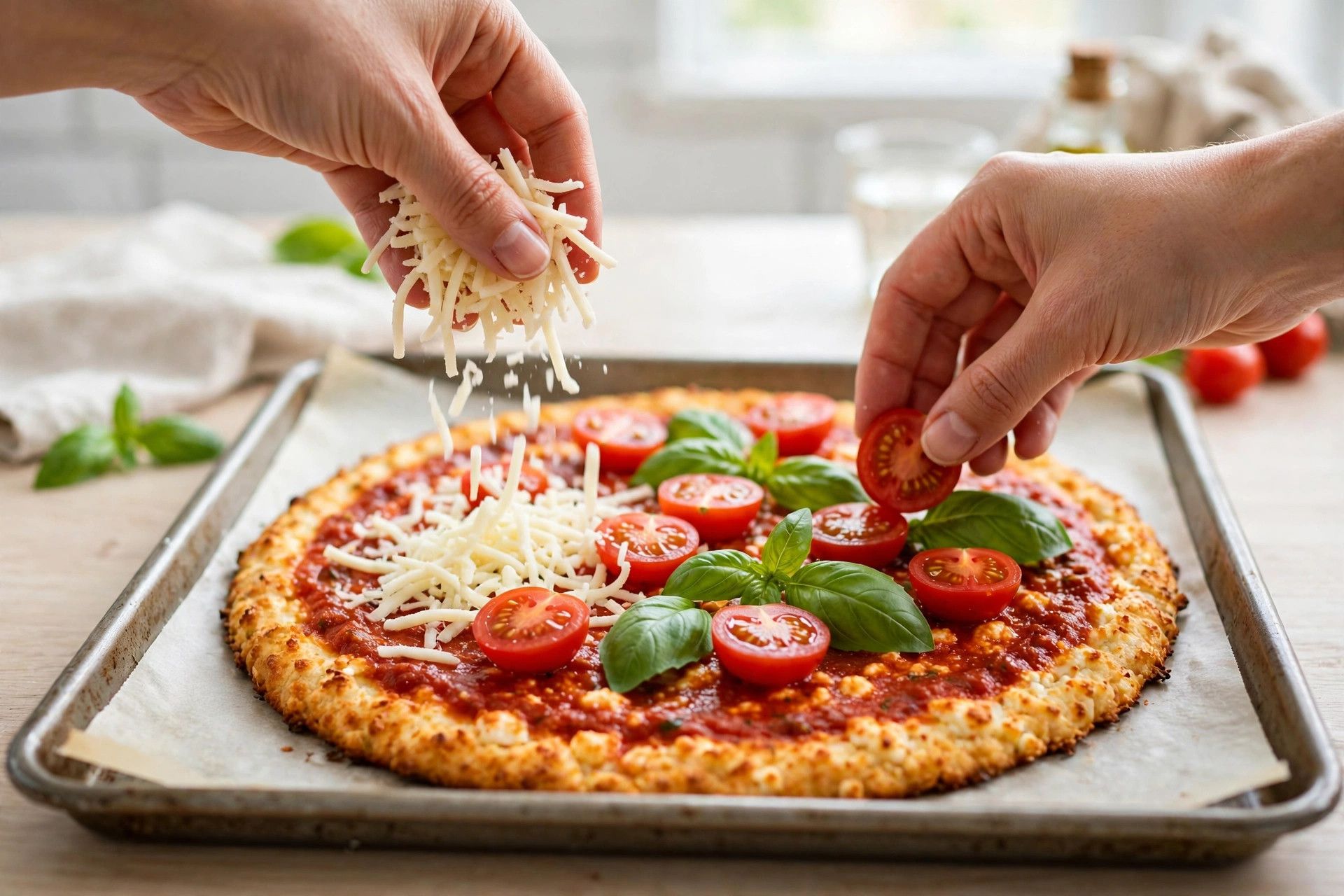
Top and bake again
Spread the tomato sauce over the pre-baked crust, leaving a small bare rim. Scatter over the mozzarella and the cherry tomato halves. Return the pizza to the oven for 8 to 10 minutes, until the cheese is melted and bubbling and the rim is deep golden.
-
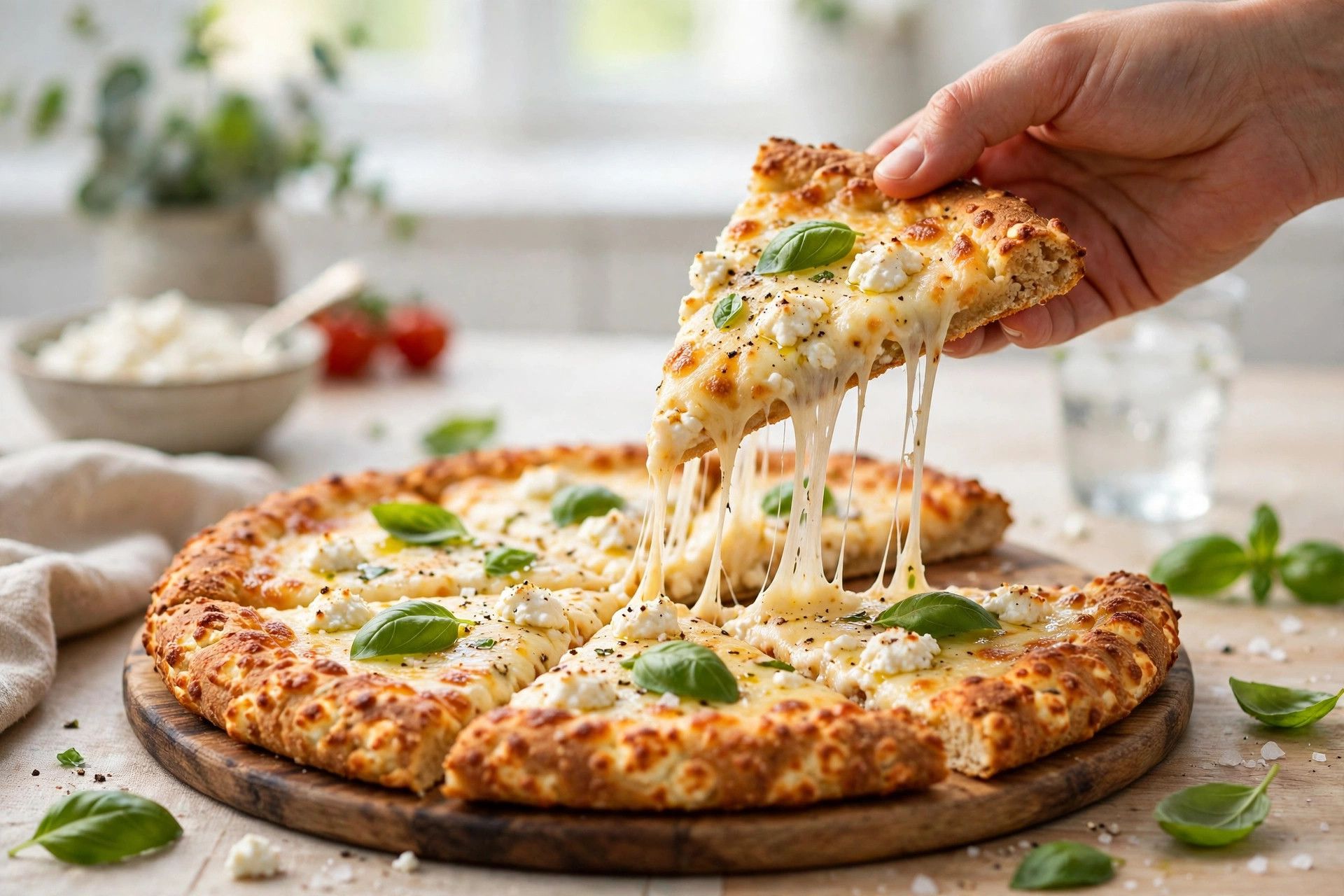
Rest, slice and serve
Rest the pizza for 5 minutes so the crust firms up and slices cleanly. Scatter over the fresh basil leaves, cut into 4 slices, and serve while the cheese is still soft. Lift a slice from the parchment and it should hold without flopping.
Notes
- Drain the cottage cheese first. Tip the tub into a fine sieve for a few minutes, or spoon off any liquid sitting on top. Extra liquid is the main cause of a soft crust.
- Parchment paper is not optional here. The dough is soft when it goes in, and it sticks firmly to a bare or lightly greased sheet.
- Keep the round even. A thin patch in the middle will overcook while a thick patch stays soft, so take a moment to smooth the dough to one even thickness.
- Ovens vary. If your oven runs hot, check the crust at 12 minutes on the pre-bake; if it runs cool, give it the full 15 minutes plus a couple more.
Nutrition per serving
Nutrition information is being calculated.
Substitutions
- All-purpose flour
- Use the same amount of whole wheat flour for a nuttier, sturdier crust, or a 1 to 1 gluten-free flour blend. The gluten-free version bakes a little softer, so give it the full pre-bake and a few extra minutes if needed.
- Mozzarella
- Use provolone, a pizza cheese blend, or a dairy-free mozzarella that melts well, at the same amount. Avoid fresh mozzarella here, since its moisture softens the crust.
- Toppings
- Keep toppings light so the crust stays crisp. Try mushrooms and peppers, olives and red onion, or a simple margherita with basil only. Cook watery vegetables briefly first so they do not wet the pizza.
Storage and make-ahead
Keep leftover slices in an airtight container in the fridge for up to 3 days. Reheat in a hot oven or air fryer for a few minutes until the cheese melts again and the base crisps; the microwave softens it. The bare pre-baked crust also freezes well for up to 1 month: cool it, wrap it tightly, and top it straight from frozen, adding a few extra minutes to the final bake.
Frequently asked questions
Does cottage cheese pizza crust taste like cottage cheese?
No, not once it is blended smooth and baked. The curds disappear in the blender, and the baked crust tastes like a soft, savoury bread base with a mild tang, much like a regular pizza crust. The Italian seasoning and garlic do the rest.
Can I make this crust gluten-free?
Yes. Swap the all-purpose flour for the same amount of a 1 to 1 gluten-free flour blend. The crust bakes a little softer than the wheat version, so keep the full pre-bake and check that the centre is set before you add the toppings.
Why is my crust soggy in the middle?
Usually one of three things: the cottage cheese was not drained, the crust was spread too thick in the middle, or the pre-bake was skipped. Drain well, spread to one even thickness, and always pre-bake the bare crust until it is set and golden before topping.
Can I make the crust ahead?
Yes, and it is a good weeknight shortcut. Pre-bake the crust, cool it completely, and keep it in the fridge for up to 2 days or freeze it for up to 1 month. Top it cold or straight from frozen and bake until the cheese bubbles.
What toppings work best on this crust?
Light, fairly dry toppings. Tomato sauce, mozzarella, cherry tomatoes and basil are the classic set. Mushrooms, peppers, olives and red onion all work, as long as watery vegetables are cooked briefly first. Heavy, wet toppings will soften even a well baked crust.