Cottage Cheese Mac and Cheese Sauce
 By Emily Carter ·
Published
Quick answer
Blend 1 1/2 cups cottage cheese with 1/2 cup milk until completely smooth, warm it in a saucepan on low heat, stir in shredded sharp cheddar, mustard, paprika and salt until glossy, then fold through 8 oz hot cooked macaroni with a splash of pasta water. The sauce carries roughly 16 g of protein per serving from label values, before the pasta.
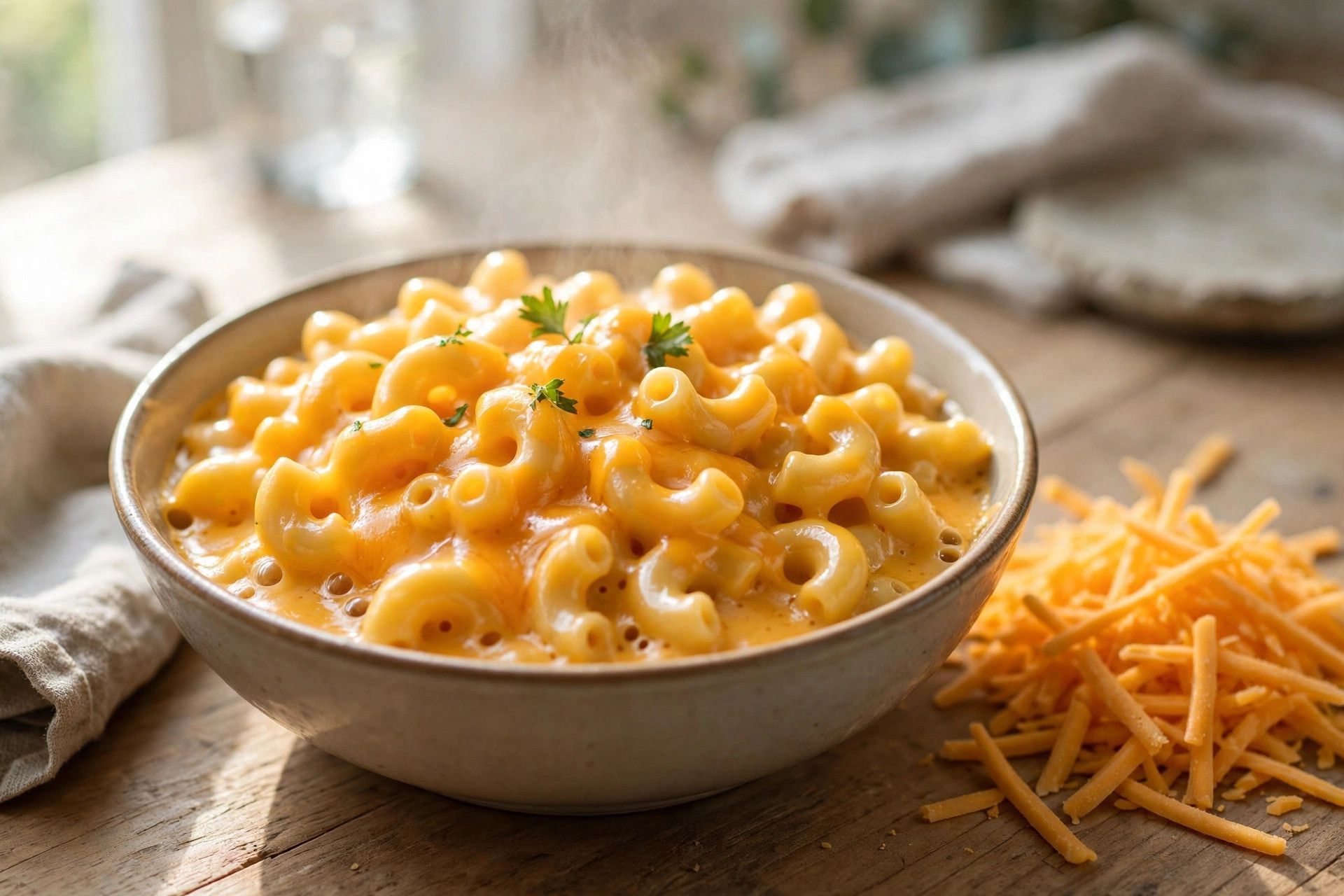
Cottage Cheese Mac and Cheese Sauce is proper cheddar flavor with a blended cottage cheese backbone. It is just cottage cheese and milk, blended silky, warmed on low heat and melted with sharp cheddar, mustard, paprika and salt, then folded through hot macaroni. Weeknight mac that carries its own protein, and no one at the table will guess the secret ingredient.
Why you’ll love it
- Tastes like real cheddar mac and cheese, not like a health swap.
- About 16 g of protein per serving of sauce from label values, before the pasta.
- Ten minutes total, one blender and one saucepan, no roux and no fuss.
- Melts glossy and smooth, with no grainy split sauce if you keep the heat low.
- Kids love it, and it reheats well for lunch the next day.
Ingredient notes
Cottage cheese: the backbone and the protein. Blended for a full 60 seconds with milk, it turns completely silky, like heavy cream, and disappears into the sauce. Full-fat gives the richest result, but low-fat works too. The key is the blend time, not the fat level.
Sharp cheddar: the flavor. One cup of shredded sharp cheddar, about 4 oz, gives proper cheddar taste without overwhelming the sauce. Shred it yourself if you can, since pre-shredded cheese is coated in anti-caking starch and melts slightly gritty.
Milk: half a cup, whole or 2%, to thin the cottage cheese into a pourable base. Whole milk gives a richer sauce, while 2% needs a slightly longer stir to thicken to the same glossy coat.
Mustard and paprika: the small ingredients that make it taste like mac and cheese instead of melted cheese. One teaspoon of mustard adds tang and depth, and half a teaspoon of paprika adds warmth and color. Neither one should be skipped.
Pasta water: the finishing ingredient. A splash of hot pasta cooking water at the folding stage emulsifies the sauce so it coats every piece instead of pooling in the bowl.
The low heat rule that makes or breaks it
One rule decides this sauce: keep the heat low and never let it boil. Cheese sauces split from boiling, not from time. A pan kept on low heat with patient stirring stays glossy and smooth for as long as you need it, while a pan brought to a boil turns grainy and watery within a minute. The same rule applies to reheating: warm leftovers gently with a splash of water or milk, stirring often, and never let them boil. Low and glossy wins, every single time.
Variations
- Bacon mac: fold in a handful of crumbled cooked bacon at the serving stage for a smoky, salty crunch against the creamy sauce.
- Broccoli mac: fold in a cup of small steamed broccoli florets with the pasta for a one-pan dinner with a vegetable built in.
- Spicy mac: add 1/4 teaspoon of cayenne or a spoonful of diced pickled jalapenos with the cheddar for a gentle heat that suits the rich sauce.
- Baked mac: transfer the folded mac to a baking dish, top with extra cheddar and breadcrumbs, and bake at 400°F for 10 minutes until golden and bubbling.
What we learned testing it
- Shredded by hand beat pre-shredded clearly. The hand shredded cheddar melted glossy and smooth, while the pre-shredded cheese stayed slightly gritty from its anti-caking coating.
- Boiling split the sauce every time. A pan kept on low heat stayed glossy, while a pan brought to a boil turned grainy and watery within a minute.
- Pasta water was the finishing difference. A splash at the folding stage emulsified the sauce so it coated the macaroni evenly instead of sliding to the bottom of the bowl.
Read how we test recipes.
Cottage Cheese Mac and Cheese Sauce
Makes About 2 1/2 cups sauce, for 8 oz pasta · 10 min total · Easy
Ingredients
Equipment
Blender · Medium saucepan · Wooden spoon
Instructions
-
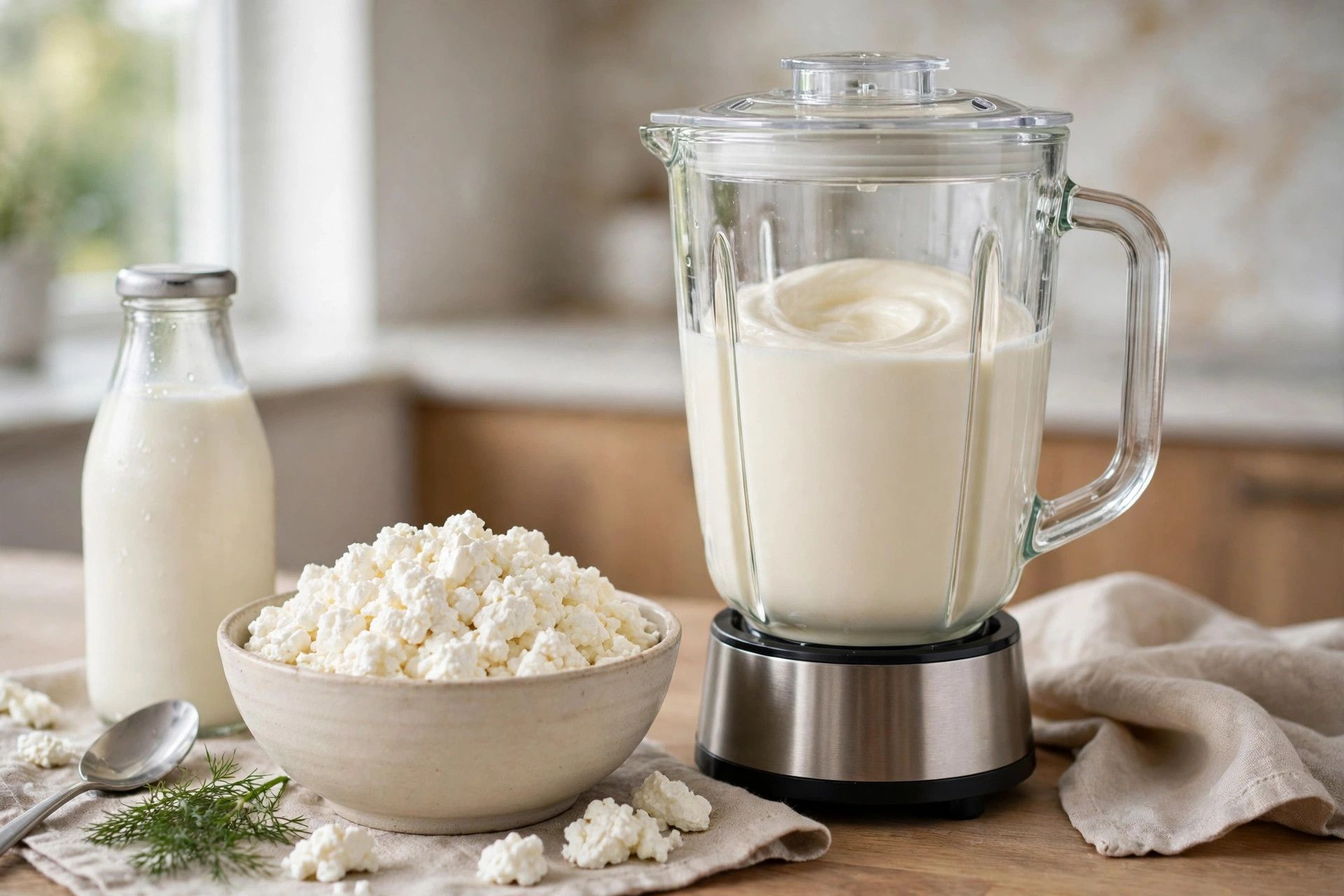
Blend the cottage cheese and milk until silky
Add the cottage cheese and milk to a blender. Blend on high for 60 seconds until completely smooth, with no curds left. The base should look like heavy cream. Any curd left now will show up in the sauce later, so keep blending until no lumps remain.
-
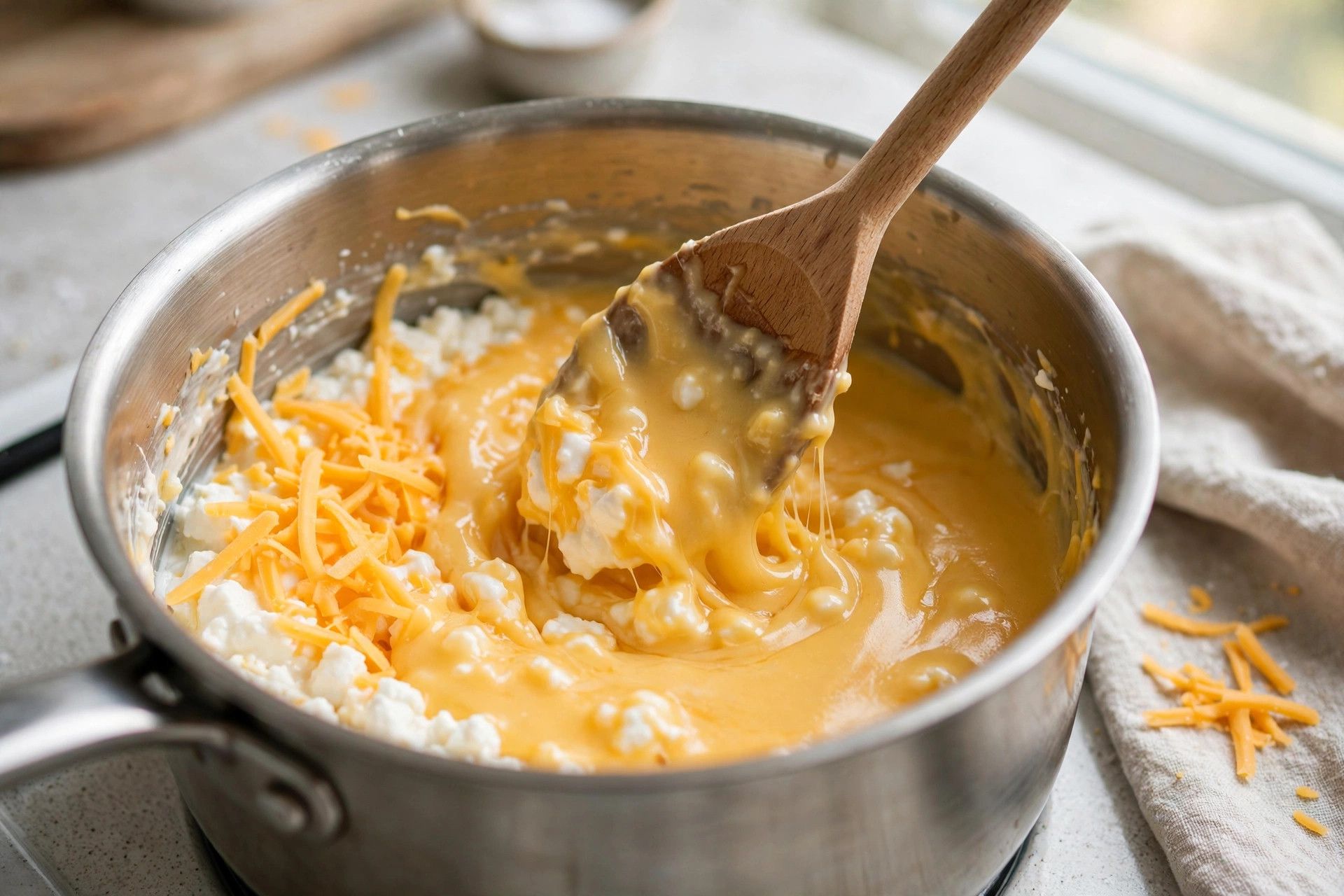
Melt the cheddar into a glossy sauce
Pour the blended base into a saucepan on low heat. Stir in the shredded cheddar, mustard, paprika and salt. Stir gently for 3 to 5 minutes until the cheddar melts into a glossy sauce. Do not boil. Boiling heat splits the cheese and turns the sauce grainy.
-
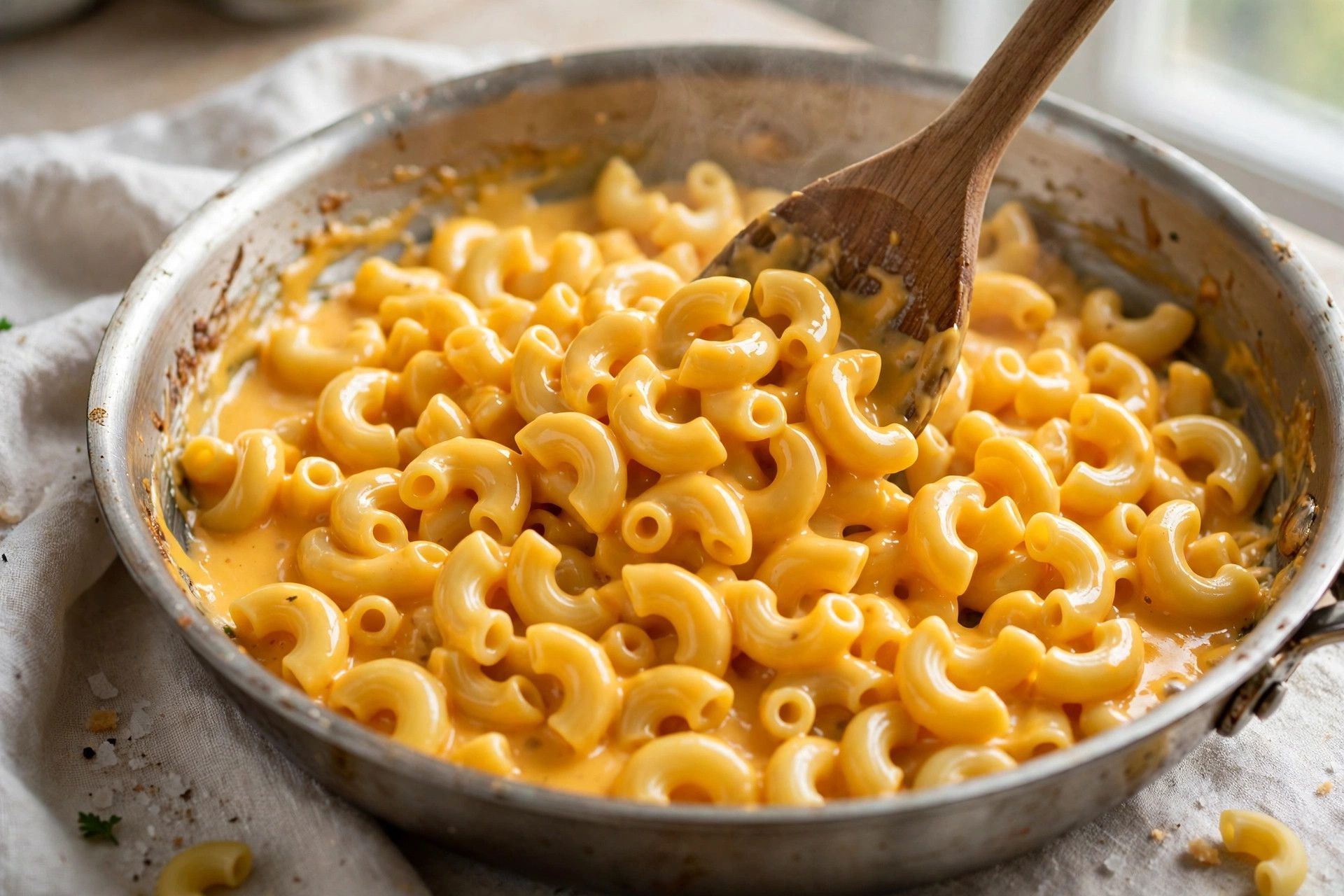
Fold through the hot macaroni
Add the hot cooked macaroni straight into the pan. Fold through with a splash of hot pasta water, a little at a time, until every piece is coated and the sauce clings with a glossy shine. The pasta water loosens the sauce and helps it coat instead of pooling in the bowl.
-
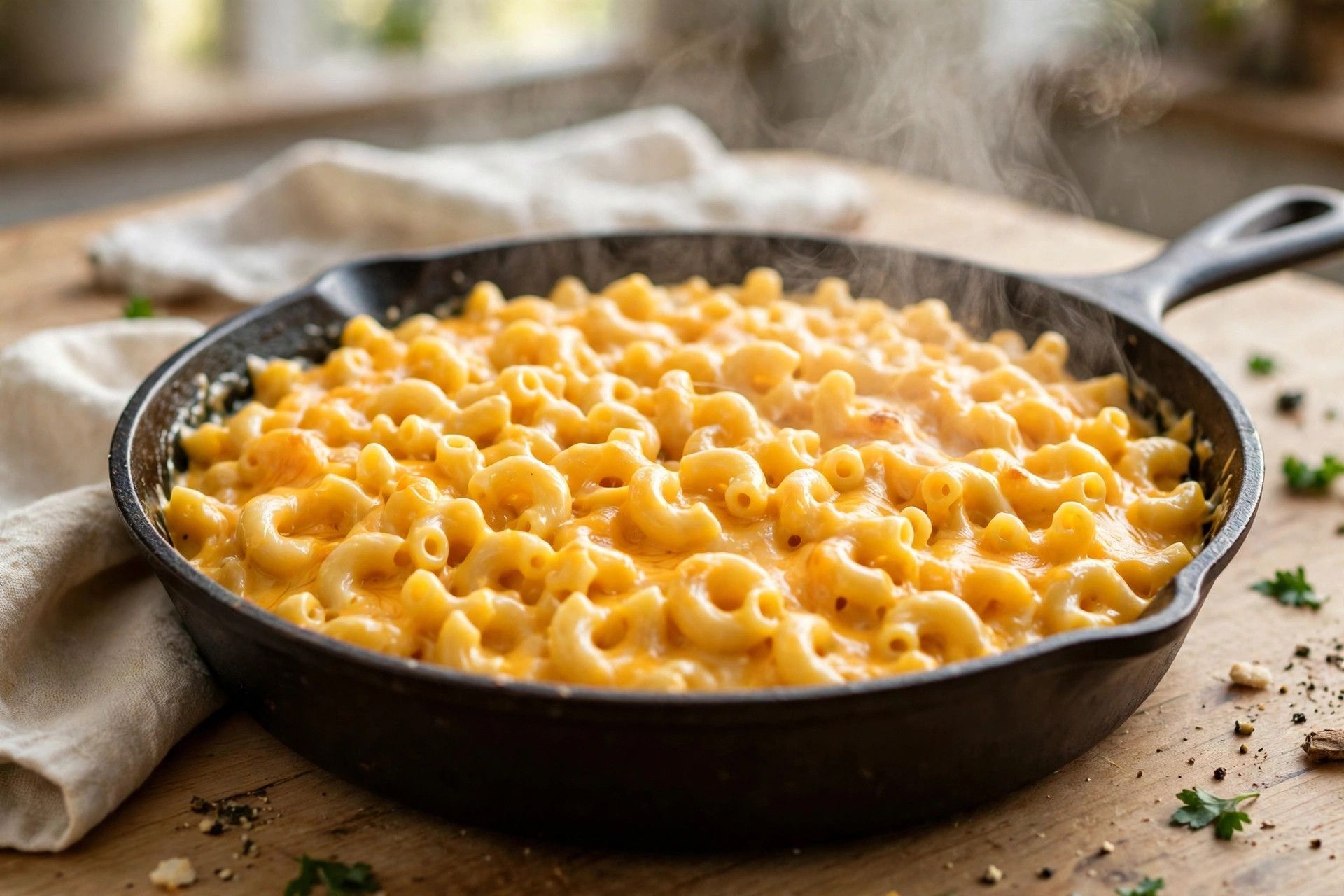
Serve straight away
Divide among warm bowls and serve immediately, while the sauce is silky. It firms up as it sits, so plan on a splash of water or milk when you reheat leftovers.
Notes
- Shred your own cheddar if you can. Pre-shredded cheese is coated in anti-caking starch and melts into a slightly gritty sauce.
- Low heat only. Cheese sauces split from boiling, not from time, so keep the pan on low and stir patiently until the cheddar melts.
- Save the pasta water. Scoop out a cup before you drain the pasta. A few splashes at the end loosen the sauce and help it coat every piece.
- Blend the full 60 seconds. A quick 20 second blend leaves visible curds in the finished sauce, and no amount of stirring fixes them later.
Nutrition per serving
Nutrition information is being calculated.
Substitutions
- Sharp cheddar
- Use Monterey Jack or a mild cheddar for a gentler flavor, or a 50-50 mix of cheddar and mozzarella for a stretchier, milder sauce. Keep the total cheese at 1 cup.
- Whole milk
- Use 2% milk instead. The sauce will be a touch thinner, so stir in the cheddar a little longer until it thickens to a glossy coat.
- Elbow macaroni
- Use shells, penne or fusilli instead. Any short pasta with curves or tubes holds this sauce well, and the method stays exactly the same.
Storage and make-ahead
Refrigerate leftover mac and cheese in an airtight container for up to 4 days. Reheat gently over low heat with a splash of water or milk, stirring often, and do not let it boil or the sauce can split. The sauce on its own freezes well for up to 2 months. Thaw it overnight in the fridge and warm it slowly.
Frequently asked questions
Does this cottage cheese mac and cheese sauce taste like cottage cheese?
No. Blended completely smooth and melted with sharp cheddar, mustard and paprika, it tastes like proper cheddar mac and cheese. The cottage cheese disappears into the sauce and just carries the protein and the creamy texture.
Why did my sauce turn grainy?
Almost always the heat. Cheese sauces split from boiling, not from time. Keep the pan on low, never let it boil after the cheese goes in, and shred your own cheddar instead of using pre-shredded cheese.
Can I make the sauce ahead of time?
Yes. Make the sauce on its own, refrigerate it for up to 4 days, or freeze it for up to 2 months. Warm it gently over low heat with a splash of water or milk, then fold through freshly cooked pasta.
How much protein is in this sauce?
These are label-based estimates, not lab tested numbers, and they vary by brand. The sauce carries roughly 16 g of protein per serving, before the pasta, from the cottage cheese, milk and cheddar labels. Check your labels for your exact numbers.
What pasta shapes work best?
Elbows are classic, but shells, penne and fusilli all hold this sauce well. Any short pasta with curves or tubes works, and the method stays exactly the same.