Smoked Brisket Recipe (Low and Slow, Tender Slices)
 By Emily Carter ·
Published
Quick answer
Trim a whole packer brisket to about 1/4 inch of fat, season it with equal parts kosher salt and coarse black pepper, and smoke it fat side up at 250 F over oak until it reaches about 165 F. Wrap it in pink butcher paper, keep smoking until the thickest part reads 203 F and probes tender, then rest it at least 1 hour before slicing against the grain.
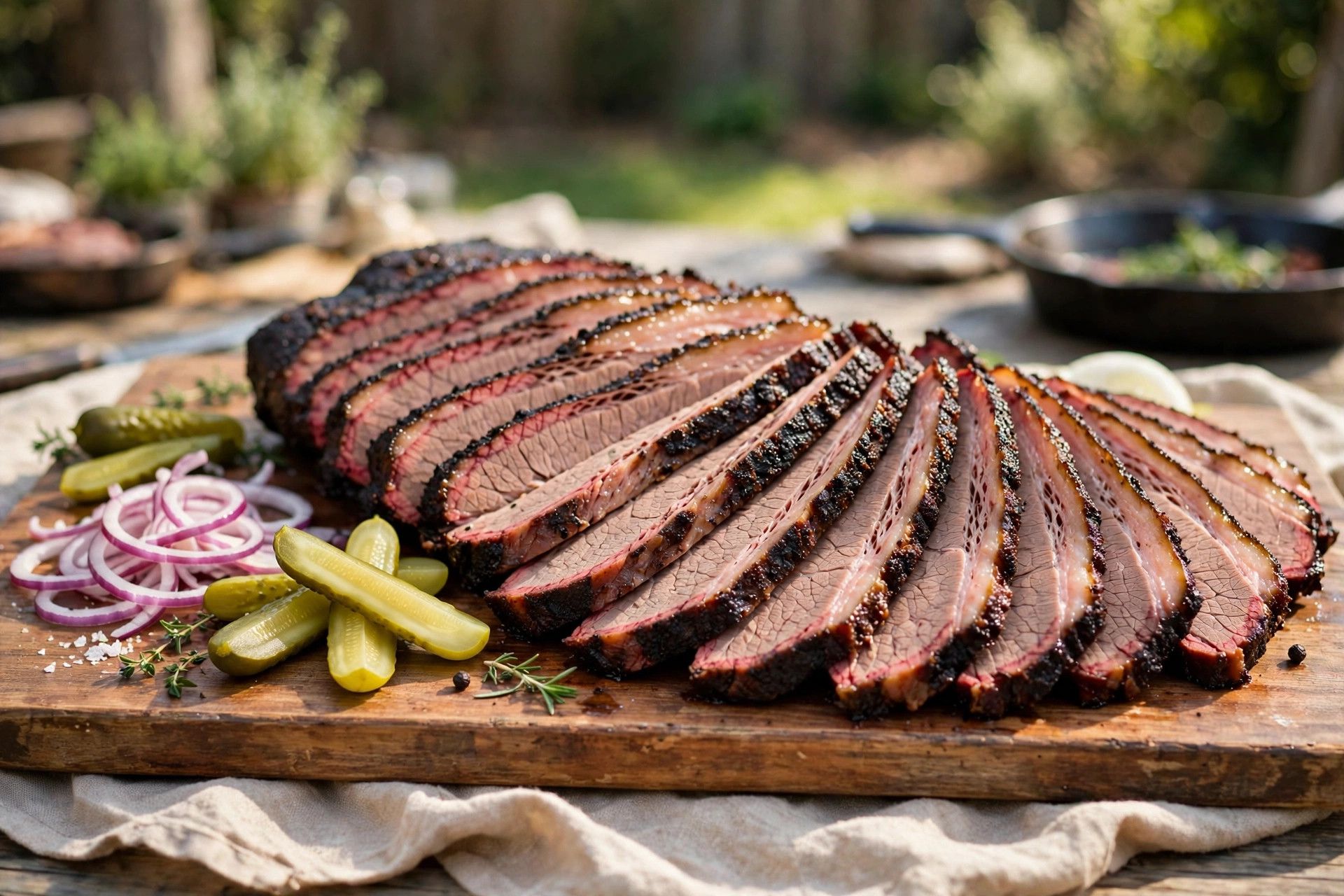
Smoked brisket recipe is the low and slow classic that turns a tough cut into dark barked, bendy slices with a pink smoke ring. It takes a whole day and a little patience, but the method is simple: a salt and pepper rub, steady oak smoke, a wrap at the stall, and a long rest before the knife comes out.
Why you’ll love it
- A dark, peppery bark with a pink smoke ring in every slice.
- Meat that bends without breaking and pulls apart with a gentle tug.
- A rub with four ingredients and no injections, no marinades, no fuss.
- Leftovers that make the best sandwiches, tacos and chili of the week.
- A whole brisket feeds a crowd, so it is the centerpiece of a cookout.
Ingredient notes
Brisket: the star. Look for a whole packer brisket around 12 to 14 lb with a thick fat cap and good marbling through the flat. A thin flat with little marbling dries out no matter how carefully you cook it, so pick a brisket that feels heavy and bends a little in the middle.
Salt and pepper: the whole Texas rub. Equal parts kosher salt and coarse black pepper do most of the work, and coarse pepper is what builds the dark, crunchy bark. Fine ground pepper burns and turns bitter over a long smoke, so keep it coarse.
Garlic and onion powder: the quiet depth. They round out the rub without adding sweetness, and they help the bark brown evenly. Keep the amounts small so the beef and the smoke stay in charge.
Spritz: the moisture keeper. Water, apple juice or beef broth all work, and the job is simply to keep the surface from drying out once the bark sets. Spritz lightly and only after the first 3 hours, so the rub has time to set first.
Butcher paper: the wrap that saves the bark. Pink butcher paper breathes, so the brisket finishes tender without steaming the crust soft the way foil does. Buy the unwaxed kind made for barbecue.
The wrap and rest rule that makes or breaks it
Two rules decide this brisket, and both happen after the first hours of smoke. First, wrap only when the bark is dark and the temperature has stalled near 165 F. Wrapping early traps steam against a soft rub and turns the bark to mush, while waiting too long dries the flat out. Second, rest the wrapped brisket for at least 1 hour, and 2 hours if you can. The rest lets the juices settle back through the meat, and a brisket sliced hot pours its moisture onto the board instead of keeping it in the slices. Pull the brisket at 203 F and probe tender, rest it wrapped in a dry cooler, then slice the flat thin against the grain.
Variations
- Texas style salt and pepper only: skip the garlic and onion powder and use only equal parts salt and coarse pepper. The purest version, and the best way to learn what your smoker does.
- Sweet bark finish: add 2 tablespoons of dark brown sugar to the rub for a darker, slightly sweet crust. Watch the temperature, since sugar burns faster over a long smoke.
- Burnt ends from the point: cube the point after slicing the flat, toss the cubes with sauce and brown sugar, and smoke them for 1 to 2 hours more until sticky.
- Oven finish: after wrapping, finish the brisket in a 250 F oven instead of the smoker. The smoke flavor is already set by then, and the oven holds a steadier temperature overnight.
What we learned testing it
- Wrapping in pink butcher paper beat wrapping in foil clearly in the side by side test. The paper wrapped brisket kept a firm bark, while the foil wrapped brisket came out steamed and soft on top.
- A 2 hour rest beat a 30 minute rest for slice quality. The longer rest let the juices settle, so the slices stayed moist on the plate instead of drying out in minutes.
- Oak beat mesquite for a first brisket. The oak smoke was mellow and let the beef flavor lead, while the mesquite batch tasted sharp and a little bitter on the edges.
Read how we test recipes.
Smoked Brisket Recipe (Low and Slow, Tender Slices)
Makes 1 whole packer brisket, about 8 servings · 11 hr 30 min total · Hard
Ingredients
Equipment
Smoker or pellet grill · Instant read thermometer · Pink butcher paper · Spray bottle · Sharp carving knife · Cutting board
Instructions
-
Trim and season the brisket
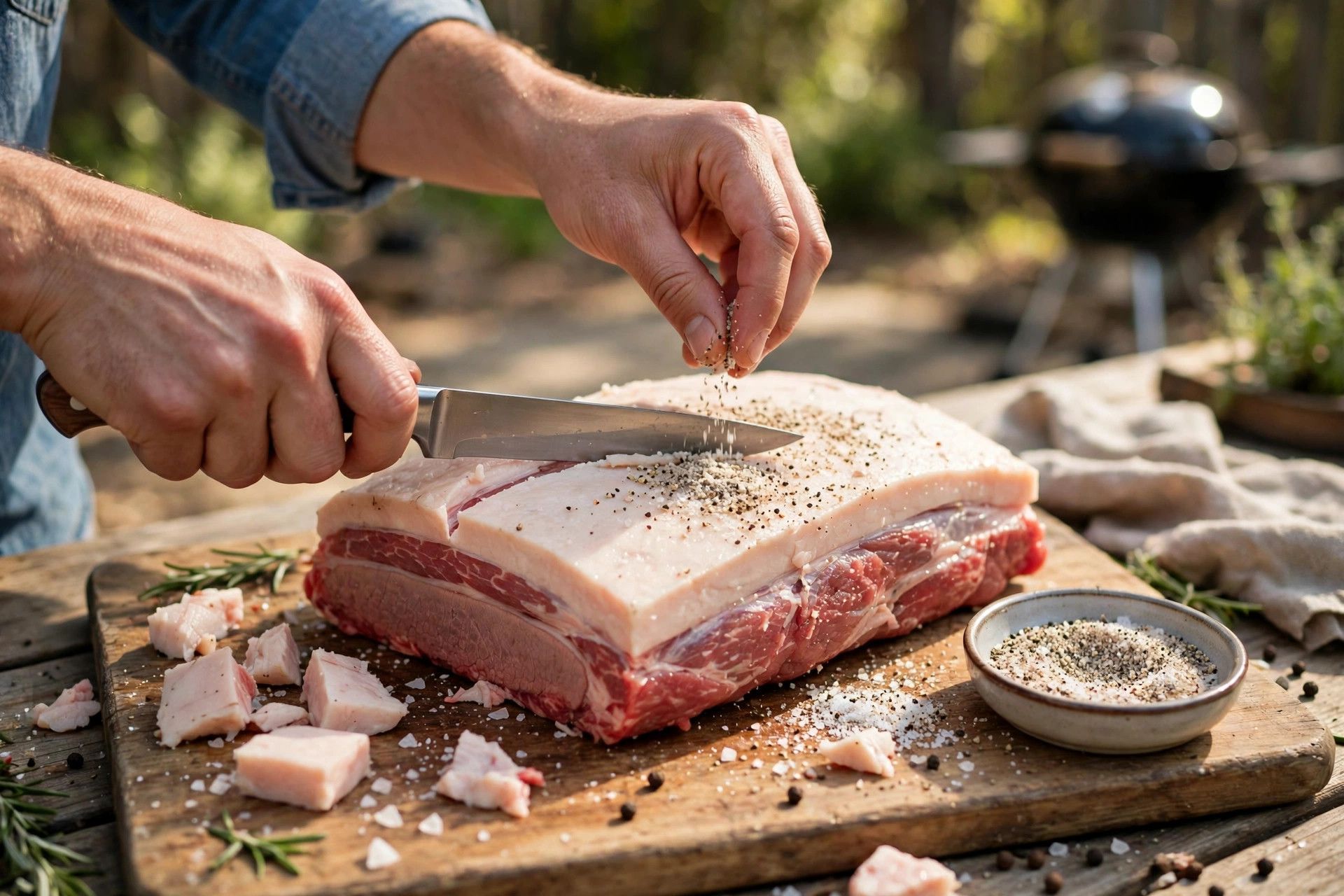
Trim the fat cap down to about 1/4 inch, removing any hard fat and loose flaps, and trim the thin edge of the flat so it does not dry out and burn. Mix the salt, black pepper, garlic powder and onion powder, then coat the brisket on all sides, pressing the rub into the meat. Let it sit at room temperature while the smoker heats to 250 F.
-
Smoke low and slow to the stall
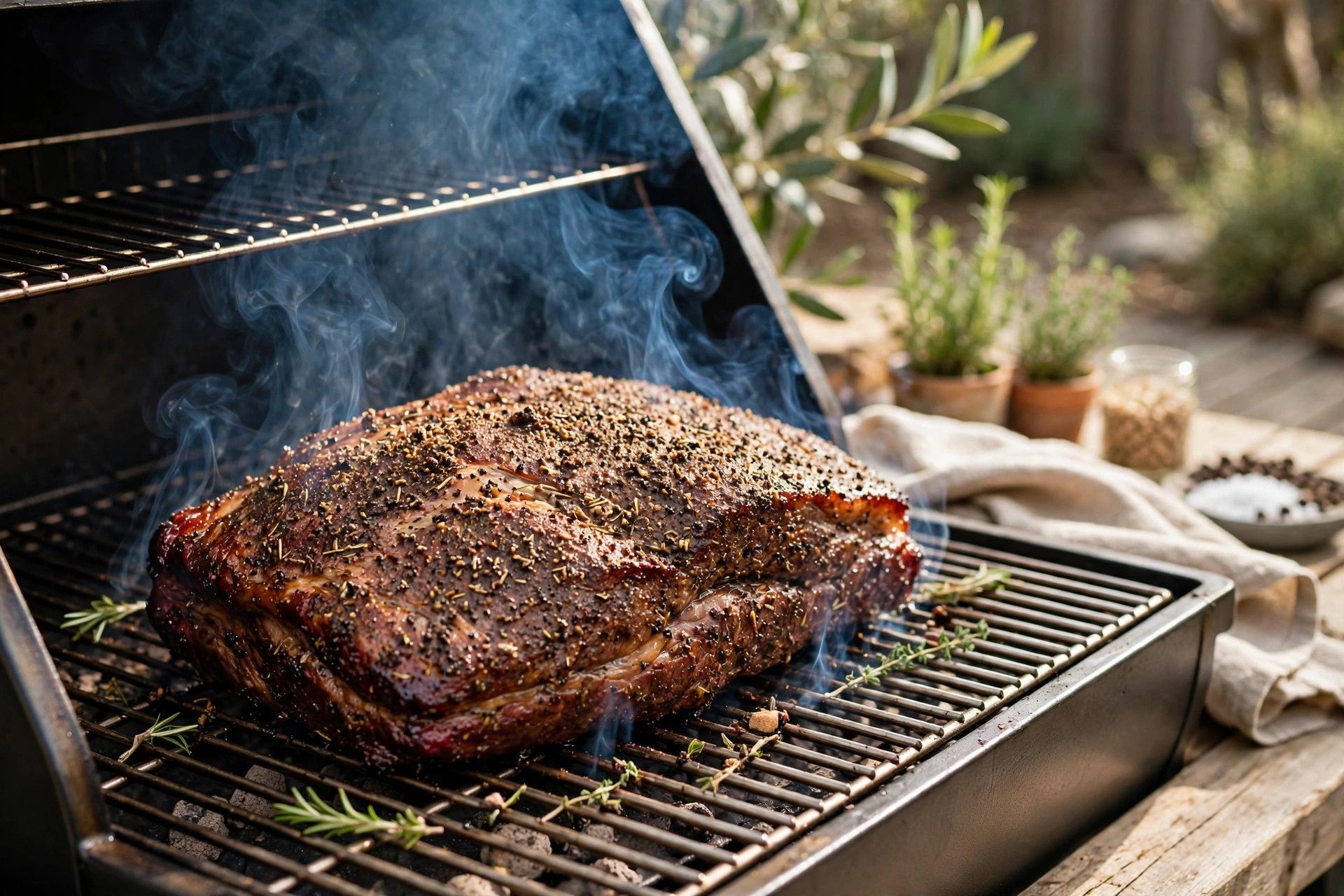
Set the brisket on the smoker fat side up, with the thick point toward the heat. Smoke at 250 F over oak, and once the bark has set after about 3 hours, spritz the surface with water, apple juice or beef broth every hour. Keep smoking until the thickest part of the flat reads about 165 F and the bark is dark and firm.
-
Wrap in butcher paper and finish
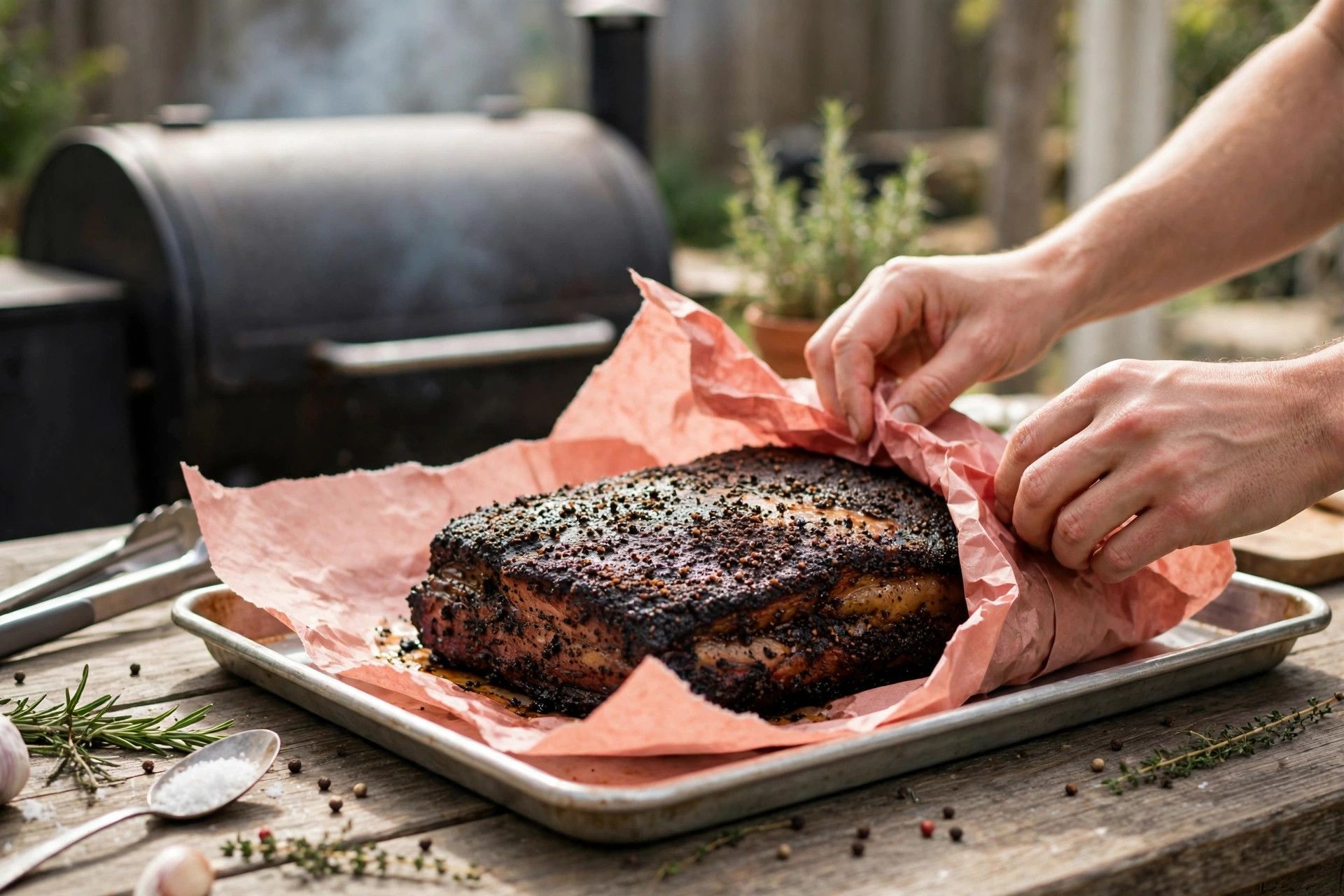
Lay out two sheets of pink butcher paper, set the brisket in the center and wrap it snug, folding the edges tight so no steam escapes. Put the wrapped brisket back on the smoker and keep cooking at 250 F until the thickest part reads about 203 F and a probe slides in with almost no resistance.
-
Rest and slice against the grain
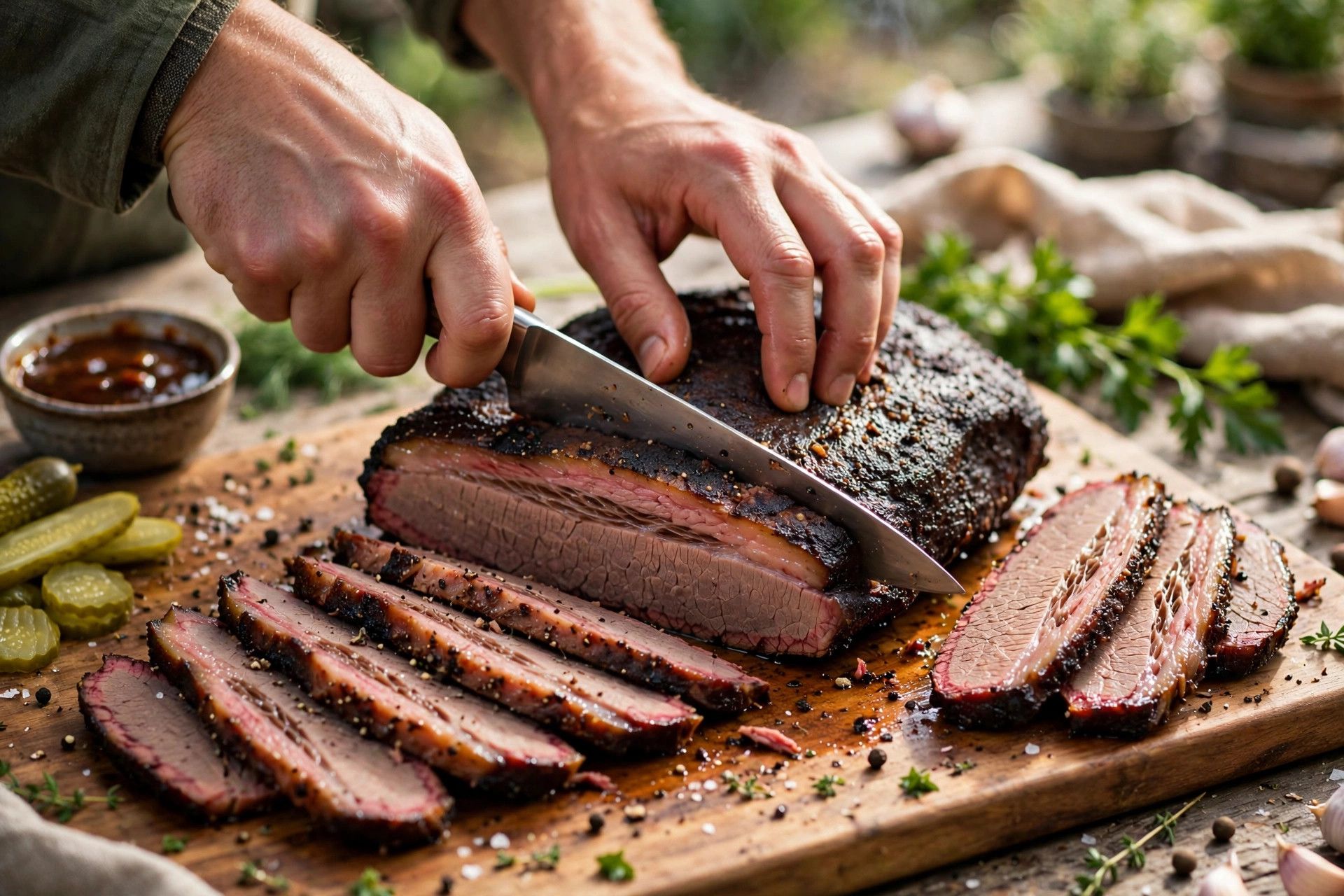
Rest the wrapped brisket for at least 1 hour, and 2 hours is even better, in a dry cooler or a warm oven. Unwrap it, separate the point from the flat along the fat seam, and slice the flat in pencil thick slices against the grain. Serve with pickles, sliced onion and white bread.
Notes
- Trim the fat cap to about 1/4 inch. A thick fat cap blocks the rub and the smoke, while no fat at all leaves the flat dry.
- Start spritzing only after the bark sets, about 3 hours in. Spritzing a wet rub just washes the seasoning off.
- Wrap when the bark is dark and the temperature stalls near 165 F. Wrapping earlier softens the bark into mush.
- Rest the brisket for at least 1 hour, and 2 hours is even better. A hot brisket sliced straight off the smoker pours its juices onto the board.
Nutrition per serving
Nutrition information is being calculated.
Substitutions
- Pink butcher paper
- Use heavy duty aluminum foil instead. The bark will be softer and a little steamed, but the brisket will still be tender and juicy.
- Oak wood
- Use hickory or pecan wood instead. Hickory is stronger and a little sweeter, so use a light hand with it on your first cook.
- Beef broth spritz
- Use plain water or apple juice instead. The spritz is mostly about keeping the surface moist, so any of the three works.
Storage and make-ahead
Store leftover brisket unsliced in the fridge for up to 4 days, wrapped tightly in foil or butcher paper, or freeze slices for up to 3 months. Reheat slices gently in a covered pan over low heat with a splash of beef broth until just warm. Slicing only what you serve keeps the rest juicy.
Frequently asked questions
What temperature should smoked brisket be cooked to?
Pull the brisket when the thickest part of the flat reads 200 F to 205 F and a probe slides in with almost no resistance. The temperature matters less than the feel, so trust the probe test over the number.
How long does it take to smoke a brisket?
Plan on 10 to 12 hours of cooking plus at least 1 hour of rest for a 12 to 14 lb packer at 250 F. Briskets stall for hours near 165 F, so start early and let the meat set the schedule.
Should I wrap my brisket in foil or butcher paper?
Butcher paper is the better choice for bark, since it breathes and keeps the crust firm. Foil works and cooks a little faster, but it steams the bark soft, so use it only if paper is not available.
How do I know when brisket is done?
Use the probe test. Push a thermometer probe or a skewer into the thickest part of the flat. When it slides in like soft butter, the brisket is done, usually near 203 F.
How do I slice brisket?
Separate the point from the flat along the fat seam, then slice the flat in pencil thick slices against the grain. Cut the point into thicker slices or cubes for burnt ends, and serve both on the same board.