Yankee Pot Roast
 By Emily Carter ·
Published
Quick answer
Sear a well seasoned chuck roast on all sides, then braise it covered at 325 F with onion, broth, tomato paste and herbs for 3 hours. Add carrots, potatoes and parsnips for the last hour until everything is fork tender. Slice against the grain and serve with the vegetables and pan gravy. Each serving carries about 38 g of protein from label values across 6 servings.
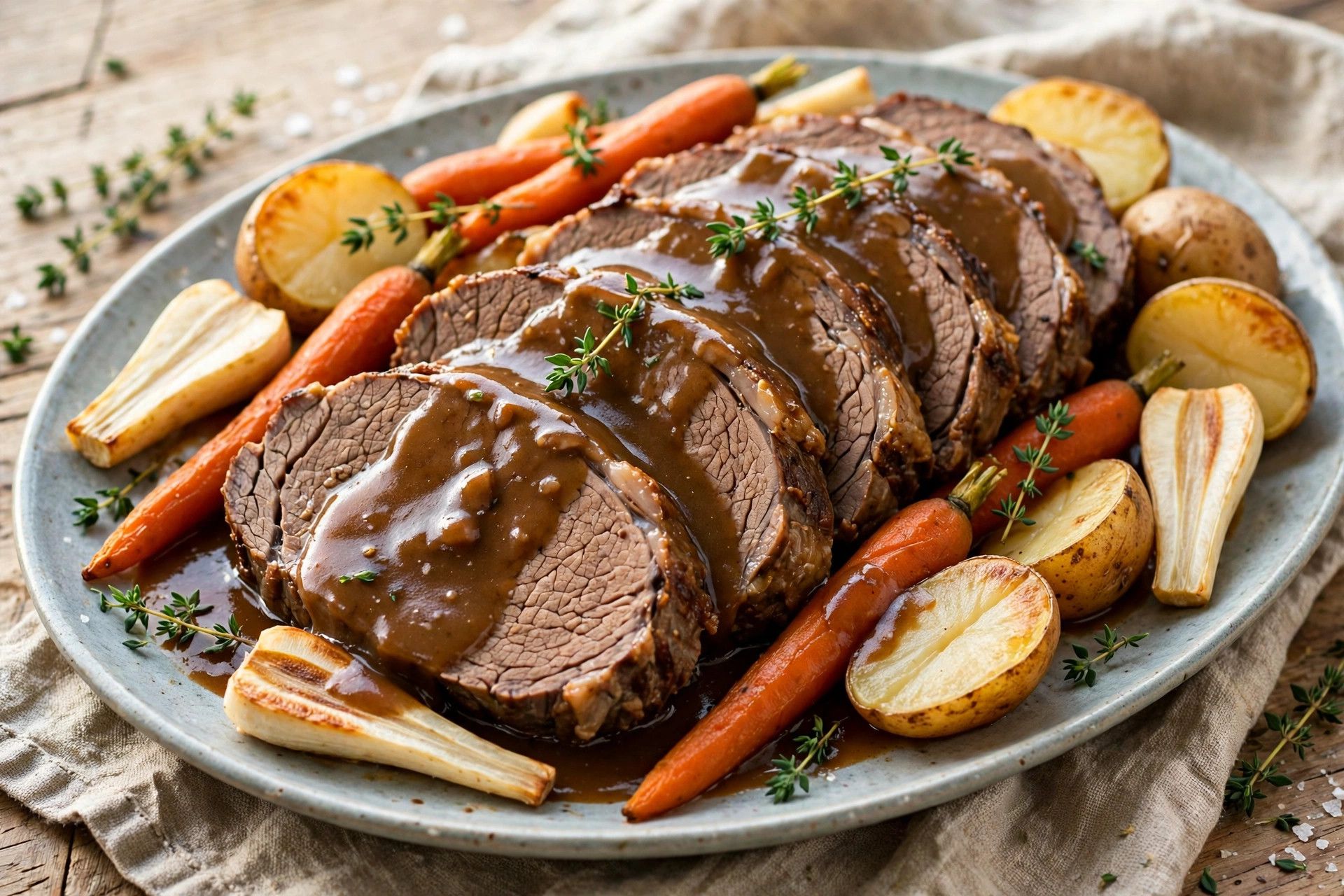
Yankee Pot Roast is the Sunday dinner that built New England. A well marbled chuck roast gets seared hard, then braises low and slow with onions, thyme and red wine until it surrenders into fork tender slices, while carrots, potatoes and parsnips cook alongside in the same pot. One pot, one glorious gravy, zero leftovers.
Why you’ll love it
- Mostly hands off: 25 minutes of work, then the oven does everything.
- The vegetables cook in the same pot, a complete dinner from one vessel.
- About 38 g of protein per serving from label values, a deeply satisfying plate.
- Leftovers make the best sandwiches and hash of the week.
- Tastes like grandmother’s house, even if your grandmother never made it.
Ingredient notes
Chuck roast: the only cut for the job. Look for heavy marbling and a thick shape that braises evenly. A flat thin roast cooks unevenly and dries at the edges.
Dry red wine: the gravy’s secret depth. It does not make the dish taste like wine; it adds a bass note that broth alone cannot. Any drinkable dry red works.
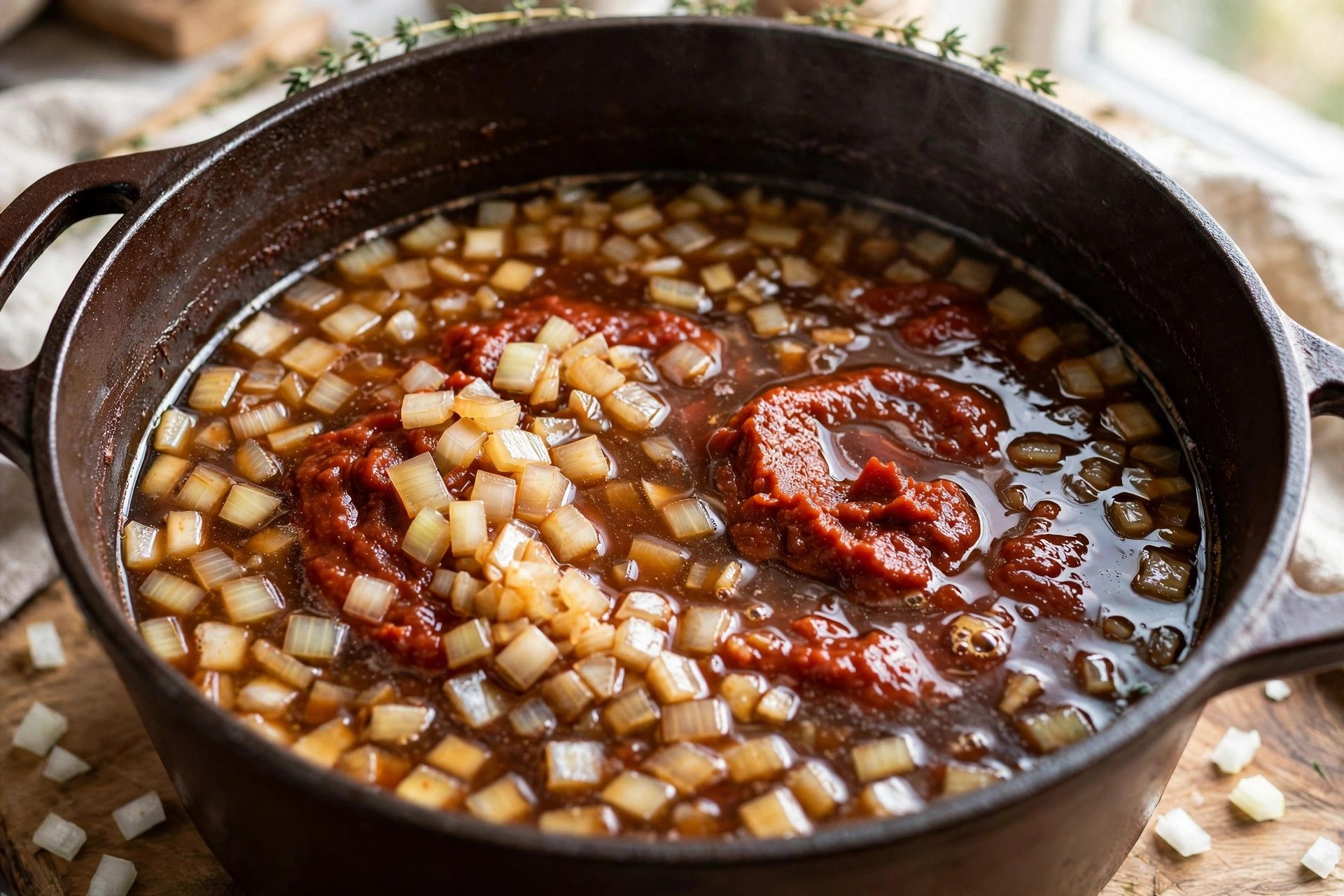
Tomato paste: browned with the aromatics for 2 minutes until it darkens. Raw tomato paste tastes tinny; browned, it turns sweet and savory.
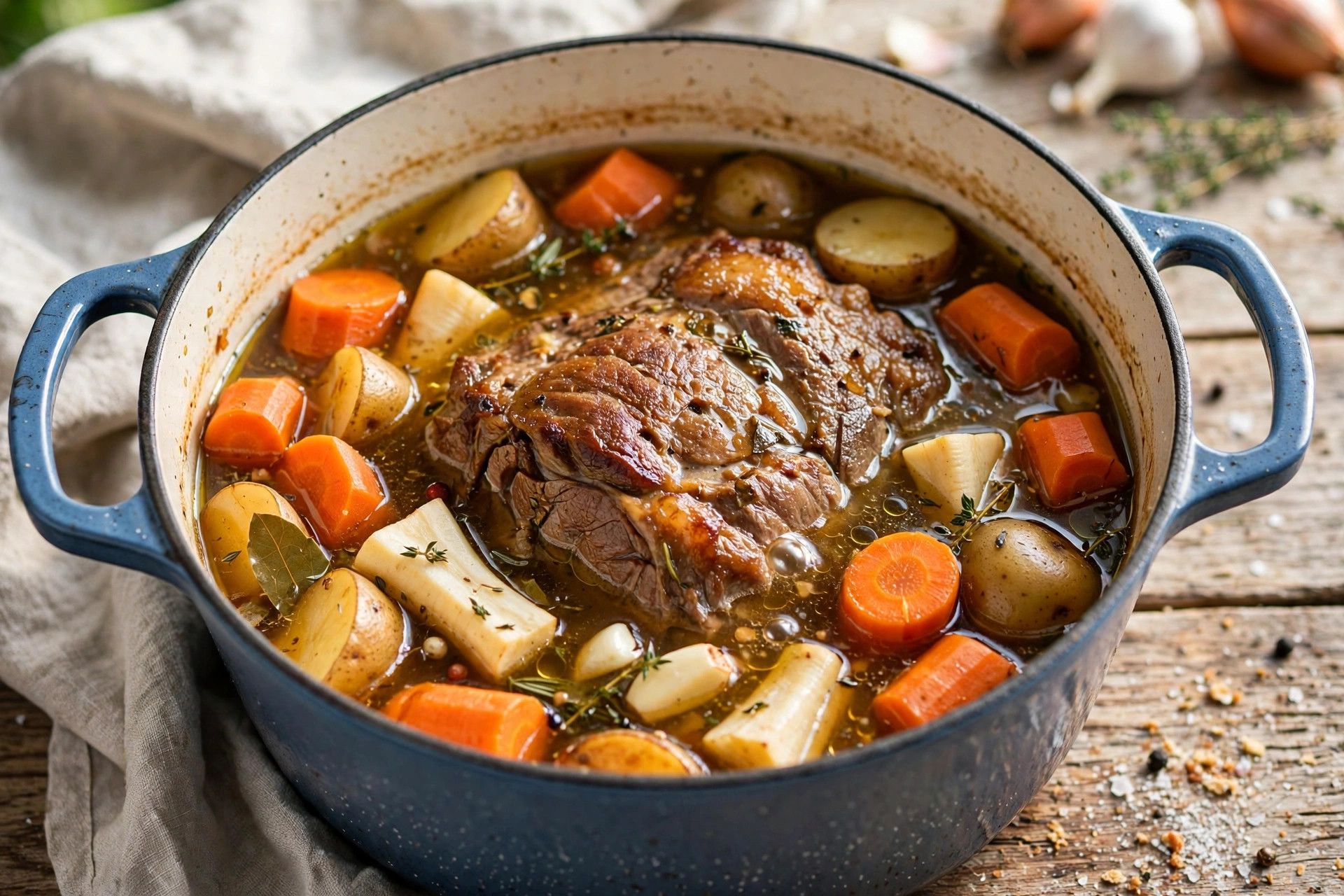
Root vegetables: carrots, yukon golds and parsnips, cut large so they survive the hour. They drink up the braising liquid and come out tasting like the best version of themselves.
Fresh thyme: woody herbs built for long braises. The sprigs go in whole and get fished out; the leaves stay behind in the gravy.
The sear and low braise rule that makes or breaks it
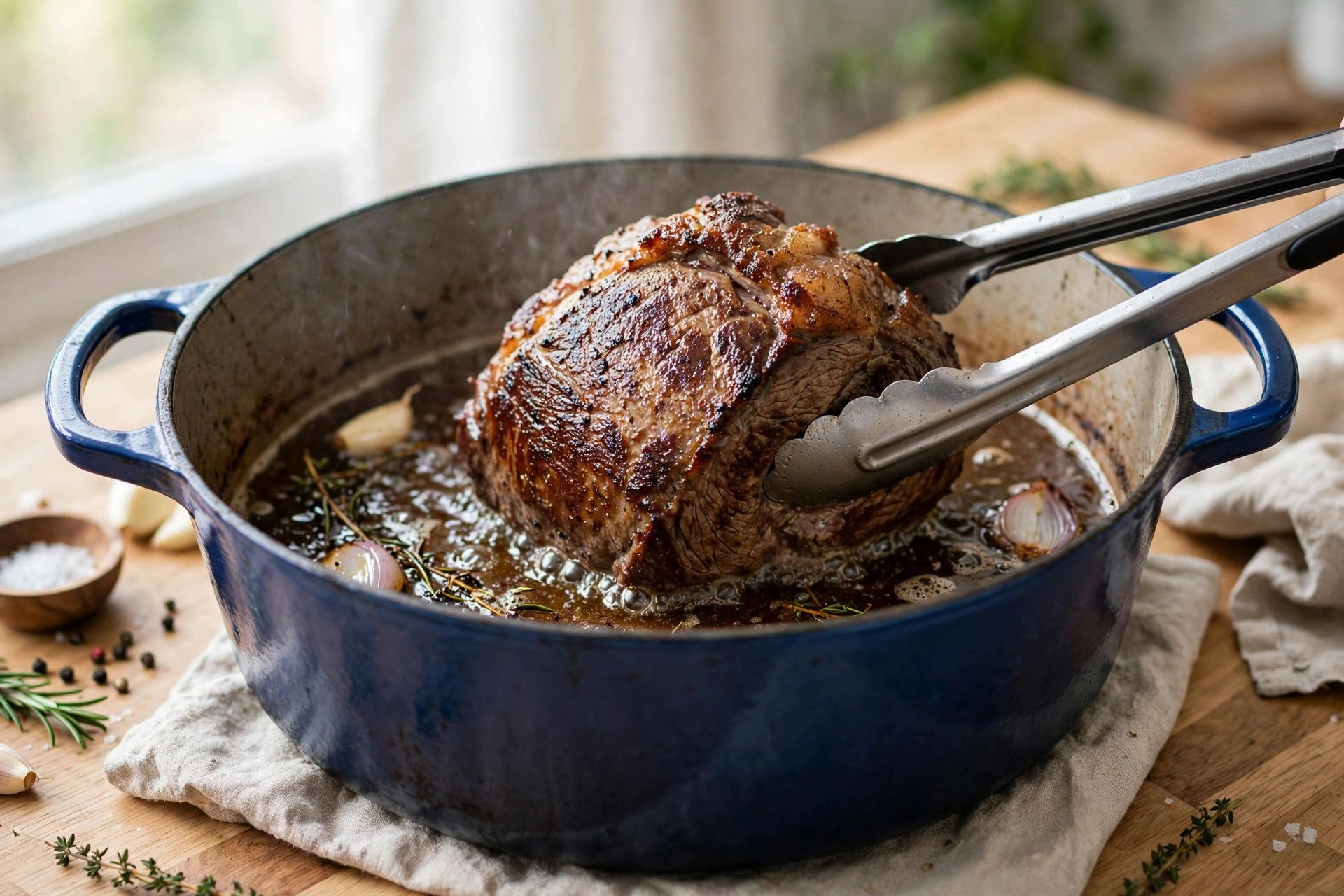
Two rules decide pot roast, and both fight the urge to rush. First, sear the roast until it is truly dark brown on every side, not just greyish tan. That crust is not about looks; it is the Maillard flavor that dissolves into the braising liquid and becomes the gravy. A pale sear gives you a pale gravy, and there is no fixing it later. Second, braise low at 325 F with the lid on, and give it the full time. Pot roast does not go from tough to tender gradually; the collagen melts all at once near the end, and pulling it early leaves you with chewy disappointment. Sear dark, braise low, wait it out, and the fork does the rest.
Variations
- Slow cooker: sear and build as written, then low 8 to 9 hours with vegetables in for the last 3.
- Mushroom pot roast: add a pound of browned mushrooms with the vegetables for an earthy twist.
- No wine: swap in all broth plus a tablespoon of balsamic for depth without alcohol.
- Leftover hash: chop cold roast and potatoes, crisp in a skillet and top with fried eggs.
What we learned testing it
- Wine beat all broth in the liquid test. The all broth batch tasted flat and one note, while the wine batch had a deeper, rounder gravy.
- Turning the roast halfway mattered more than expected. The unturned roast had a dry top where it sat above the liquid; the turned one braised evenly throughout.
Read how we test recipes.
Yankee Pot Roast
Makes 6 servings · 4 hr 10 min total · Medium
Ingredients
Equipment
Large Dutch oven with lid · Tongs · Sharp carving knife · Cutting board · Whisk
Instructions
-
Sear the chuck roast
Pat the roast very dry and season all over with a generous amount of salt and pepper. Heat the oil in a large Dutch oven over medium high heat until shimmering. Sear the roast 4 to 5 minutes per side until deeply browned everywhere, including the edges. Do not rush this; the crust is the gravy's foundation.
-
Build the braising liquid
Transfer the roast to a plate. Add the onions to the pot and cook 5 minutes, scraping up the browned bits. Stir in the garlic and tomato paste and cook 2 minutes until darkened. Pour in the wine, scraping the bottom clean, then add the broth, bay leaves and thyme. Return the roast to the pot; the liquid should come two thirds up the sides.
-
Braise with root vegetables
Cover and braise at 325 F for 2 hours, turning the roast once. Add the carrots, potatoes and parsnips around the meat, spooning some liquid over them. Cover and braise 1 hour more until the meat shreds with a fork and the vegetables are completely tender.
-
Slice and make the gravy
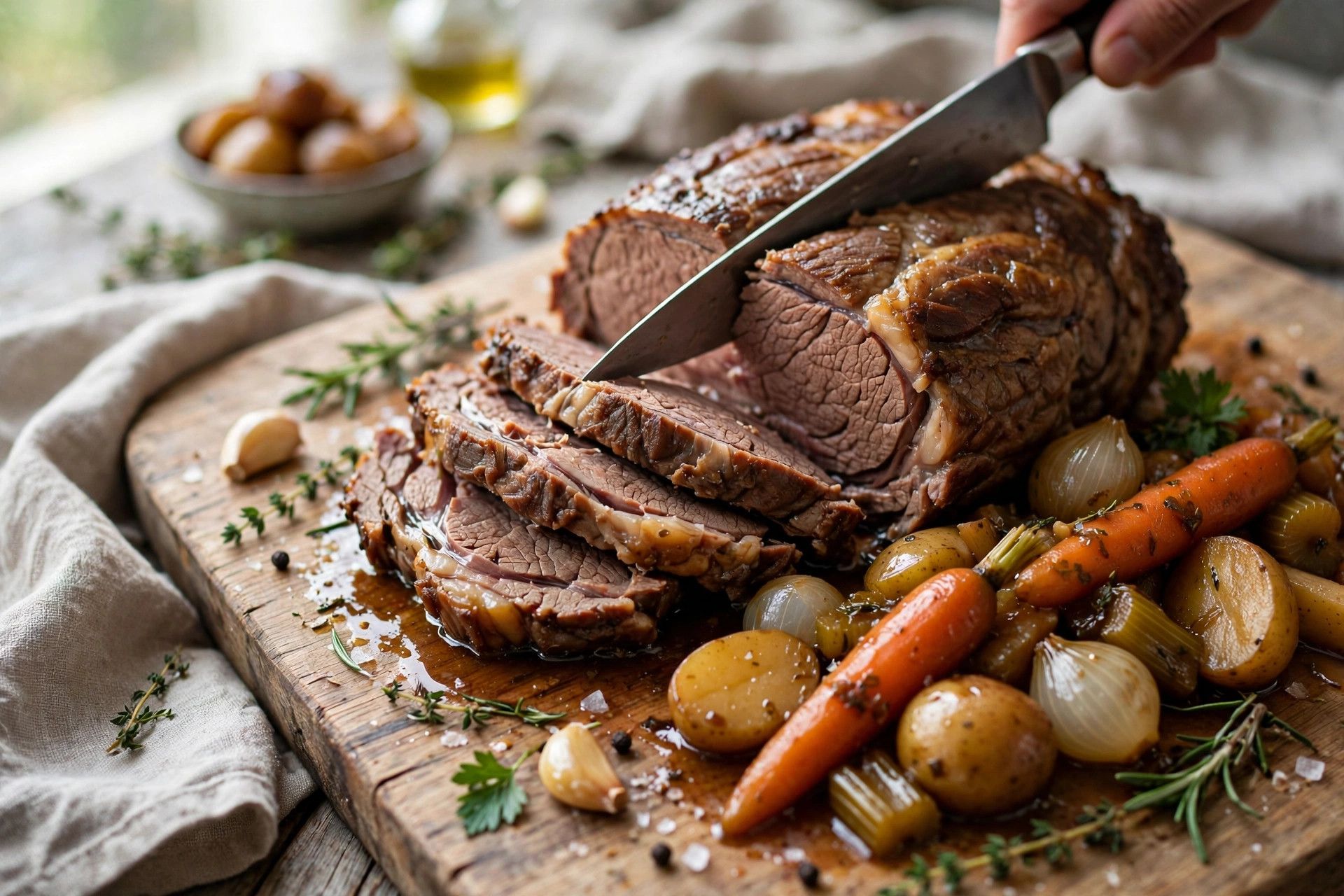
Move the roast and vegetables to a warm platter and tent with foil. Skim the fat from the braising liquid, bring to a simmer and whisk in the flour slurry for a silky gravy, 2 to 3 minutes. Slice the roast against the grain, arrange with the vegetables, and pour the gravy over everything.
Notes
- Dry the roast thoroughly before searing. Surface moisture is the enemy of browning, and browning is the enemy of bland gravy.
- Chuck roast is the only cut to buy here. Leaner cuts dry out over the long braise; chuck's marbling melts into tenderness.
- Add the vegetables late. They need just an hour; added at the start they dissolve into mush.
- Slice against the grain. With the grain slices chew like rope, against the grain they fall apart.
- These protein estimates come from nutrition labels, not lab testing. A serving lands near 38 g of protein from typical brand labels, nearly all of it from the beef, so check your labels for your exact numbers.
Nutrition per serving
Nutrition information is being calculated.
Substitutions
- Chuck roast
- Brisket flat or bottom round work, though neither gets quite as succulent. Add 30 minutes to the braise for bottom round.
- Red wine
- Use all beef broth with a tablespoon of balsamic vinegar for the missing acidity and depth.
- Parsnips
- Swap in turnips or rutabaga, or simply double the carrots. Any sturdy root vegetable that loves a long braise works.
Storage and make-ahead
Refrigerate pot roast and vegetables in their gravy up to 4 days; slice only what you serve so the rest stays juicy. Reheat covered at 325 F with a splash of broth. Freeze up to 3 months; thaw overnight in the fridge before reheating.
Frequently asked questions
What makes it a Yankee pot roast?
The New England style: a chuck roast braised with root vegetables, carrots, potatoes and often parsnips or turnips, in a savory gravy without the sweet glazes some other regional pot roasts use. It is the Sunday dinner of old New England.
Why is my pot roast tough?
It almost always needs more time, not less. Tough pot roast is under braised pot roast; the connective tissue has not melted yet. Give it another 30 to 45 minutes and test again with a fork.
Can I make pot roast in a slow cooker?
Yes. Sear and build the liquid as written, then transfer to a slow cooker on low 8 to 9 hours, adding the vegetables for the last 3 hours. Finish the gravy on the stove.
Should I sear the roast before braising?
Absolutely. The browned crust creates the deep flavor that becomes the gravy. Skipping the sear gives you grey meat and a thin, sad braising liquid.
What is the best cut for pot roast?
Chuck roast, without question. Its marbling and connective tissue are built for long, slow cooking and turn meltingly tender. Lean cuts like eye of round dry out no matter how carefully you braise them.