BBQ Burnt Ends (Smoky, Sticky, Tender Cubes)
 By Emily Carter ·
Published
Quick answer
Smoke a brisket point at 250 F until it reaches about 195 F, then cube the meat into 1 inch pieces. Toss the cubes with barbecue sauce, brown sugar and a little extra rub, and smoke them in a pan for 1 to 2 hours more until they are sticky, caramelized and tender enough to bite through.
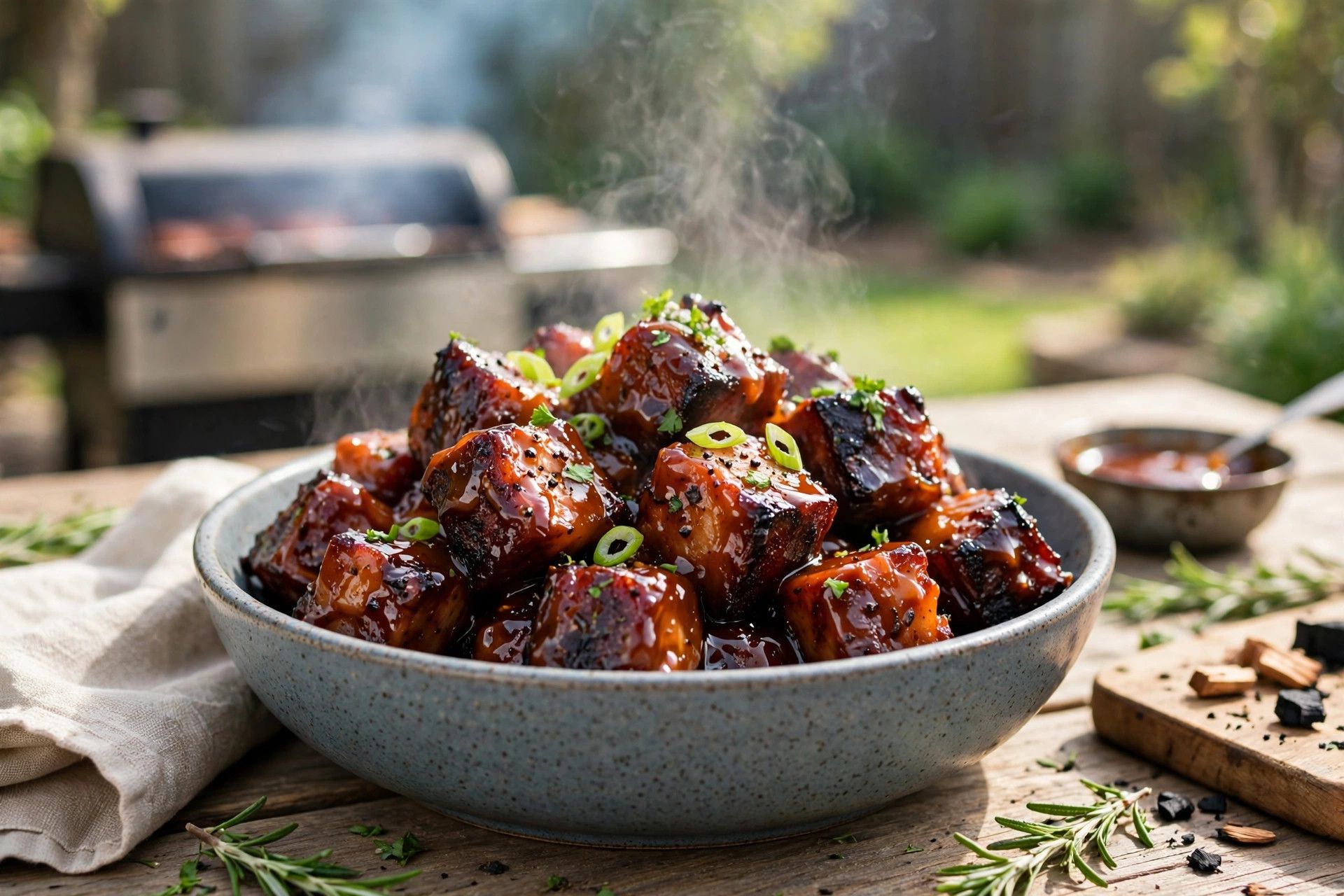
BBQ burnt ends are the kansas city treasure: cubes of smoked brisket point tossed in sauce and brown sugar, then smoked again until they turn sticky, caramelized and tender. They started as a thrifty way to use the fatty end of the brisket, and they ended up as the bite everyone reaches for first.
Why you’ll love it
- Sticky, caramelized cubes with a smoky bark on every side.
- Fatty, juicy bites that melt instead of chewing tough.
- A second smoke that turns simple sauce into a glossy glaze.
- The best use of a brisket point, and the star of any barbecue board.
- Easy to serve straight from the pan, no slicing or plating needed.
Ingredient notes
Brisket point: the star. Use the thick, fatty end of a whole packer brisket, about 5 lb untrimmed. Its fat and connective tissue are what turn into juicy cubes, so never use the lean flat for burnt ends.
Salt and pepper: the base rub. Equal parts kosher salt and coarse black pepper build the dark bark on the point, with garlic powder and smoked paprika for depth. Keep the rub simple so the second smoke and the glaze can shine.
Barbecue sauce: the glaze. A thick, sweet, tomato based sauce is what caramelizes into a sticky coating. Thin sauces slide off the cubes, so pick a thick sauce and use a full cup.
Brown sugar and honey: the caramel team. Brown sugar gives the glaze its body and honey adds shine and a gentle sweetness. Together they turn the sauce into a sticky coat that clings to every cube.
Butter: the richness. A few small pieces of butter melt into the pan and keep the sauce from drying out during the second smoke. It also rounds out the sweetness so the glaze tastes rich, not just sugary.
The second smoke rule that makes or breaks it
Two rules decide these burnt ends, and both happen after the first smoke. First, cube the point only after it reaches about 195 F and rests for 15 minutes. Cubing early leaves the meat tough, while waiting until the point is fully tender gives cubes that finish soft. Second, give the second smoke the full 1 to 2 hours, tossing every 30 minutes. A short finish leaves the cubes saucy but not sticky, while the full second smoke caramelizes the sauce into a thick glaze that clings to every edge. When a cube bites through with almost no resistance and the sauce shines, the pan is ready.
Variations
- Spicy burnt ends: add 1 teaspoon of cayenne and a tablespoon of hot sauce to the glaze for cubes with a warm kick under the sweetness.
- Poor mans burnt ends: use a chuck roast instead of a brisket point. Smoke it the same way, cube it at 195 F and finish it in the pan for the same sticky result.
- Burnt end sandwiches: pile the hot cubes on soft buns with pickles and coleslaw for the richest barbecue sandwich on the board.
- Burnt end beans: stir a cup of finished burnt ends into a pot of baked beans for a smoky, meaty side dish that steals the show.
What we learned testing it
- A second smoke of 1 to 2 hours beat a 30 minute finish. The longer second smoke caramelized the sauce properly, while the short finish left the cubes saucy but not sticky.
- Mixing fatty and lean cubes in the same pan beat separating them. The fat bastes the lean pieces as they cook, so every cube stays juicy.
- Brown sugar plus honey beat sauce alone for the glaze. The sugar and honey caramelized into a sticky coating, while the sauce only batch stayed thin and slid off.
Read how we test recipes.
BBQ Burnt Ends (Smoky, Sticky, Tender Cubes)
Makes About 2 lb burnt ends, about 6 servings · 8 hr 35 min total · Medium
Ingredients
Equipment
Smoker or pellet grill · Instant read thermometer · Aluminum foil pan · Sharp carving knife · Cutting board · Tongs
Instructions
-
Season and smoke the point
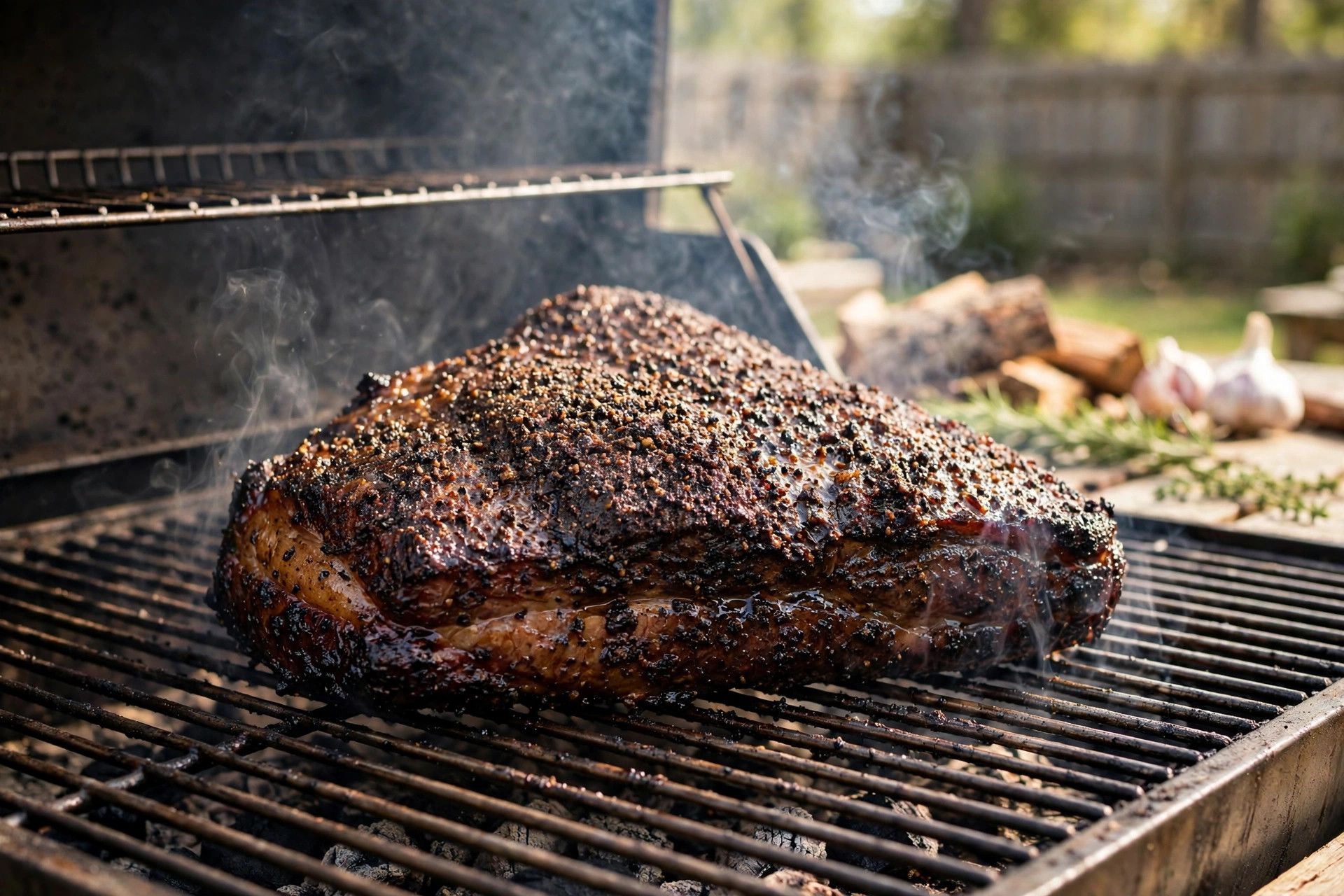
Mix the salt, black pepper, garlic powder and smoked paprika, then coat the brisket point on all sides, pressing the rub into the meat. Smoke the point at 250 F over oak until the thickest part reads about 195 F and the bark is dark and firm, about 6 hours. Rest it for 15 minutes before cubing.
-
Cube the smoked point
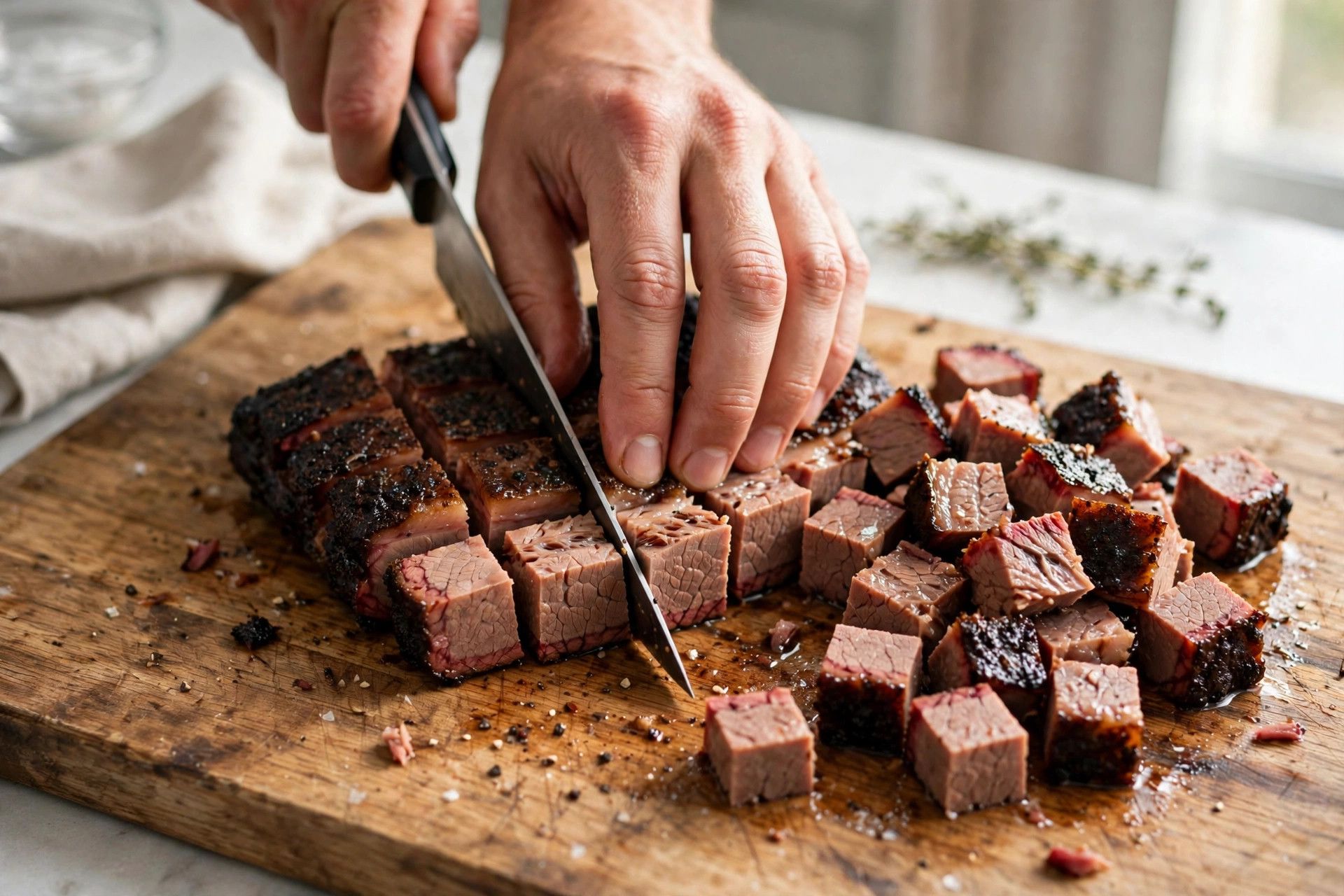
Set the rested point on a cutting board and cut it into 1 inch cubes, keeping the fatty pieces and the lean pieces mixed together. The fat is what keeps the cubes juicy through the second smoke, so do not trim it away. Put the cubes in an aluminum foil pan in a single layer.
-
Sauce and sugar the cubes
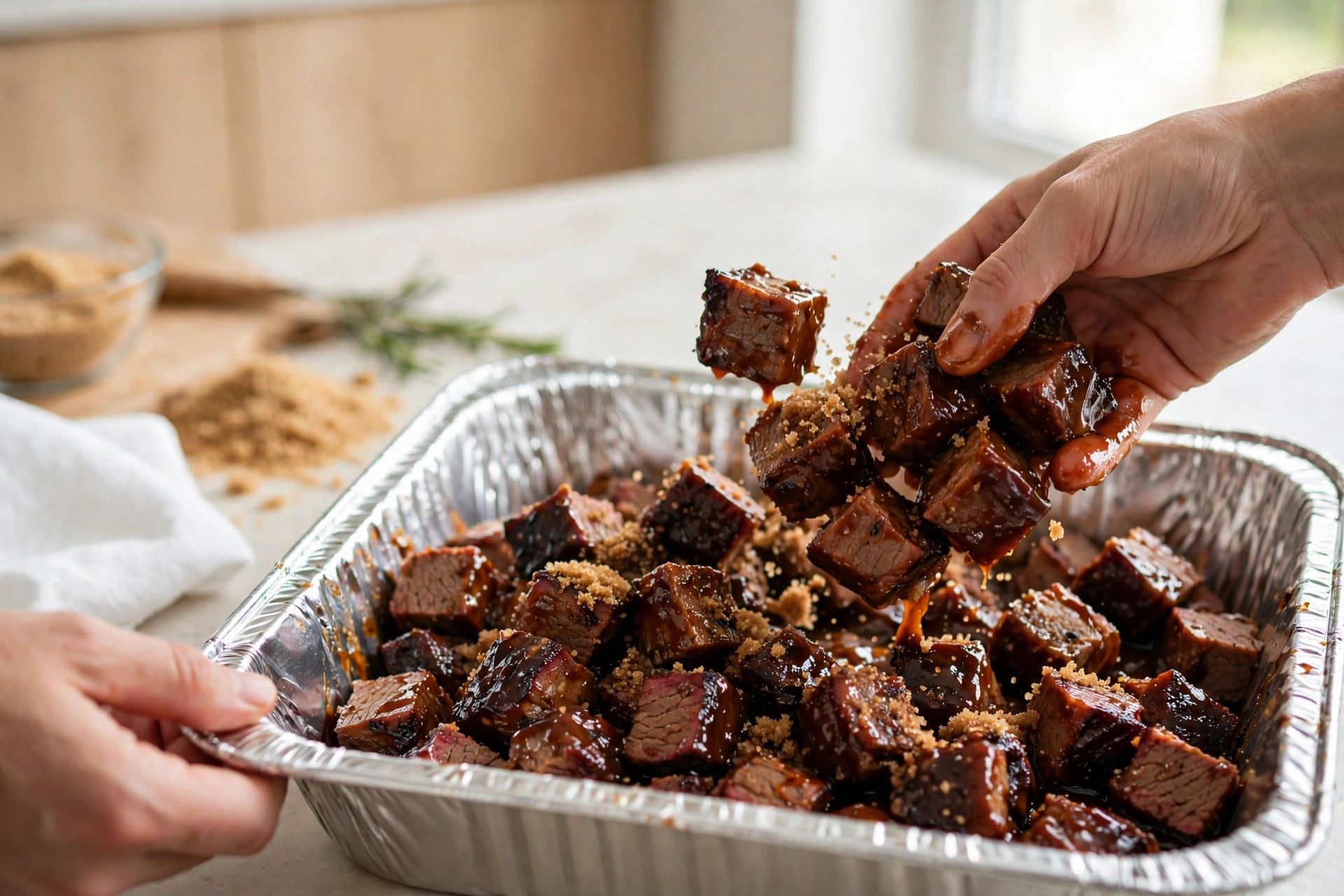
Pour the barbecue sauce over the cubes and toss them until every piece is coated. Sprinkle the brown sugar over the top, drizzle with honey and dot with the butter pieces. Toss once more so the sugar and butter sit in the gaps between the cubes.
-
Smoke again until sticky
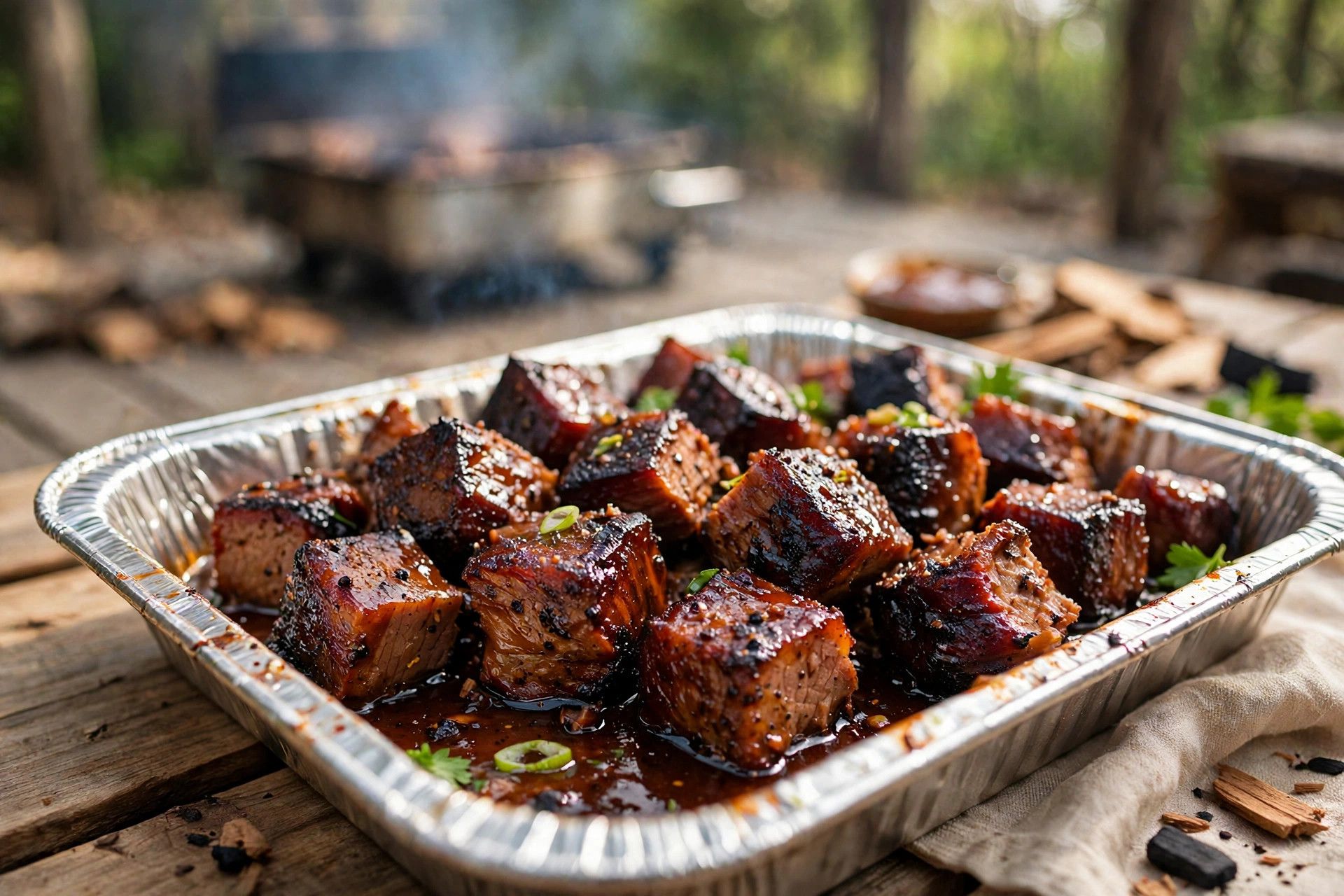
Put the pan back on the smoker at 250 F and smoke for 1 to 2 hours, tossing the cubes every 30 minutes so the sauce coats evenly. The burnt ends are done when the sauce is thick and sticky, the edges are caramelized and dark, and a cube bites through with almost no resistance. Serve hot from the pan.
Notes
- Use the point, not the flat. The point has the fat and the connective tissue that turn into juicy, tender cubes, while the flat dries out when cubed and smoked twice.
- Cut the cubes about 1 inch across. Smaller cubes dry out in the second smoke, and bigger cubes stay chewy in the middle.
- Toss the cubes every 30 minutes during the second smoke so the sauce coats evenly and no cube burns on one side.
- Serve burnt ends straight from the pan while the sauce is hot and sticky. They firm up as they cool, and cold burnt ends lose their shine.
Nutrition per serving
Nutrition information is being calculated.
Substitutions
- Brisket point
- Use a chuck roast instead. It has similar fat and connective tissue, so smoke it the same way and cube it once it reaches 195 F.
- Dark brown sugar
- Use light brown sugar or maple syrup instead. Light brown sugar gives a milder sweetness, while maple adds a deeper flavor to the glaze.
- Barbecue sauce
- Use any thick, sweet tomato based sauce instead. Thin vinegar sauces will not caramelize into a sticky glaze, so save those for pulled pork.
Storage and make-ahead
Store burnt ends in the fridge for up to 4 days in a sealed container, or freeze them for up to 3 months. Reheat them in a covered pan in a 300 F oven with a splash of sauce until hot, then uncover for 5 minutes so the glaze goes sticky again.
Frequently asked questions
What are bbq burnt ends?
Burnt ends are cubes of smoked brisket point tossed in barbecue sauce and brown sugar, then smoked a second time until sticky and caramelized. They started as a kansas city way to use the fatty point of the brisket.
What cut of meat do you use for burnt ends?
The brisket point, which is the thick, fatty end of a whole packer brisket. Its fat and connective tissue turn into juicy, tender cubes, while the lean flat would dry out.
How long do burnt ends take to smoke?
About 6 hours for the point to reach 195 F, plus 1 to 2 hours more after cubing and saucing. Plan on 8 hours total from the smoker to the table.
How do you know when burnt ends are done?
The sauce should be thick and sticky, the edges dark and caramelized, and a cube should bite through with almost no resistance. If a cube still chews tough, give the pan another 30 minutes.
Can I make burnt ends from a whole brisket?
Yes. Smoke the whole packer as usual, slice the flat for serving, then cube the point and finish it as burnt ends. It is the best way to use every part of the brisket.