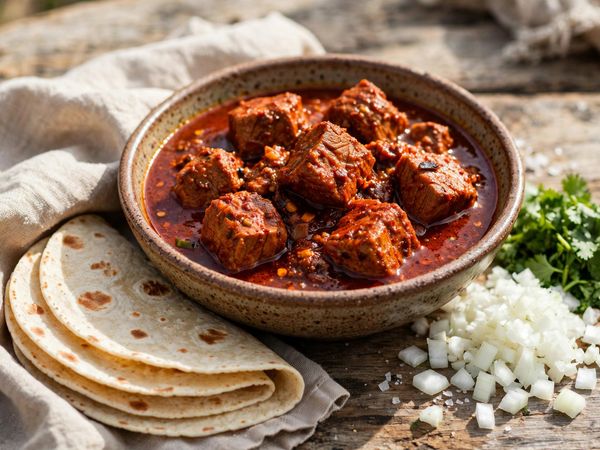
Pork Posole
 By Emily Carter ·
Published
Quick answer
Brown cubed pork shoulder, then simmer it with onion, garlic, red chile, oregano and canned hominy until the meat is spoon tender, about 90 minutes. Finish with lime juice and serve in deep bowls with shredded cabbage, radishes, cilantro and warm tortillas. Each serving carries about 28 g of protein from label values across 6 servings.
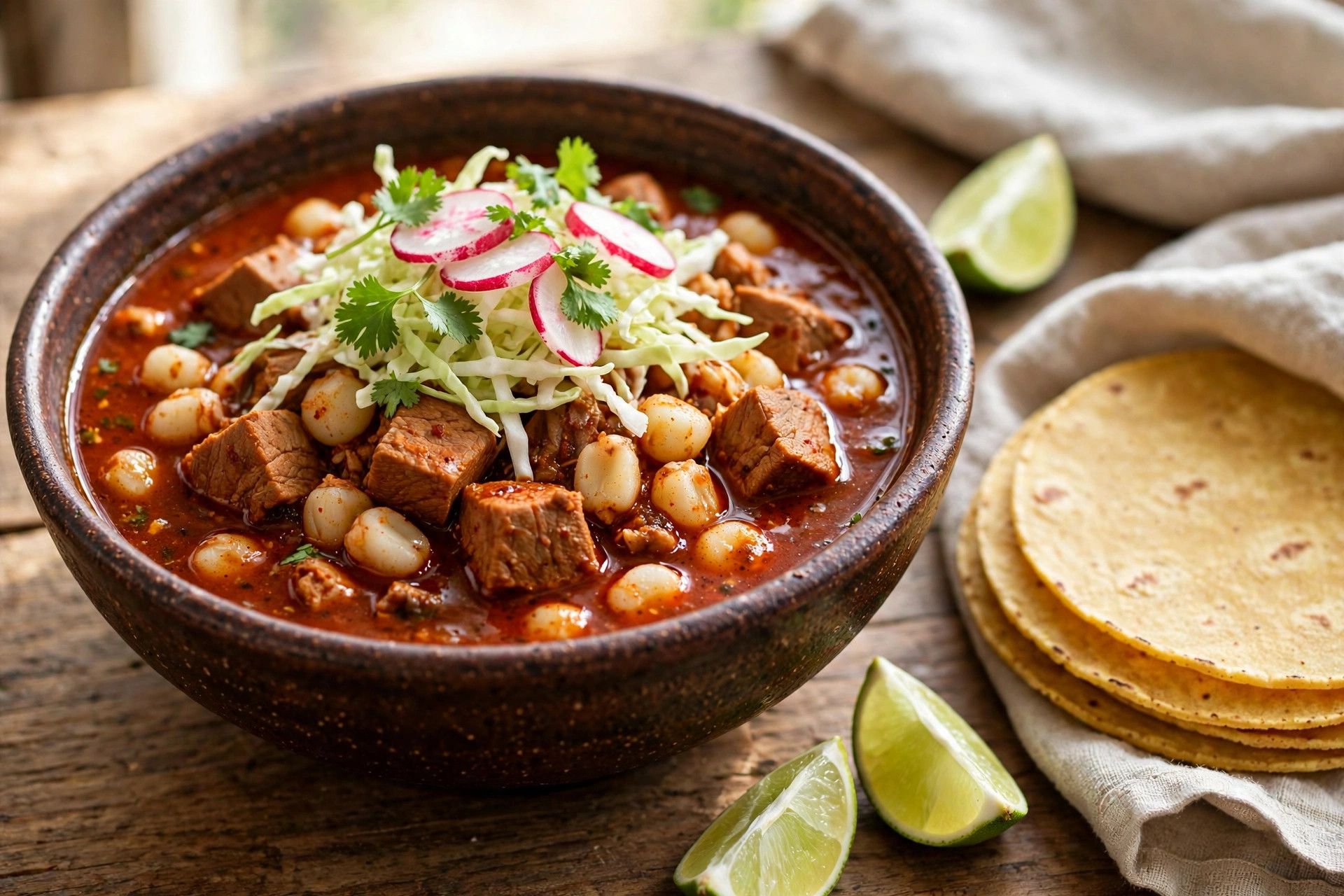
Pork Posole is the brothy, soul warming stew that defines New Mexican comfort food. Cubes of pork shoulder simmer low with chewy hominy and a brick red chile broth until the meat turns spoon tender, then the whole pot gets finished with a squeeze of lime and a snowfall of crisp fresh toppings. It is humble, hearty and deeply satisfying, the kind of bowl that fixes a cold evening.
Why you’ll love it
- One pot from sear to simmer, so the whole dish builds on its own browned flavor.
- The broth tastes even better reheated the next day, a true make ahead win.
- About 28 g of protein per serving from label values, a genuinely filling dinner.
- Endlessly customizable at the table with the fresh topping spread.
- Feeds a crowd from a single Dutch oven with pantry friendly staples.
Ingredient notes
Pork shoulder: the cut that makes posole. Its marbling keeps the cubes juicy through a long simmer, and the browned edges melt into the broth. Cut the cubes a full inch so they stay meaty after 90 minutes.
New mexico style red chile powder: pure ground dried chiles, nothing else. Generic chili powder blends sneak in cumin, oregano and salt that throw the balance off. If the label lists more than chiles, keep shopping.
White hominy: the chewy, puffy corn kernels that give posole its identity. Canned hominy is fully cooked and ready to go; just rinse it well so the broth stays clear.
Dried oregano: mexican oregano if you can find it, with its citrusy edge. Mediterranean oregano works fine, just use a touch less.
Lime juice: stirred in off the heat at the very end. It lifts the whole pot the way salt alone cannot, so do not skip it.
The sear and bloom rule that makes or breaks it
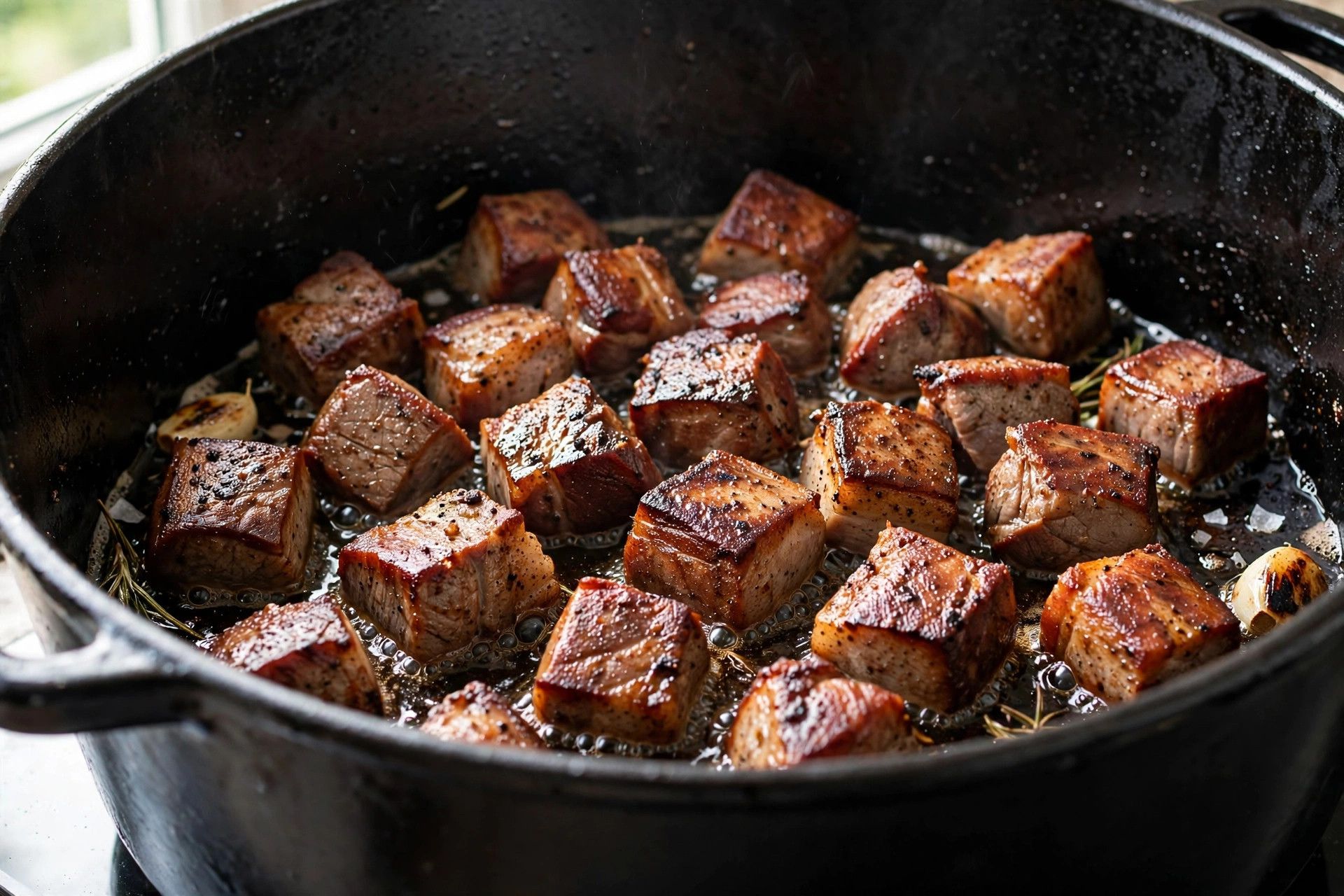
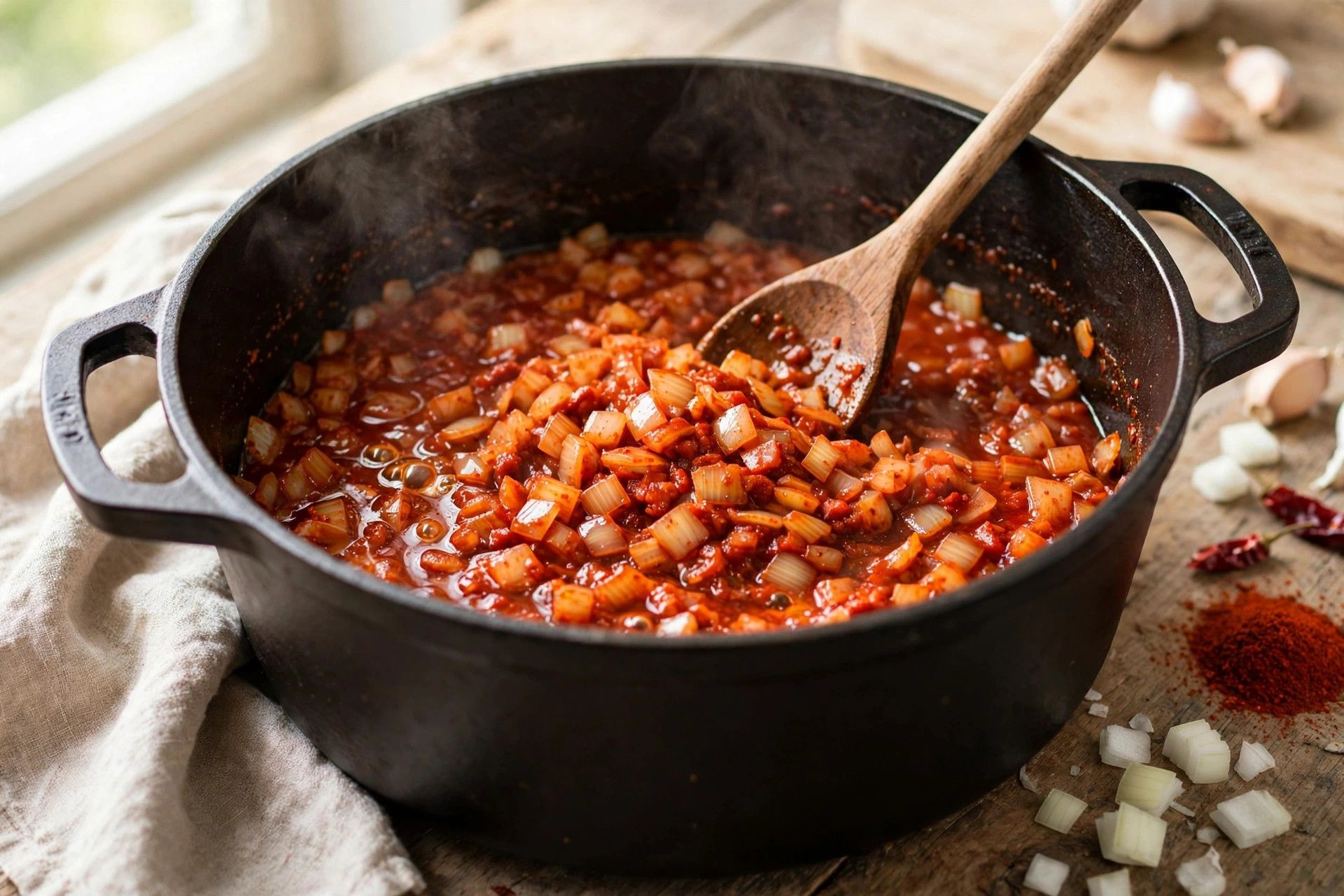
Two moves decide posole, and both happen before the broth goes in. First, sear the pork in batches until truly brown. That browned crust, the fond stuck to the pot, is where the deep roasted flavor lives; steamed grey pork gives you a thin, boring broth. Second, bloom the chile powder in the hot fat for a full minute. Dry chile powder tastes dusty and raw until hot fat wakes it up, and that one minute turns it brick red, fragrant and fully alive. Sear hard, bloom the chile, and the simmer takes care of the rest.
Variations
- Green posole: swap the red chile powder for a pound of roasted, peeled hatch green chiles, chopped, plus a cup of tomatillo salsa for tang.
- Chicken posole: use 2 1/2 lb boneless chicken thighs instead of pork and simmer 45 minutes until tender.
- Slow cooker: brown and bloom as written, then cook on low 7 to 8 hours. The pork will shred itself.
- Extra hominy: add a third can of hominy and an extra cup of broth to stretch the pot for a bigger crowd.
What we learned testing it
- Batch searing won the taste test clearly. The single crowded batch tasted flat and boiled, while the two batch version had a rich roasted backbone in the broth.
- Ninety minutes was the sweet spot in three tests. At 60 the pork was still chewy, and at 2 hours the cubes started falling apart into shreds, which some cooks actually prefer.
Read how we test recipes.
Pork Posole
Makes 6 servings · 2 hr 10 min total · Medium
Ingredients
Equipment
Large Dutch oven or heavy pot with lid · Large spoon · Sharp knife · Cutting board · Ladle
Instructions
-
Brown the pork in batches
Pat the pork cubes dry and season generously with salt and pepper. Heat the oil in a large Dutch oven over medium high heat until shimmering. Sear the pork in two batches, turning until deeply browned on at least two sides, about 8 minutes per batch. Do not crowd the pot. Transfer the browned pork to a plate and keep the drippings in the pot.
-
Bloom the chile and aromatics
Lower the heat to medium. Add the onion to the pot and cook 5 minutes, scraping up the browned bits from the bottom. Stir in the garlic, chile powder, oregano and cumin and cook 1 minute until fragrant and brick red. This quick bloom wakes up the chile flavor before any liquid goes in.
-
Simmer with hominy until tender
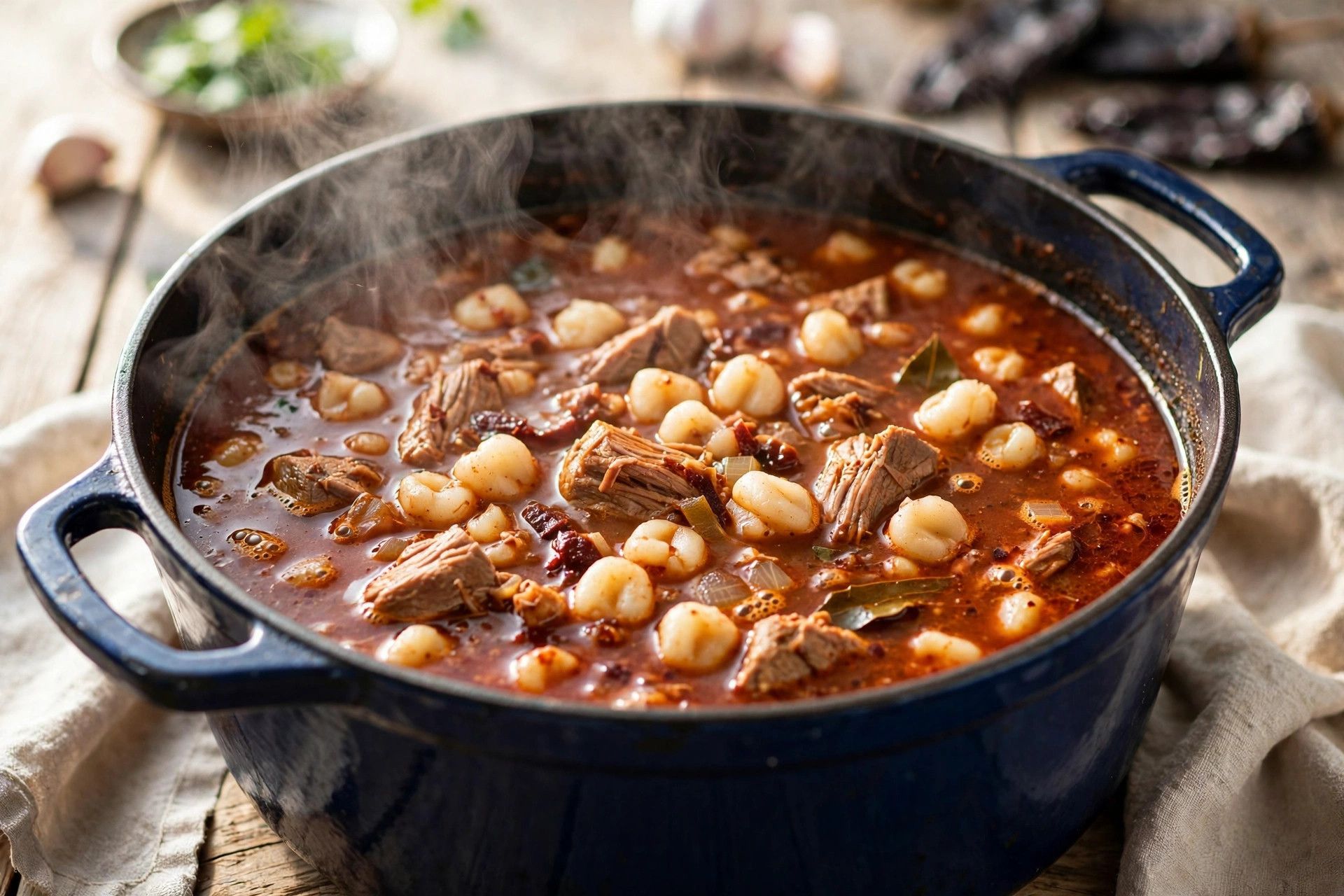
Pour in the chicken broth, return the browned pork to the pot, and add the hominy and bay leaves. Bring to a gentle boil, then lower to a steady simmer. Partially cover and cook 90 minutes, stirring now and then, until the pork shreds easily and the broth turns lightly silky. Fish out the bay leaves, stir in the lime juice and season boldly with salt.
-
Serve with crisp fresh toppings
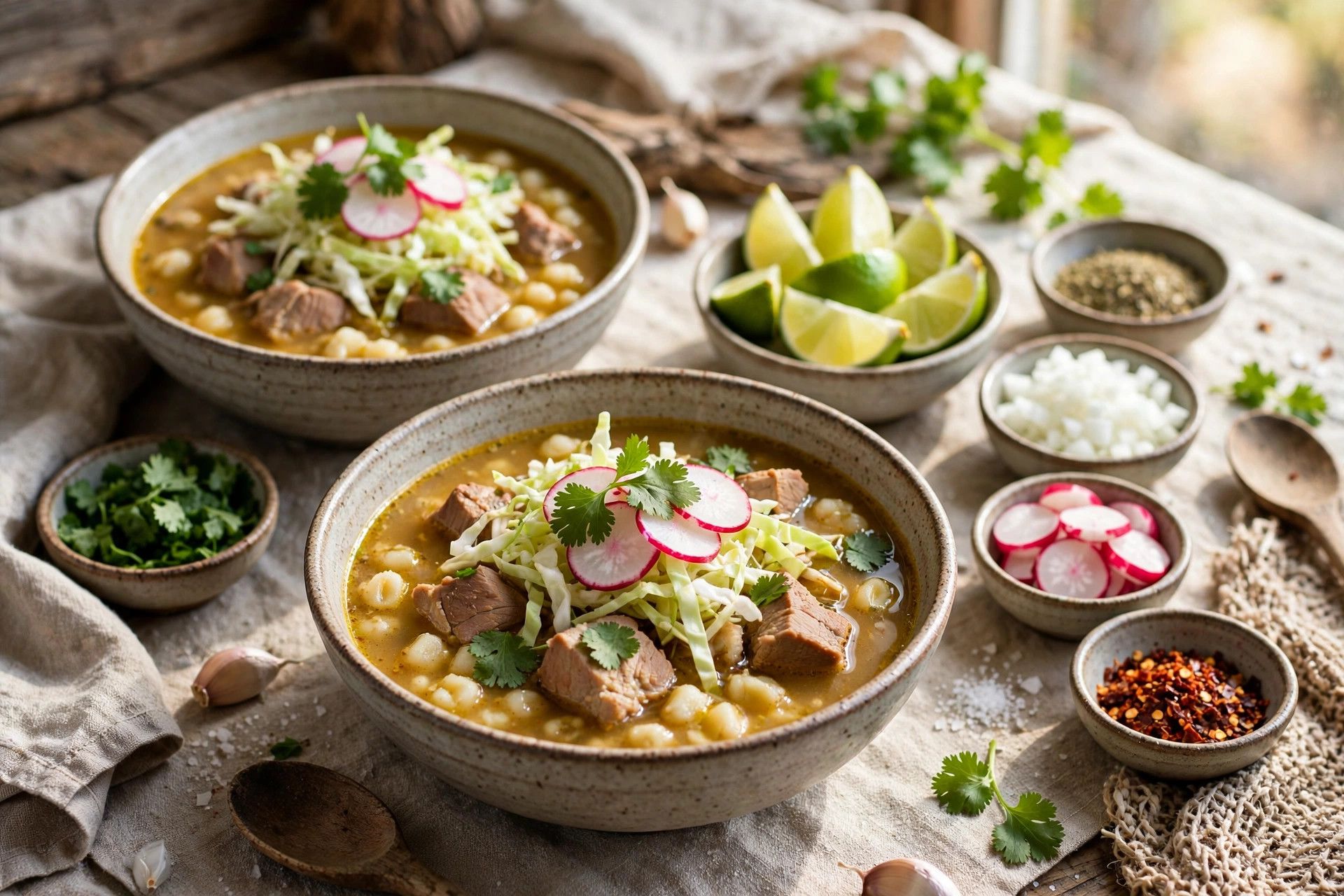
Ladle the posole into deep bowls. Set out the shredded cabbage, radishes, cilantro, onion and lime wedges so everyone finishes their own bowl. The cold crunch against the hot brothy stew is the whole point. Warm corn tortillas on the side are non negotiable.
Notes
- Brown in batches, not all at once. Crowded pork steams instead of searing, and you lose the deep browned flavor that carries the whole pot.
- Use new mexico style chile powder, not generic chili powder blends, which contain extra spices and salt that muddy the broth.
- Rinse the canned hominy well. The canning liquid is starchy and cloudy, and a good rinse keeps the broth clear and clean tasting.
- Posole is better the next day. The broth settles, the chile deepens and the pork drinks in more flavor, so make it ahead when you can.
- These protein estimates come from nutrition labels, not lab testing. A serving lands near 28 g of protein from typical brand labels, nearly all of it from the pork, so check your labels for your exact numbers.
Nutrition per serving
Nutrition information is being calculated.
Substitutions
- Pork shoulder
- Use pork butt or country style ribs cut into chunks. Boneless chicken thighs also work; reduce the simmer to 45 minutes.
- Red chile powder
- Blend 4 soaked dried new mexico chiles with a cup of broth for a fresher, brighter chile base.
- White hominy
- Golden hominy is a fine swap with a slightly sweeter bite. Do not use dried hominy unless you cook it separately first.
Storage and make-ahead
Refrigerate leftover posole in an airtight container for up to 4 days; the flavor deepens overnight. Reheat gently on the stove with a splash of broth. Freeze for up to 3 months without the fresh toppings. Thaw overnight in the fridge, then reheat and top fresh.
Frequently asked questions
What is posole?
Posole is a traditional Mexican stew built on hominy, those big puffy corn kernels, simmered in a chile seasoned broth with pork. Red posole uses red chiles, green uses green chiles or tomatillos, and white skips the chile for a clear broth.
Is posole the same as pozole?
Yes, the two spellings describe the same dish. Pozole is the more common spelling in Mexico, while posole is widely used in New Mexico and the American Southwest. Same stew, same hominy, same comfort.
Can I make pork posole in a slow cooker?
Yes. Brown the pork and bloom the chile as written, then transfer everything except the lime juice and toppings to a slow cooker. Cook on low 7 to 8 hours or on high 4 to 5 hours, then finish with the lime juice and the fresh toppings.
What toppings go on posole?
The classic spread is shredded cabbage, thin sliced radishes, chopped white onion, cilantro and lime wedges. Diced avocado, crumbled cotija and a spoonful of crema are welcome extras. Warm corn tortillas belong on the table, not in the bowl.
Can I use dried hominy instead of canned?
You can, but cook it separately first. Dried hominy needs several hours of simmering to turn tender, so get it fully cooked, then add it to the stew for the last 30 minutes to soak up the chile broth.