Cottage Cheese Cookie Dough
 By Emily Carter ·
Published
Quick answer
Blend 1 cup cottage cheese until completely smooth, then mix with almond flour, vanilla protein powder, peanut butter, honey, vanilla and salt. Fold in mini chocolate chips, roll into about 16 small balls and chill for 30 minutes to firm up. The batch carries roughly 64 g of protein from label values, about 8 g per serving of 2 balls.
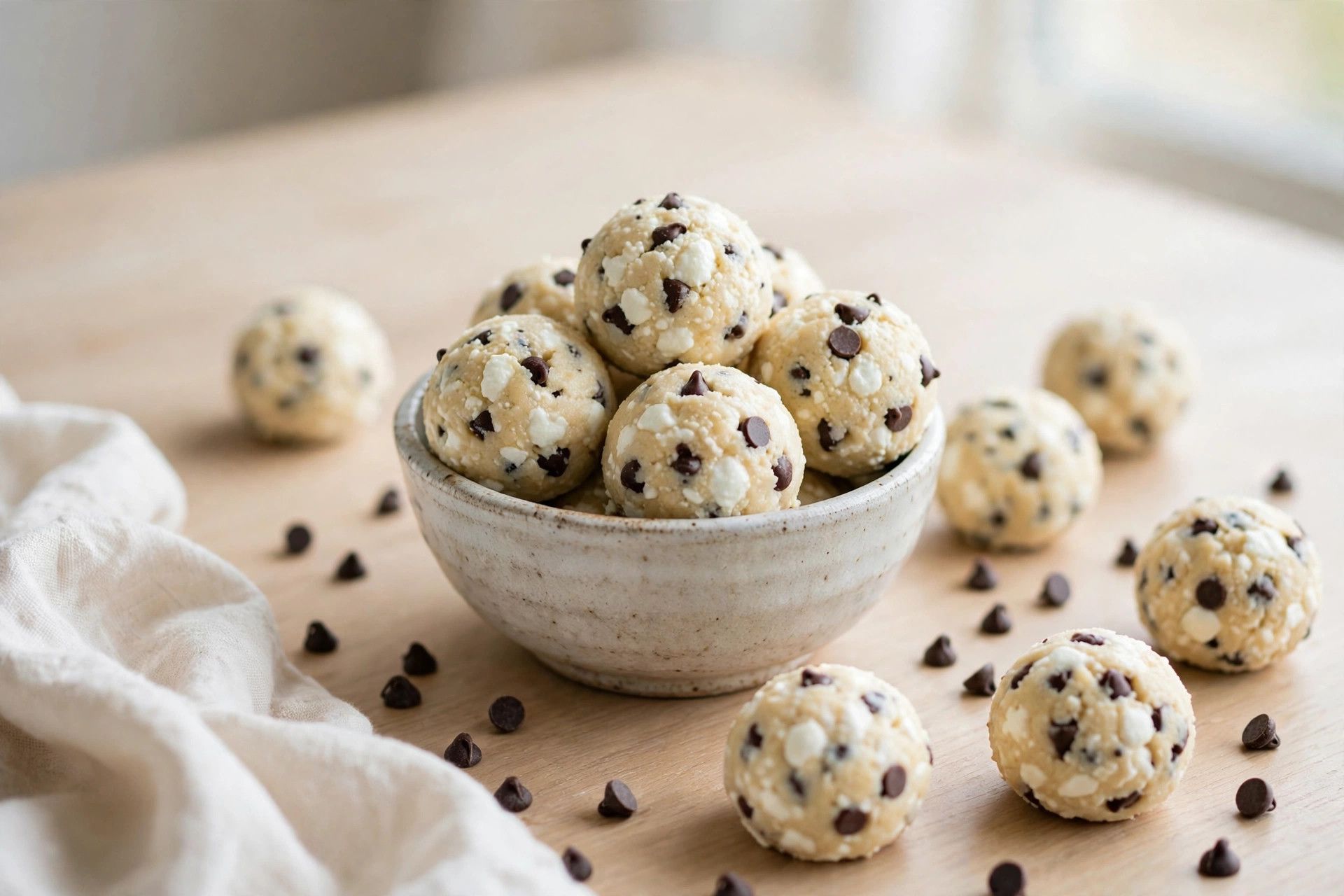
Cottage Cheese Cookie Dough is the edible cookie dough you can eat by the spoonful without turning on the oven. It starts with cottage cheese blended completely smooth, then almond flour, vanilla protein powder, peanut butter, honey and vanilla turn it into thick, scoopable dough studded with mini chocolate chips. No bake, no raw flour or raw egg worries, just mix, roll and chill for 30 minutes. The whole batch carries roughly 64 g of protein from label values, which works out to about 8 g in every 2 ball serving.
Why you’ll love it
- Tastes like real chocolate chip cookie dough, not like a health food compromise.
- About 8 g of protein per 2 ball serving from label values, about 64 g per batch.
- No bake and no oven time. Mix, roll, chill and snack.
- Safe to eat raw, since it uses almond flour and blended cottage cheese instead of raw wheat flour or eggs.
- Kid friendly balls that pack well in a lunchbox and disappear fast at parties.
Ingredient notes
Cottage cheese: the protein engine. Blend 1 cup until completely smooth with no curds left, and it becomes a thick, neutral cream that carries about 28 g of protein on most brand labels. Low fat blends the smoothest, while full fat works too and makes a slightly richer dough.
Almond flour: the flour substitute that keeps this no bake and safe to eat raw. One cup adds body plus about 6 g of protein from label values, and its fine texture is what makes the dough feel like real cookie dough.
Vanilla protein powder: the second protein driver at about 20 g per scoop on most labels. Vanilla blends into the dough flavor instead of fighting it, so skip chocolate or unflavored here.
Natural peanut butter: 2 tablespoons add about 8 g of protein plus the rich, nutty backbone that makes this taste like actual cookie dough. Use a drippy natural jar and stir it well first.
Honey or pure maple syrup: 1/4 cup sweetens the whole batch. Honey gives a thicker dough and a classic flavor, while maple syrup makes it a touch softer.
Vanilla extract and salt: 1 teaspoon of vanilla and a pinch of fine sea salt round everything out. Skip the salt and the dough tastes flat, no matter how much sweetener you add.
Mini chocolate chips: 1/4 cup of minis spread through all 16 balls. Full size chips overwhelm small balls, so minis are worth seeking out.
The blend smooth rule that makes or breaks it
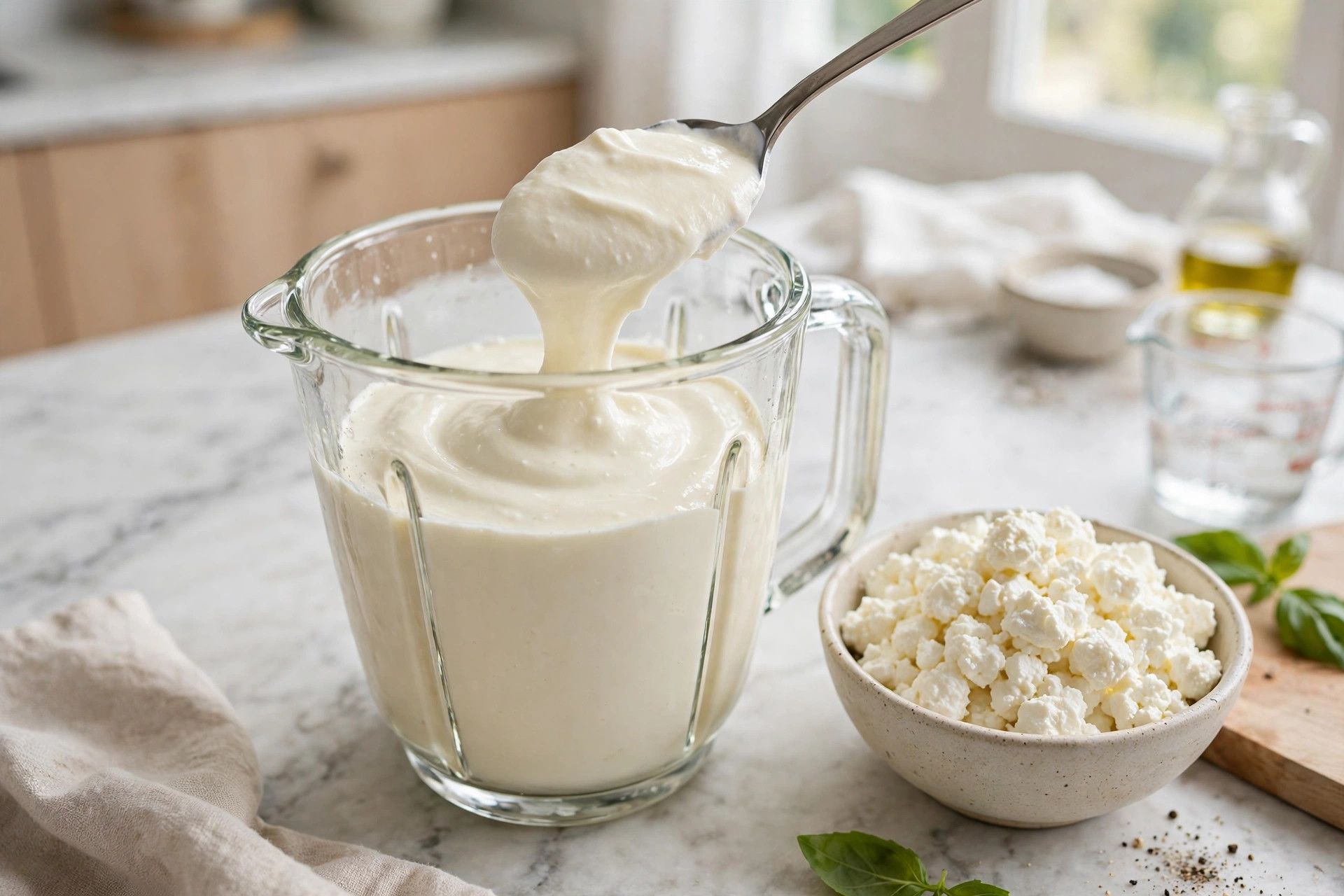
This recipe has exactly one rule, and it happens in the first step. Blend the cottage cheese until it is completely smooth, with no curds visible at all. That means a full 45 to 60 seconds in the blender, scraping down the sides halfway through. What you want is a thick, pourable cream that looks like melted ice cream. If you stop early, tiny curds survive, and they show up in the finished balls as little tangy pockets that remind everyone this is cottage cheese. Give it the full time, and the dough tastes like cookie dough, full stop. Everything after the blend is simple mixing, rolling and chilling.
Variations
- Peanut butter cup: fold in 2 tablespoons of chopped peanut butter cups along with the mini chips for a bakery style upgrade.
- Oatmeal raisin style: swap half the almond flour for oat flour and fold in 1/4 cup of raisins instead of half the chips for a chewy twist. A pinch of cinnamon in the blend takes it the rest of the way.
- Double chocolate: add 1 tablespoon of cocoa powder to the dry mix and keep the mini chips for a deep chocolate dough.
- Birthday cake: fold in 2 tablespoons of rainbow sprinkles with the chips and use a birthday cake flavored protein powder if your brand makes one.
What we learned testing it
- The fully blended batch beat the half blended batch in a side by side taste test. The half blended batch still showed tiny curds and tasted like cottage cheese, while the fully blended batch tasted like plain cookie dough.
- Honey and maple syrup both worked, but honey gave a thicker dough and a classic cookie dough flavor. Maple syrup made a slightly softer dough that needed 5 extra minutes of chill time.
- Thirty minutes of chill time was the sweet spot. At 15 minutes the balls held their shape but felt soft, and at 60 minutes they were firm but lost a little of the fresh mixed creaminess.
Read how we test recipes.
Cottage Cheese Cookie Dough
Makes about 16 balls (8 servings of 2 balls) · 45 min total · Easy
Ingredients
Equipment
Blender or food processor · Mixing bowl · Baking sheet · Parchment paper
Instructions
-
Blend the cottage cheese until completely smooth
Add the cottage cheese to a blender or food processor and blend for 45 to 60 seconds, scraping down the sides once halfway through. You want a thick, pourable cream with no curds visible at all. This is the step that decides whether the finished dough tastes like cookie dough or like cottage cheese, so do not rush it.
-
Mix the dough until thick and scoopable
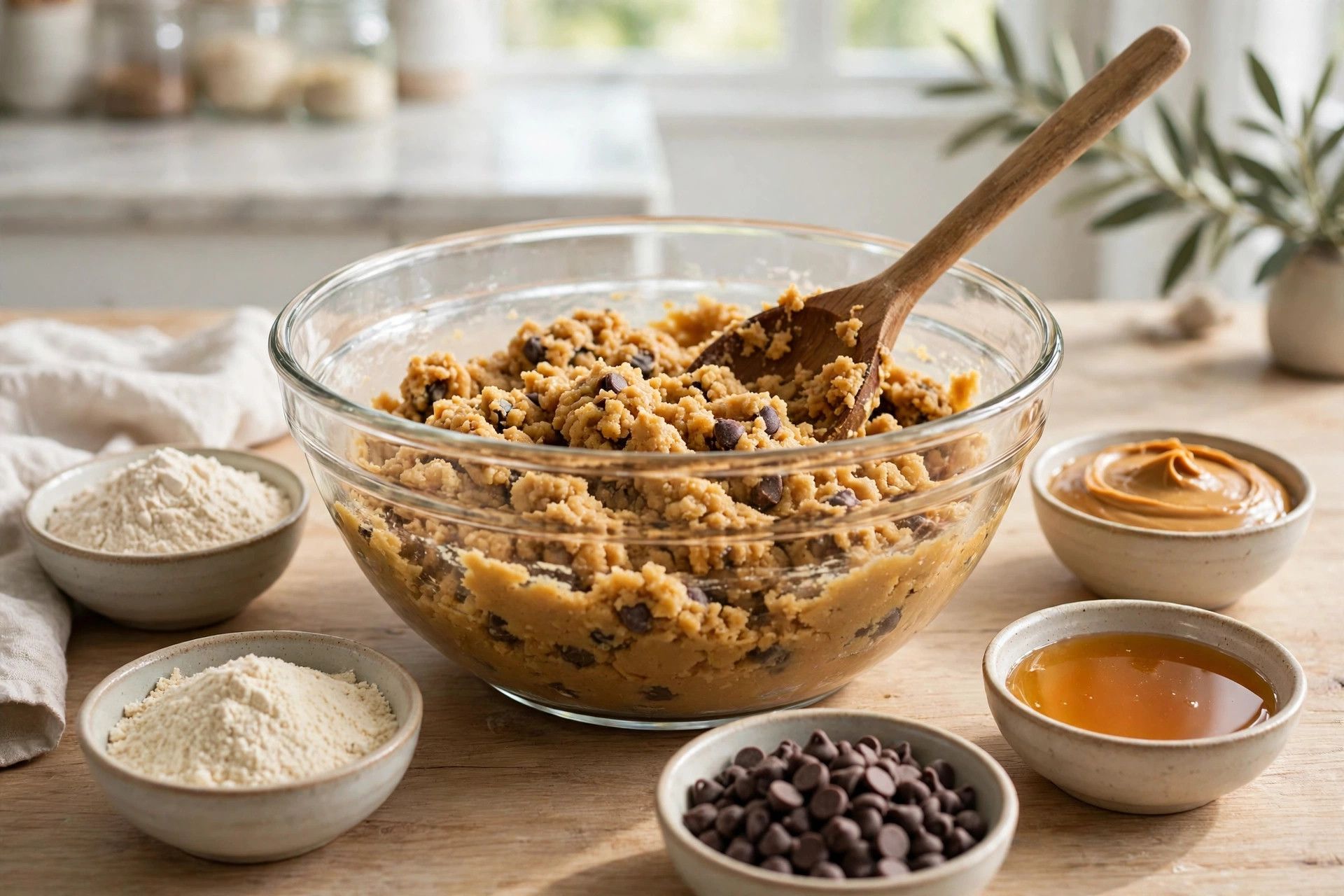
Spoon the smooth cottage cheese into a mixing bowl and add the almond flour, protein powder, peanut butter, honey, vanilla and salt. Stir with a sturdy spoon until a thick dough forms, then fold in the mini chocolate chips. If the dough feels too soft to roll, work in 1 tablespoon of almond flour at a time.
-
Roll into balls and line the sheet
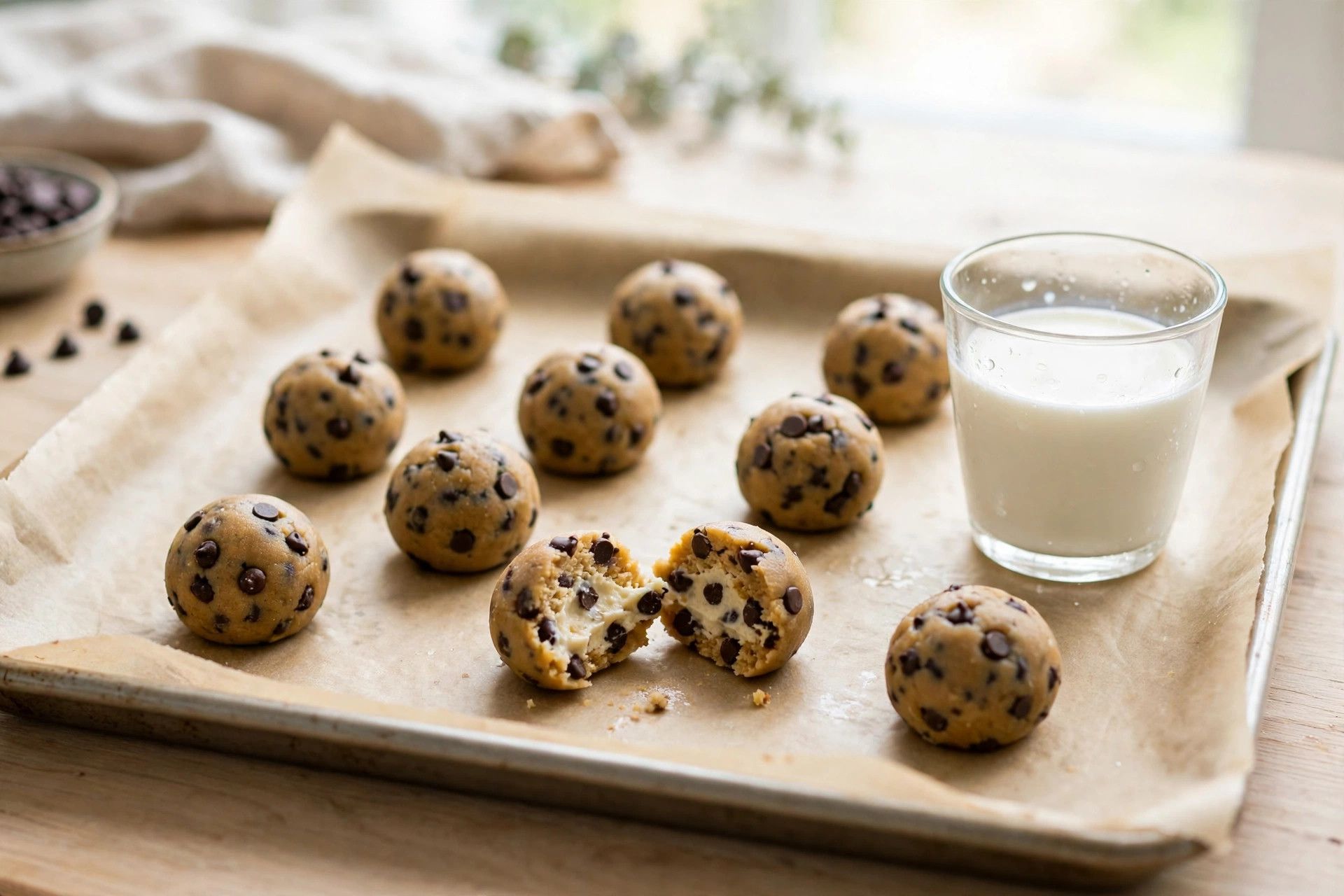
Line a baking sheet with parchment paper. Scoop about 1 tablespoon of dough at a time and roll it between your palms into smooth balls, setting them on the sheet as you go. You should get about 16 small balls.

-
Chill 30 minutes, then snack
Slide the sheet into the fridge and chill the balls for 30 minutes so they firm up. Eat them straight from the fridge for the best texture. They hold their shape on a party tray at room temperature, but the fridge is home.
Notes
- Blend the cottage cheese first and blend it well. Any curds left behind will show up in the finished dough, and this step is what separates great cookie dough from cottage cheese with mix ins.
- Taste the dough before you add the chocolate chips. Sweetness varies by protein powder and honey brand, so adjust with an extra spoonful of honey before the chips go in.
- If the dough feels too soft to roll, chill the bowl for 10 minutes or work in 1 tablespoon of almond flour at a time. If it feels dry and crumbly, add milk 1 teaspoon at a time.
- Use mini chocolate chips, not full size. Full size chips overwhelm small balls and make rolling harder, while minis spread evenly through every bite.
Nutrition per serving
Nutrition information is being calculated.
Substitutions
- Natural peanut butter
- Use almond butter or cashew butter cup for cup. The dough will taste a little milder, so add an extra pinch of salt to keep the flavor balanced.
- Honey
- Use pure maple syrup in the same amount. Expect a slightly softer dough, and give the balls 5 to 10 extra minutes in the fridge.
- Vanilla protein powder
- Leave it out and add 3 extra tablespoons of almond flour to keep the dough thick. The batch will drop by about 20 g of protein, so the honest count becomes about 44 g total and about 5 to 6 g per serving.
Storage and make-ahead
Keep the balls in an airtight container in the fridge for up to 5 days. The flavor stays best in the first 3 days. For longer storage, freeze the balls on the sheet until solid, then move them to a freezer bag for up to 1 month. Thaw frozen balls in the fridge for 10 to 15 minutes before eating.
Frequently asked questions
Is this cottage cheese cookie dough safe to eat raw?
Yes. There are no eggs and no raw wheat flour in the recipe, which are the two ingredients that make raw cookie dough risky. Almond flour is made from blanched nuts, and the cottage cheese is blended smooth before anything else goes in.
Can I taste the cottage cheese in it?
Not when you blend it fully. A full 45 to 60 second blend turns the cottage cheese into a thick, neutral cream, and the peanut butter, honey and vanilla cover what little tang remains. Stop blending early and you will notice tiny curds, so give it the full time.
How much protein is in this cookie dough?
These are label based estimates, not lab tested numbers, and they vary by brand. The whole batch carries roughly 64 g of protein: about 28 g from the cottage cheese, 20 g from the protein powder, 8 g from the peanut butter and 6 g from the almond flour, with the chips rounding it out. That is about 8 g per serving of 2 balls.
Can I make it without protein powder?
You can. Leave the powder out and add 3 extra tablespoons of almond flour so the dough stays thick and rollable. The batch will carry about 44 g of protein instead of 64 g, which works out to about 5 to 6 g per 2 ball serving.
Can I freeze the cookie dough balls?
Yes. Freeze the rolled balls on the parchment lined sheet until solid, then move them to a freezer bag and keep them up to 1 month. Thaw in the fridge for 10 to 15 minutes before serving, or eat them half frozen for a firmer, chewier bite.