Cedar Plank Salmon (Grilled, With Lemon and Dill)
 By Emily Carter ·
Published
Quick answer
Soak an untreated cedar plank in water for 1 to 2 hours, then heat the grill to medium high. Season 4 salmon fillets with olive oil, lemon, garlic, dill, mustard, honey, salt and pepper, lay them on the plank, and grill with the lid closed 15 to 20 minutes until the salmon flakes easily and reads 125 F in the thickest part. Rest 5 minutes and serve with lemon wedges and extra dill.
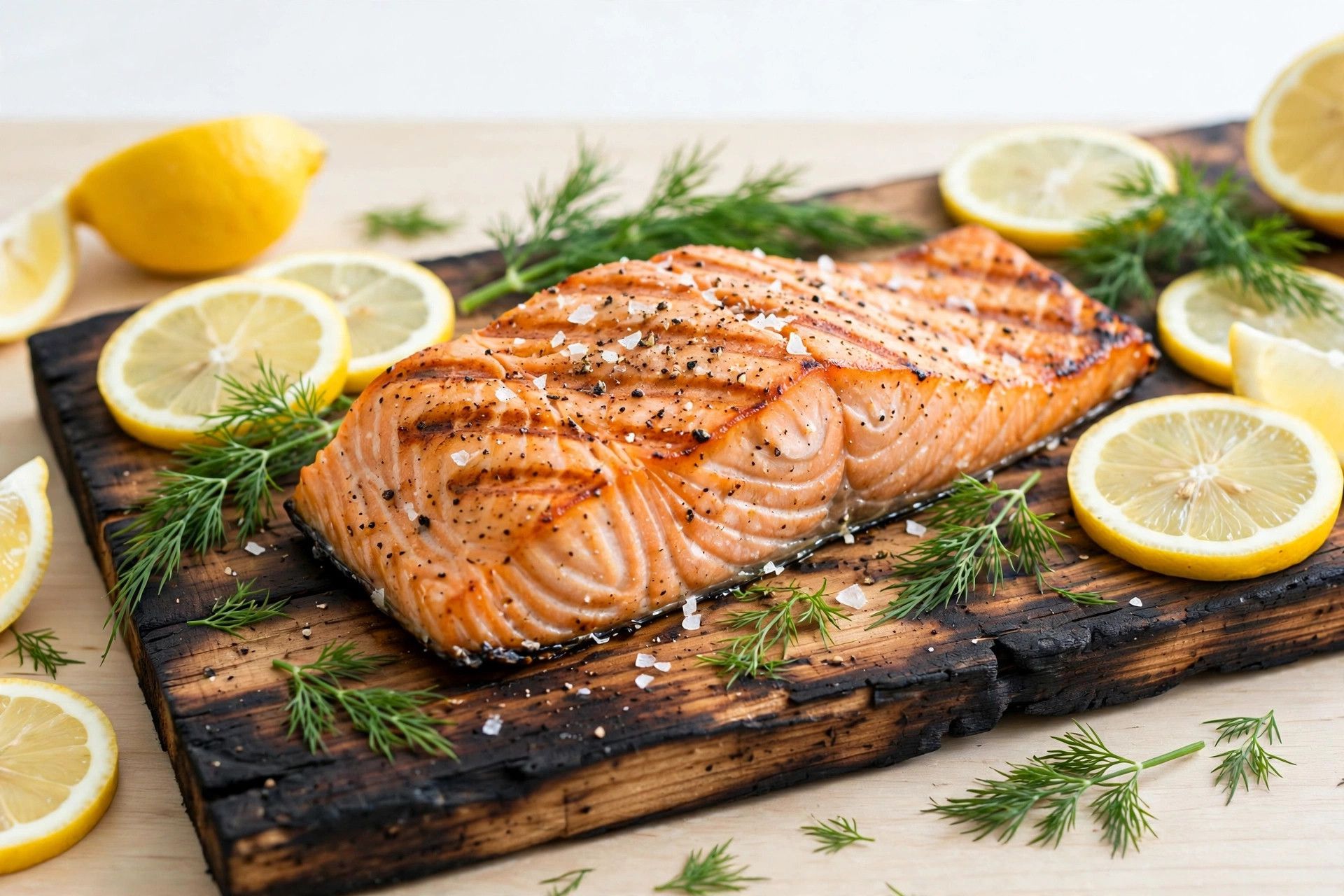
Cedar Plank Salmon is the Pacific Northwest at its best: fresh salmon, a smoky cedar plank, lemon and dill, and a grill doing all the work. The plank steams the fillets gently from below while the closed lid roasts them from above, so the salmon comes out juicy, lightly smoky and flaky, with almost no cleanup. It tastes like a restaurant dish and cooks like a weeknight dinner.
Why you’ll love it
- Smoky cedar flavor with no smoker and no special gear, just a plank and a grill.
- Juicy, flaky salmon every time, with the skin protecting the flesh from the heat.
- Fifteen minutes of prep and one plank to carry to the table.
- Naturally gluten free and dairy free, with about 34 g of protein per fillet from label values.
- Impressive enough for guests, easy enough for a weeknight.
Ingredient notes
Salmon fillets: the heart of the dish. Choose fillets of even thickness, about 6 oz each, skin on, so they cook at the same rate. The skin protects the flesh from the hot plank and releases cleanly at serving, so leave it on.
Cedar plank: the flavor. Buy an untreated plank sold for grilling, about 12 by 6 inches, and soak it for 1 to 2 hours before cooking. The soaked wood steams and smokes gently, and that smoke is what makes the salmon taste like the Pacific Northwest.
Lemon: the brightness. Half the lemon goes into the seasoning as juice, and the other half is sliced into rounds that sit on top of the fillets while they grill. The rounds soften in the heat and perfume the fish.
Dill and garlic: the seasoning. Fresh dill gives a clean, grassy note that suits salmon better than any dried herb, and garlic adds warmth without taking over. Mince the garlic fine so it spreads evenly.
Dijon mustard and honey: the balance. A teaspoon of each gives the seasoning a light tang and a touch of sweetness that rounds out the lemon and helps the mixture cling to the fish.
The soak and heat rule that makes or breaks it
Two rules decide this salmon, and both are about the plank. First, soak it for a full 1 to 2 hours, weighing it down so it stays submerged. A dry plank catches fire on the grill, and a half soaked plank flames at the edges while the fish is still raw. Second, grill with the lid closed at medium high heat, about 400 F, and do not flip the fillets. The plank cooks from below and the lid roasts from above, so the salmon cooks through in 15 to 20 minutes without turning. Pull it at 125 F in the thickest part and rest it for 5 minutes on the plank. That rest is what turns good salmon into juicy salmon, since the temperature rises a few degrees and the juices settle before you lift the fillets off the skin.
Variations
- Maple cedar salmon: swap the honey for maple syrup and add a pinch of smoked paprika to the seasoning for a sweeter, deeper smoke.
- Spicy cedar salmon: add 1/2 teaspoon of red pepper flakes and a finely chopped jalapeno to the seasoning for gentle heat.
- Herb cedar salmon: swap the dill for chopped fresh parsley and thyme, and add a tablespoon of capers to the seasoning for a briny finish.
- Citrus cedar salmon: swap the lemon for orange, using orange juice in the seasoning and orange rounds on top, for a sweeter citrus note.
What we learned testing it
- Soaking for a full 2 hours beat a 30 minute soak clearly in the side by side test. The long soak plank smoked gently and never flamed, while the short soak plank caught at the edges and needed spraying twice.
- Pulling the salmon at 125 F beat 140 F for juiciness. The 125 F fillets were moist and flaky after a 5 minute rest, while the 140 F fillets were dry at the edges.
- Skin side down beat skin side up clearly. The skin protected the flesh from the hot plank, released cleanly at serving, and kept the fillets from sticking.
Read how we test recipes.
Cedar Plank Salmon (Grilled, With Lemon and Dill)
Makes 4 salmon fillets · 35 min total · Medium
Ingredients
Equipment
Gas or charcoal grill · Untreated cedar plank about 12 by 6 inches · Instant read thermometer · Wide spatula
Instructions
-
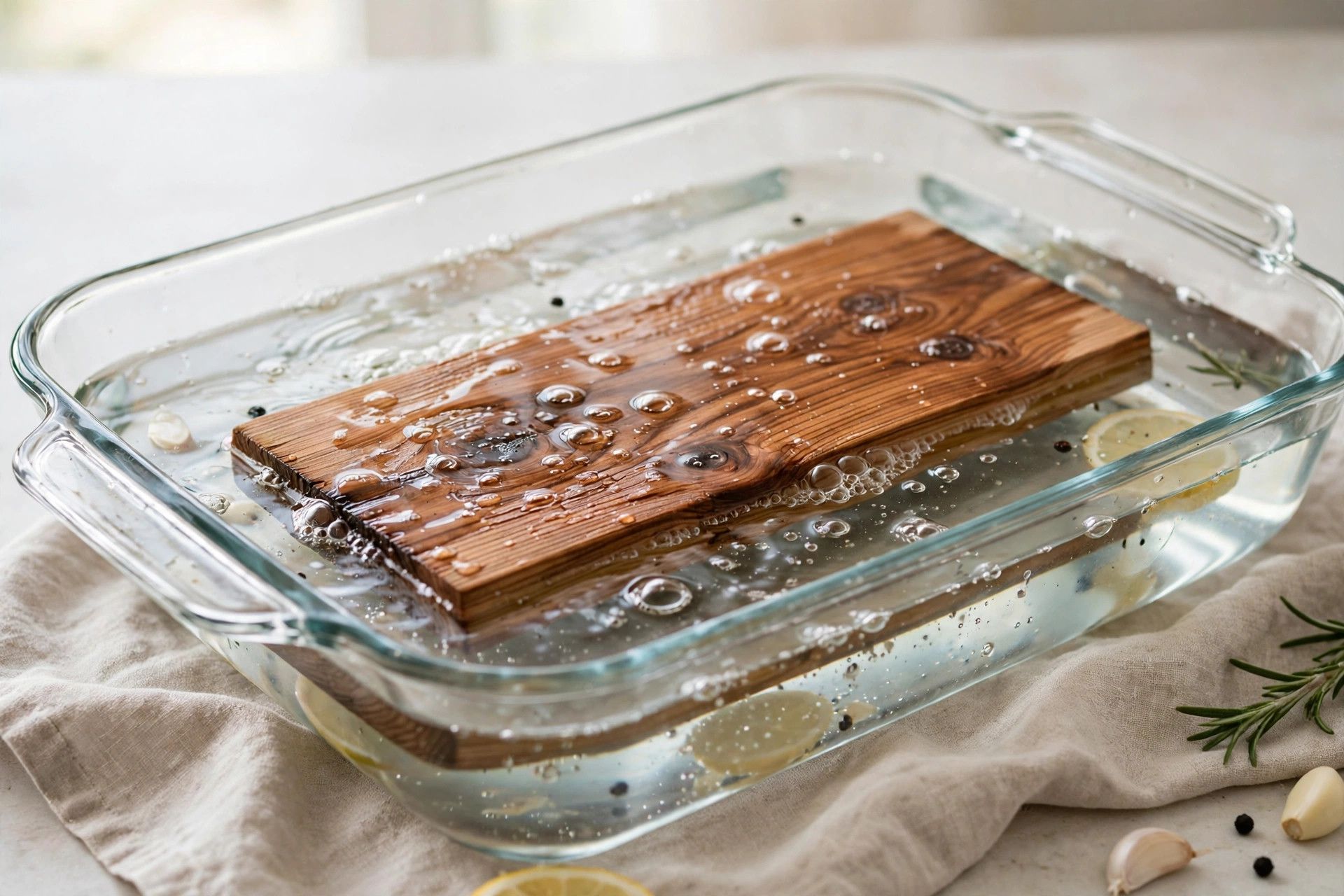
Soak the cedar plank
Submerge the cedar plank in water for 1 to 2 hours, weighing it down with a heavy pot so it stays under the surface. A fully soaked plank steams gently on the grill instead of catching fire, and that steam is what carries the cedar flavor into the salmon. Pat the top of the plank dry with a towel just before cooking so the fillets sit on a dry surface.
-
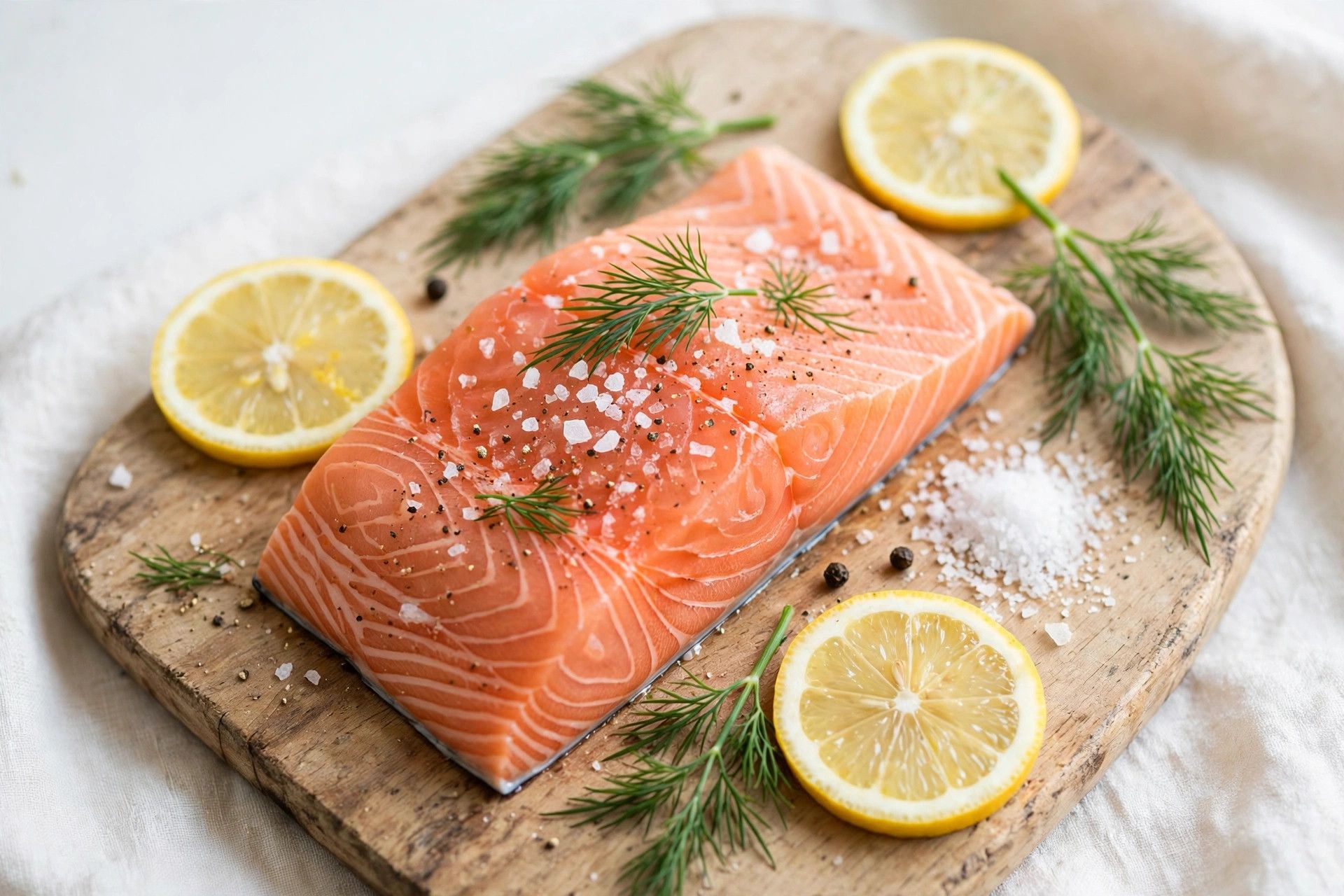
Season the salmon fillets
Pat the salmon fillets dry with paper towels, then stir the olive oil, lemon juice, garlic, dill, Dijon mustard, honey, salt and pepper together in a small bowl. Brush the mixture generously over the top and sides of each fillet, and lay a lemon round or two on top of each one. Let the seasoned fillets sit at room temperature for 10 minutes while the grill heats.
-
Grill the salmon on the cedar plank
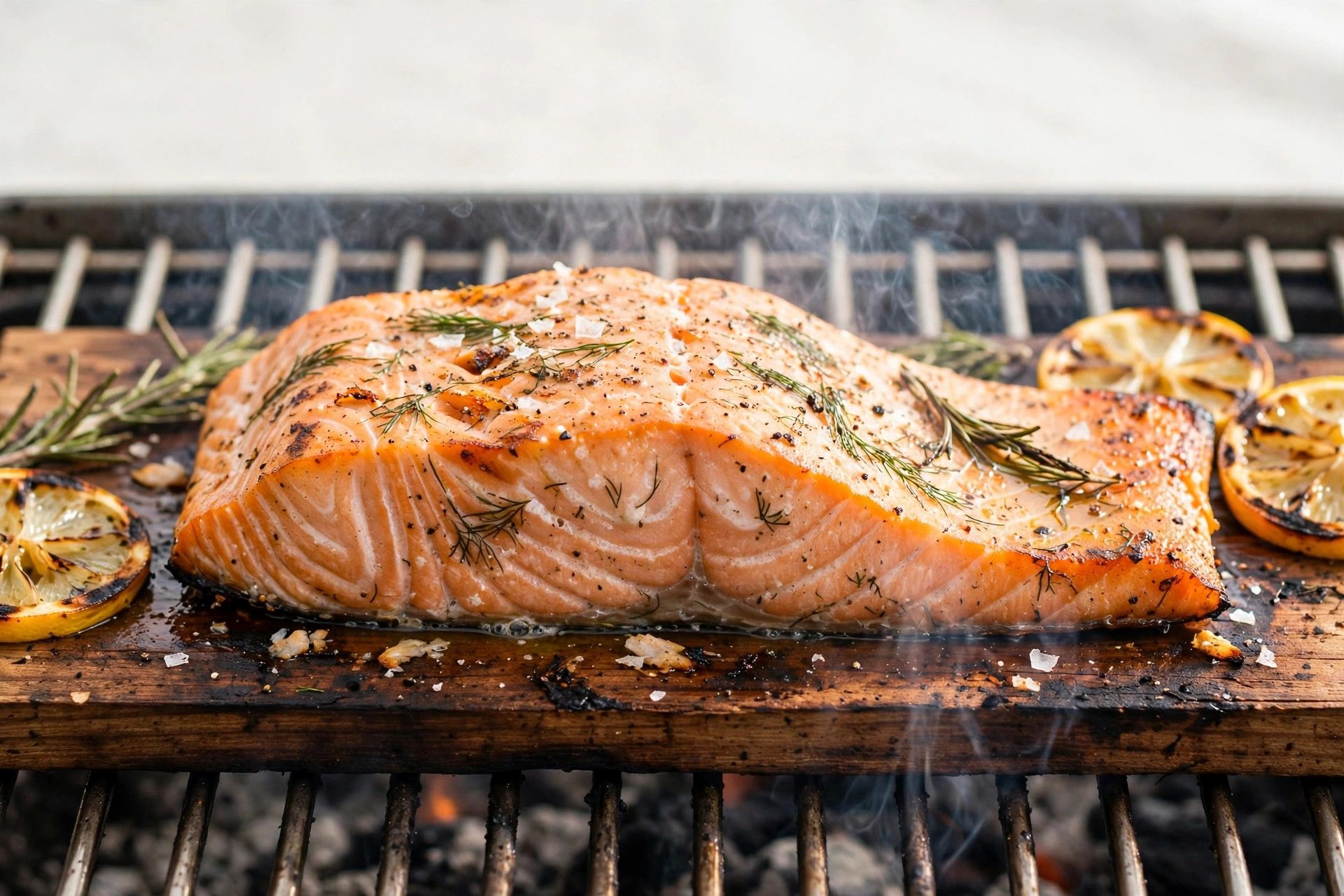
Heat the grill to medium high, about 400 F, and place the soaked plank directly on the grates. Close the lid and let the plank heat for 3 minutes until it starts to crackle and smoke lightly. Lay the fillets skin side down on the hot plank, close the lid, and grill for 15 to 20 minutes until the salmon flakes easily and reads 125 F in the thickest part.
-
Rest and serve the salmon
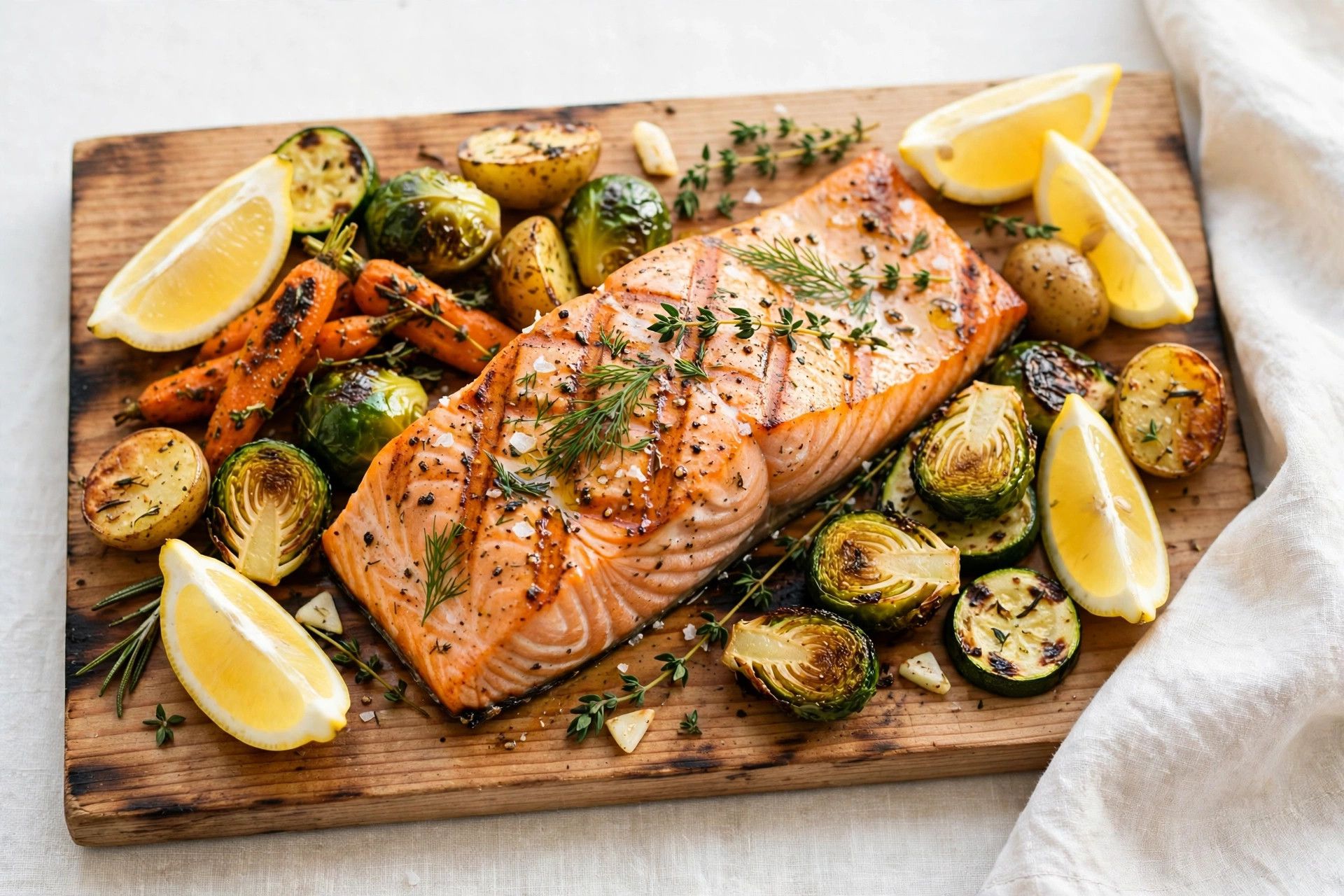
Lift the whole plank off the grill with tongs and a wide spatula, and set it on a heatproof tray. Let the salmon rest on the plank for 5 minutes, which lets the juices settle and the fillets firm up for serving. Slide a spatula between the skin and the flesh to lift each fillet onto a plate, and serve with lemon wedges and a sprinkle of fresh dill.
Notes
- Use an untreated cedar plank sold for grilling, never a plank from a lumber yard. Treated wood can release chemicals when heated, and it is not safe for food.
- Pat the fillets dry before seasoning. A dry surface takes the lemon and dill mixture properly, while a wet fillet lets it slide off.
- Do not flip the salmon. The plank cooks the fillets gently from below while the closed lid roasts them from above, so flipping only risks breaking them.
- Keep a spray bottle of water near the grill. If the edges of the plank catch and flame, a quick spray knocks the flame down without soaking the fish.
Nutrition per serving
Nutrition information is being calculated.
Substitutions
- Fresh dill
- Use 2 tablespoons of chopped fresh parsley with 1 teaspoon of dried dill instead. The flavor is milder, but it still suits the lemon and cedar.
- Honey
- Use 1 teaspoon of maple syrup or brown sugar instead. Either one gives the same light sweetness that balances the lemon.
- Dijon mustard
- Use 1 teaspoon of whole grain mustard instead. It gives a gentler tang and a few pleasant pops of texture in the seasoning.
Storage and make-ahead
Store leftover salmon in the fridge in a sealed container for up to 2 days. Reheat gently in a 275 F oven, covered with foil, for about 10 minutes until just warm, and do not microwave it, since the fish turns rubbery. Leftover salmon is also good cold, flaked over a salad or into a sandwich.
Frequently asked questions
How long do you soak a cedar plank for salmon?
Soak it in water for 1 to 2 hours, weighing it down so it stays fully submerged. A full 2 hour soak is the safest choice, since a short soak lets the plank edges catch fire on the grill.
What temperature should cedar plank salmon be cooked to?
Grill until the thickest part reads 125 F on an instant read thermometer, then rest the fillets for 5 minutes. The temperature rises a few degrees as it rests, and the salmon finishes moist and flaky.
Do you flip salmon on a cedar plank?
No, never flip it. The plank cooks the fillets from below while the closed grill lid roasts them from above, so the salmon cooks through without turning. Flipping only risks breaking the fillets.
Can I reuse a cedar plank?
A plank that only smoked lightly can be scrubbed clean and reused once, but a plank that charred heavily or caught fire should be thrown away. A fresh plank gives the best cedar flavor, so I use a new one for guests.
How much protein is in cedar plank salmon?
These are label based estimates, not lab tested numbers. A 6 oz salmon fillet carries about 34 g of protein from standard labels, which makes this a high protein dinner with no extra effort.