Kitchen guide
Ninja Creami Recipes Without Protein Powder (Cottage Cheese Base)
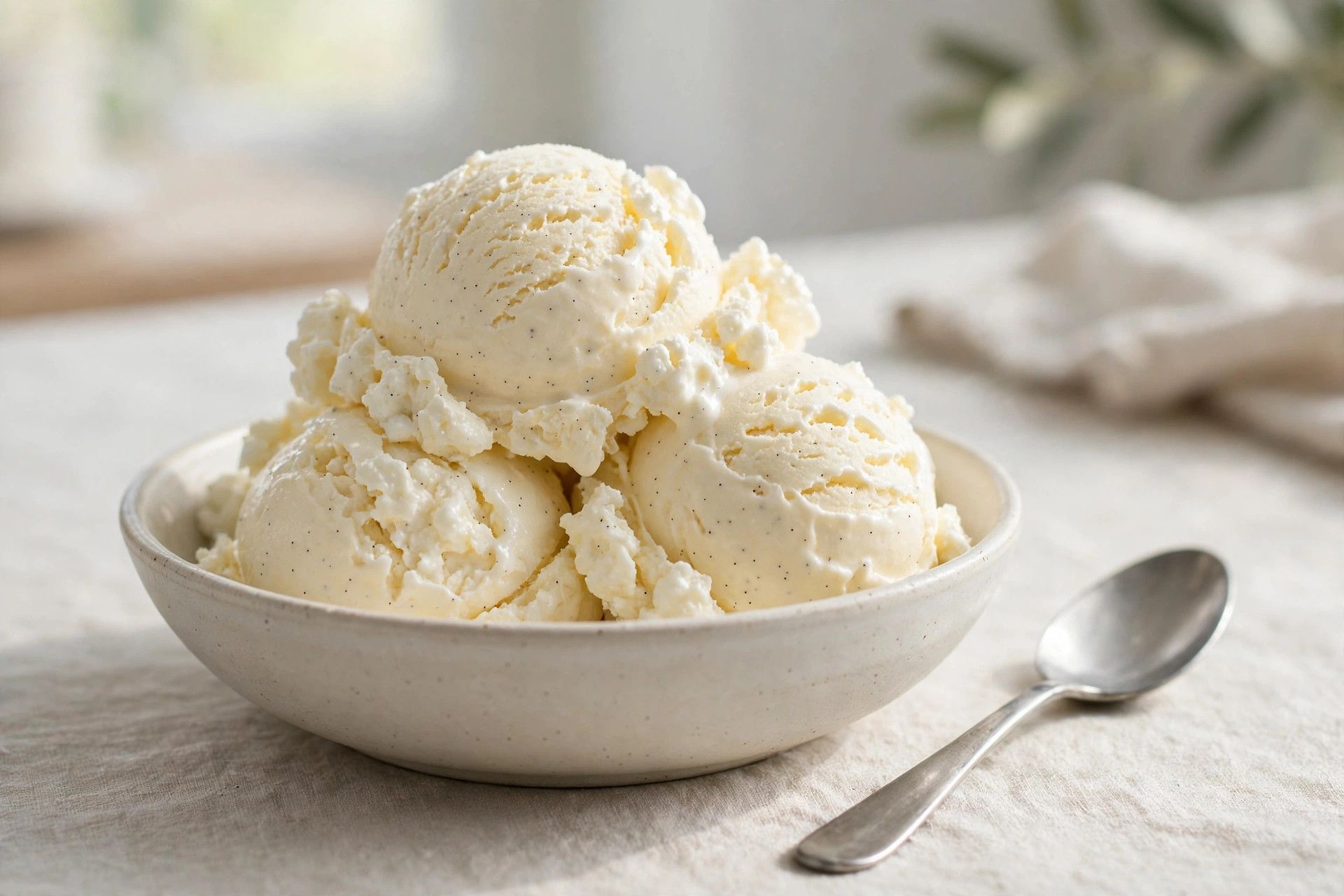
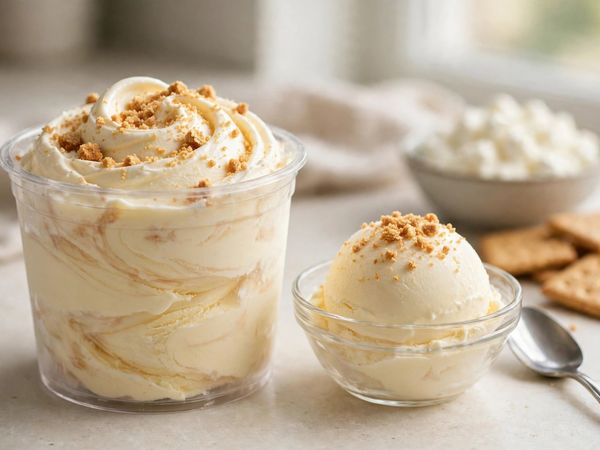
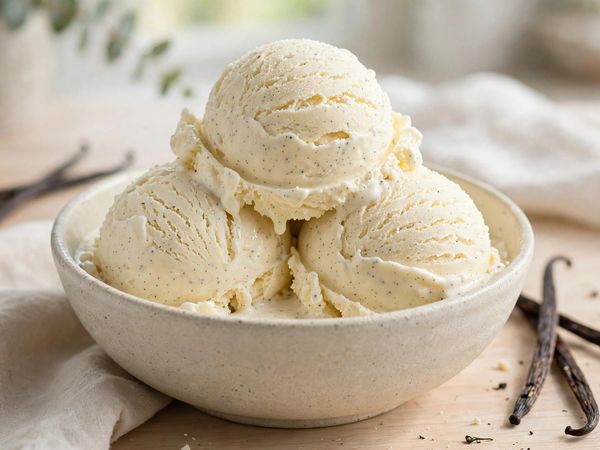
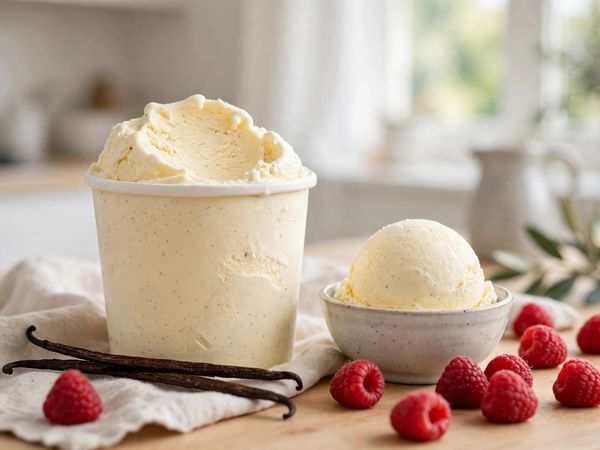
Ninja Creami Recipes Without Protein Powder start with a cottage cheese base that spins thick, creamy and sweet, with no powder in the pint at all. Cottage cheese, milk, Greek yogurt, sweetener, vanilla and salt blend into a smooth vanilla base, freeze for a full day, then spin into proper scoops. It tastes like real vanilla ice cream, carries about 30 g of protein per pint from label values, and costs less per pint than a pint built on powder.
Why you’ll love it
- Real vanilla ice cream flavor with no protein powder in the pantry or in the pint.
- About 8 g of protein per serving from label values, about 30 g per pint.
- Cottage cheese and yogurt cost less per pint than a scoop of powder.
- Five minutes of hands on work, then the freezer and the machine do the rest.
- Spins thick and scoopable, with one respin fixing the crumbly first spin.
Ingredient notes
Cottage cheese: the protein and the body in this pint. It brings most of the protein in the pint, and it is what makes a no powder base spin thick instead of thin and icy. Blend it completely smooth or the finished pint turns grainy.
Whole milk: the creaminess. It keeps the base from freezing rock hard and helps the machine spin a smooth pint. Skim milk works, but the pint comes out icier, so whole milk or 2% is the better pick here.
Greek yogurt: the quiet texture ingredient. It adds tang and body, and it is what keeps this pint thick instead of thin and icy. Plain yogurt only, since a flavored yogurt would fight the vanilla.
Sweetener and salt: two tablespoons of sweetener is enough once the pint is frozen, and the small pinch of salt is what makes the vanilla taste rounded instead of flat and sweet.
Vanilla bean paste: the flavor that makes this pint. It gives real speckled bean flavor for almost no extra cost, and it beats extract clearly once the base is frozen. Extract works in a pinch, but expect a flatter result.
Three no powder routes
Not every no powder pint starts with cottage cheese. These are the three routes that work, and the cottage cheese base below is the one I reach for most.
1. The cottage cheese base (this recipe). Cottage cheese, milk, Greek yogurt, sweetener, vanilla and salt. This is the thickest no powder base, the highest in protein, and the closest to real vanilla ice cream. Blend it for a full 60 seconds and it spins smooth every time.
2. The Greek yogurt base. Swap the cottage cheese for the same amount of plain Greek yogurt and keep everything else the same. The pint turns out tangier, a little lighter, and a little thinner than the cottage cheese version. It suits fruit mix ins and a berry swirl better than eating plain, and it is the best pick if cottage cheese is not in your fridge.
3. Fruit sorbet with no dairy and no powder. Blend 2 cups of frozen mango, pineapple or mixed berries with 2 tablespoons of sweetener and a squeeze of lemon, then freeze and spin on Sorbet. There is no dairy and no powder here, and no protein to speak of either, so think of it as a fresh fruit dessert rather than a protein pint. It is the simplest route of the three and the best one for a hot day.
Why protein powder is optional
Protein powder is a shortcut, not a requirement. It adds protein in one scoop, but it also adds cost, a chalky edge if it is not blended well, and a flavor that has to be covered up. Cottage cheese and Greek yogurt add protein from real food, with a creamy texture built in. The trade is time: a powder base blends in 30 seconds, while a cottage cheese base needs a full 60 seconds to turn completely smooth. That extra half minute is the whole difference. If you already own powder, it still has a place in a light pint, and the related vanilla bean post shows how. But if you never bought powder, or you ran out, you are not missing anything. The freezer and the machine do the same work either way.
How to hit protein without powder
The math is simple once you build the base from protein rich dairy. Cottage cheese is the main source, with Greek yogurt and milk adding the rest. One pint built this way carries about 30 g of protein from label values, about 8 g per serving across 4 servings. To push the number higher without powder, add an extra 1/4 cup of Greek yogurt and use whole milk cottage cheese, which keeps the pint creamy at the same time. To keep the pint lighter, use low fat cottage cheese and skim milk, and the protein stays nearly the same while the calories drop. Either way, check your own labels, since cottage cheese brands vary more than most people expect. The number on your tub is the number that counts.
The freeze and spin rules
Two rules decide this pint, and both are about patience. First, freeze for a full 24 hours on a level surface, with the top smoothed flat. A pint frozen for only a few hours, or frozen at a slant, spins soft and uneven. Second, do not judge the first spin. No powder bases often look crumbly after the first cycle, and that crumbly look sends a lot of people to the conclusion that the recipe failed. It did not. One tablespoon of milk and one respin turns it thick, creamy and scoopable. A second respin takes it softer still, toward soft serve, so stop after the first respin if you want proper scoops.
Variations
- Berry swirl: after spinning, fold in a spoonful of mashed fresh strawberries or raspberries with a spoon, just twice, so the fruit ripples through instead of turning the whole pint pink.
- Chocolate chip: add 2 tablespoons of mini chocolate chips through the mix in cycle after the respin. The chips stay chunky and shatter nicely against the cold vanilla.
- Peanut butter ripple: after spinning, spoon 1 tablespoon of peanut butter over the top and fold it through twice with a spoon, so it ripples instead of blending in.
- Cinnamon sugar: stir 1/2 teaspoon of cinnamon into the base before freezing, then finish each bowl with a pinch of cinnamon sugar on top for a snickerdoodle style pint.